Direct Factory Product Portfolio
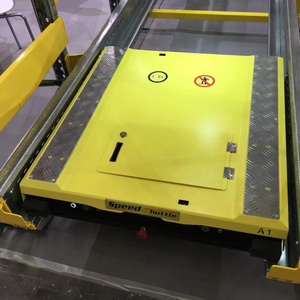
High-Efficiency Roller, Shuttle & Dynamic Storage Systems
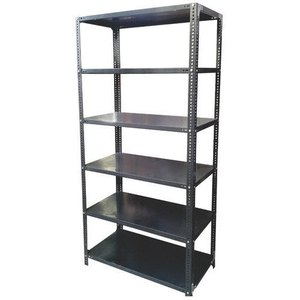
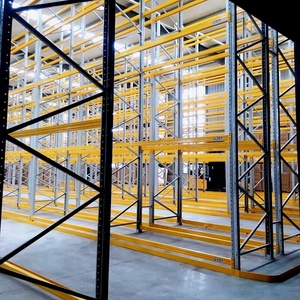
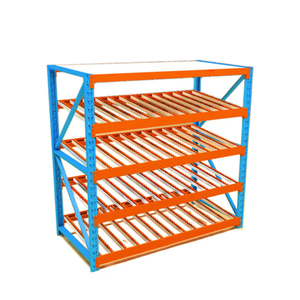
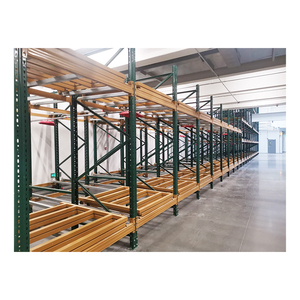
Cold-formed structural profiles precision-engineered to meet stringent FEM and RMI parameters. Sized according to client pallet footprints, operational clearance, and automated material handling specifications.
Technical Specification & Mechanics
Engineering Architecture of Gravity Pallet Flow & Roller Systems
A comprehensive analysis of kinetic energy mitigation, mechanical roller track construction, and gradient tolerances in dynamic warehouse storage.
Gradient Calculations & Flow Dynamics
The core operating efficiency of dynamic roller racking hinges on precise track inclination. Industrial gravity beds typically operate on a calibrated slope ranging between 2.5% to 4.0% (approximately 1.5° to 2.3°), tailored specifically to pallet bottom deck material (hardwood, plastic, or perimeter base steel). If the incline is insufficient, stick-slip friction arrests movement; excessive pitch accelerates load mass, posing acute impact risks to perimeter structural uprights. HEDA engineering calculates rolling resistance indices to guarantee controlled descent speeds regardless of bay depth.
Centrifugal Brake Rollers & Kinetic Damping
Uncontrolled kinetic energy accumulation in deep-lane systems (exceeding 4 pallets in depth) will compromise mechanical safety. We integrate self-governing centrifugal speed controllers that engage dynamically as pallet forward velocity exceeds 0.3 m/s. Fitted with wear-resistant polyurethane rings and maintenance-free enclosed gear assemblies, our brake rollers maintain consistent deceleration across variable load profiles (from 200 kg to 1,500 kg per pallet), isolating terminal stop plates from shearing shocks.
Separation Separators & Pressure Mitigation
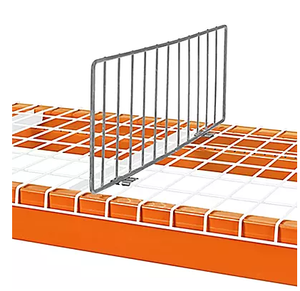
At the picking face, line pressure exerted by trailing pallets can exceed 5 tons in long runs, making forklift extraction hazardous and binding bottom pallets. HEDA incorporates mechanical load separators that lock the rear pallet stream 200mm back from the picking face. The initial pallet is extracted with zero back pressure; upon full removal, the mechanical trigger resets, releasing the secondary queue in a smooth, sequential progression that preserves pallet integrity and eliminates forklift mast strain.
Direct OEM/ODM Manufacturing Superiority
Guangzhou HEDA Shelves: 25 Years of Storage Engineering
Operating from our 30,000 square meter standardized production hub in Guangzhou, we bridge high-grade metallurgical conversion with custom parametric design to supply intralogistics infrastructure across 120+ countries.
2001
Established Milestone
30,000 m²
Guangzhou Facility
30,000 t
Monthly Cold Steel Output
120+
Global Trade Territories
Certified Structural Compliance
Certified under CE No. 2435-CPR-8605159 and ISO 9001:2015 No. 18624Q00169R0M. All load-bearing steel components undergo mechanical yield evaluations, deflection monitoring (1/200 limit parameters), and chemical spectrographic analysis.
Pre-Treatment & Corrosion Immunity
We execute multi-stage chemical surface conversion: acid pickling, degreasing, and zinc phosphating prior to electrostatic polyester powder coating. For cold rooms and tropical coastal installations, continuous hot-dip galvanization is fully supported.
Free 2D/3D CAD Layout Service
Our in-house design engineering department develops bespoke structural layouts within 24 to 48 hours. Every plan contains clear building clearances, load distribution maps, seismic moment calculations, and operational throughput simulations.
Container Packaging Optimization
Deploying specialized nesting methodologies and custom welded steel stillage frames, we eliminate in-transit deformities and maximize sea freight cube utilization from South China ports, drastically reducing total landing capital expenditures.
Standardized 10-Stage Industrial Manufacturing Matrix
01
Raw Material
Q235B/Q355B prime coil certification.
02
Precision Cut
Automated uncoiling & high-speed shearing.
03
Punching
CNC micro-pitch column punching lines.
04
Cold Bending
Progressive roll forming of uprights & beams.
05
Profiling
Continuous closed-box beam profile welding.
06
Polishing
Weld seam grinding & edge deburring.
07
Welding
Robotic gas-shielded connector joining.
08
Phosphating
Automated chemical washing & rust stripping.
09
Coating
Electrostatic powder curing at 180°C–200°C.
10
QC Pack
Tolerances audit and export container banding.
Industry Macro Intelligence
Future Procurement & Technological Trends in Roller Racking
How smart warehouses, autonomous mobile robots (AMRs), climate shifts, and carbon footprint mandates are transforming global storage procurement strategies.
Hybrid Gravity-Shuttle & AMR Integration
Warehouses are moving rapidly away from standalone gravity racks. The prevailing procurement shift merges gravity flow lanes with Autonomous Mobile Robots (AMRs) and automated radio shuttles. In these hybrid systems, automated shuttles service high-bay storage while discharge channels feed into roller-tracked FIFO buffer stages directly adjacent to AGV pick-up points. This eliminates driver handling cycles, prevents forklift collision damages to rack legs, and achieves near-zero stock latency in 24/7 fulfillment centers.
IoT-Enabled Kinetic Condition Monitoring
Predictive maintenance is becoming standard in mission-critical logistics facilities. Traditional roller systems required manual walk-throughs to identify worn bearings, defective brake rollers, or pallet jams. Next-generation installations integrate embedded acoustic and vibration sensors along roller channels. These low-power mesh nodes broadcast status data to cloud warehouse execution systems (WES), pinpointing decelerator degradation or misaligned tracks long before kinetic lockups cause facility downtime.
Cold-Chain & Decarbonization Mandates
High-density dynamic roller racks deliver direct operational carbon savings by removing forklift transit aisles inside refrigerated warehouses. Every cubic meter of unused refrigerated aisle airspace incurs perpetual power consumption. Modern enterprise buyers specify roller systems to increase pallet density by 60% within existing building footprints. Concurrently, environmental procurement rules dictate eco-certified low-VOC electrostatic powder coatings and closed-loop pickling lines—specifications fully matched by HEDA’s RoHS-compliant operations.
Engineering & Procurement FAQ
Frequently Asked Questions for Project Directors & Buyers
Detailed answers addressing load dynamics, maintenance requirements, seismic engineering, and global logistics execution.
What pallets work reliably on dynamic roller racking?
Hardwood Euro pallets (1200x800mm) and standard industrial GMA/Asian pallets (1200x1000mm) with continuous runners function exceptionally well. Plastic pallets with full perimeter bases or solid bottom decks run smoothly on steel rollers. However, pallets with missing boards, protruding nails, or non-rigid skid designs can cause jams or roller damage. We perform tilt-table roll tests with your pallet samples to specify ideal roller diameters, track counts, and spacing.
How does HEDA address seismic zone requirements?
For installations in earthquake-prone regions (such as Japan, the Philippines, Indonesia, and Taiwan), our structural engineering team calculates base plate surface areas, upright profile thicknesses, and cross-bracing patterns to resist dynamic seismic shear loads. Anchor bolts are scaled according to local concrete floor ratings, and comprehensive finite element analysis (FEA) reports can be provided to support local building permit approval.
What is the expected lifespan and maintenance for roller channels?
With correct pallet selection, our galvanized steel rollers and precision-sealed ball bearings deliver a service life exceeding 10 to 15 years. Recommended maintenance is straightforward: conduct quarterly visual inspections of brake rollers to remove debris, test spring-loaded separator levers, and clean foreign particles from the track channels. Bearings are permanently greased and sealed against industrial dust.
How are deep-lane roller systems operated in sub-zero freezers?
In cold chain environments operating down to -30°C, ordinary lubricants congeal and standard steel can suffer low-temperature embrittlement. HEDA supplies sub-zero cold room specifications: low-temperature synthetic lubricants inside brake rollers, specialized impact-resistant roller polymers, and cold-galvanized or hot-dip galvanized structural profiles to resist condensation corrosion during defrost cycles.
Transform Your Warehouse Throughput With Engineered Roller Racking
Submit your architectural CAD drawings, pallet dimensions, and handling volume targets. Guangzhou Heda Shelves delivers an engineering layout, structural load verification, and direct factory pricing within 24 to 48 hours.
Send an Inquiry