Core Industrial Pallet Racking & Storage Systems
Manufactured using Q235B high-tensile cold-rolled steel, robotic continuous seam welding, and multi-stage anti-corrosion electrostatic powder coatings. Fully customized to your SKU profile, clear warehouse height, and material handling fleet.
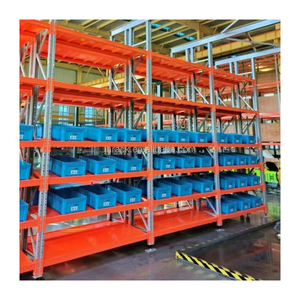
Precision bolted-upright design engineered for manual order picking, split-case carton consolidation, and medium-density workshop parts replenishment.
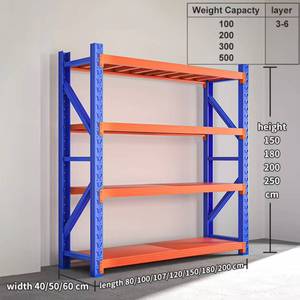
Modular post-pallet framework ideal for dynamic seasonal overflow, bulk unpalletized cargo, tyre distribution hubs, and non-standard warehouse footprints.
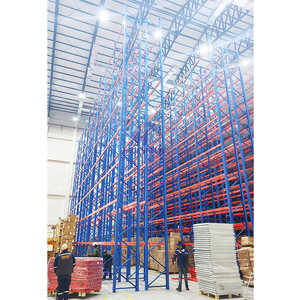
Engineered teardrop punch profile compatible with universal US/European patterns, optimized for heavy mechanical assembly, tyres, and crated goods.
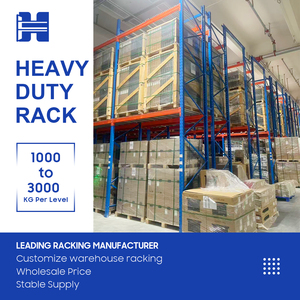
Industry-standard 100% selective accessibility framework. Allows immediate picking access to every single unit load with zero aisle-access bottlenecks.
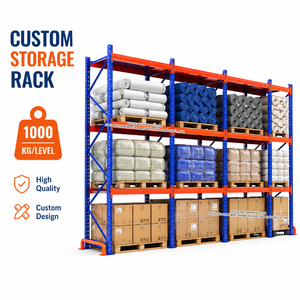
Factory-direct optimized engineering for FMCG, retail distribution, and industrial manufacturing plants demanding verified 1000kg to 2000kg beam spans.
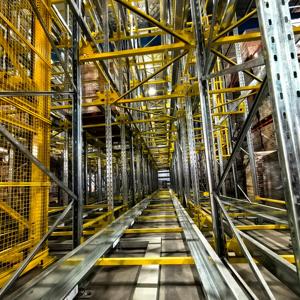
Automated ultra-dense storage engineered for sub-zero (-25°C) cold chains, maximizing thermal energy efficiency and eliminating forklift entry damage.
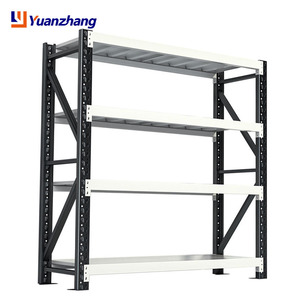
Cost-efficient, multi-purpose modular shelving system for carton picking, maintenance rooms, archive vaults, and spare hardware inventory rooms.
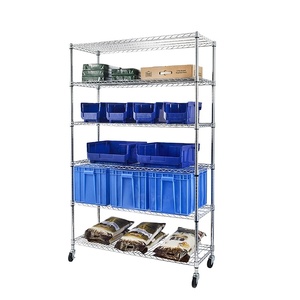
Sanitary, chrome-plated or epoxy-coated ventilated wire racks on lockable caster wheels, certified for food processing, cleanrooms, and medical supplies.
Guangzhou HEDA Shelves: A Global Leader in Storage Engineering
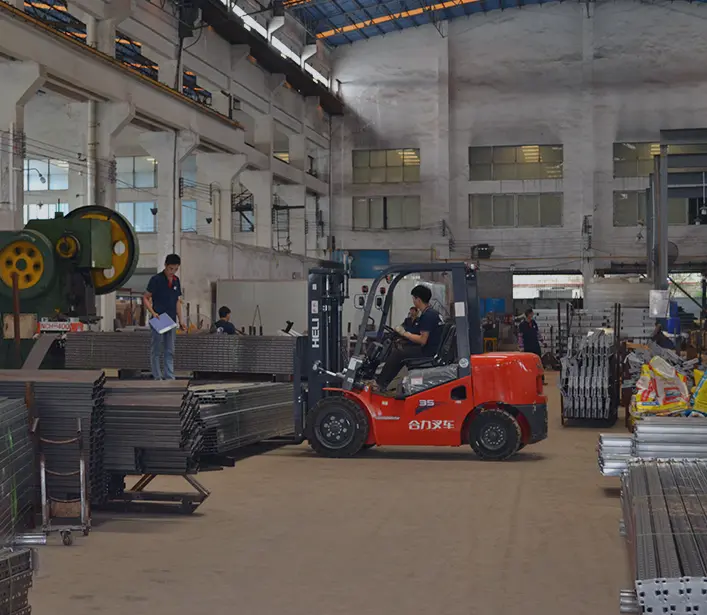
Founded in 2001, Guangzhou Heda Shelves Co., Ltd. has developed from a pioneering manufacturing facility in Guangdong into one of Asia's most sophisticated steel storage equipment exporters. Operating an integrated 30,000 m² state-of-the-art production complex, we command an industrial capacity of over 30,000 metric tons per month.
Unlike commercial trading intermediaries, every structural profile leaving our docks is cold-roll formed, CNC punched, shot-blasted, chemically pickled, and electrostatic thermoset powder-coated under rigorous ISO 9001:2015 quality surveillance. With projects deployed in more than 120 countries, our engineering division solves complex intralogistics challenges across Southeast Asia, South Asia, the GCC, Europe, and the Americas.
- Direct Mill Sourcing: Prime structural steel grades Q235B and Q355B with certified mechanical elongation and yield strength testing.
- CE Structural Attestation: Fully certified under CE No. 2435-CPR-8605159 and compliant with European standard EN 15512:2020.
- Seismic Load Validation: Finite element analysis (FEA) calibrated for high-risk zones across Indonesia, the Philippines, New Zealand, and Chile.
- In-House Turnkey Layouts: Comprehensive 2D CAD engineering plans, 3D structural visual models, and accurate pallet-position counts rendered within 24 to 48 hours.


Engineering Decision Matrix: Industrial Racking Comparison
A technical assessment framework designed for procurement managers, structural consultants, and warehouse directors to select optimal load, selectivity, and capital expenditure vectors.
| Racking System Type | Selectivity Rate | Floor Space Utilization | Pallet In/Out Rotation | Forklift Requirement | Seismic Sensitivity | CAPEX Index |
|---|---|---|---|---|---|---|
| Selective Pallet Racking | 100% (Direct) | 40% – 50% | FIFO (Unrestricted) | Standard Counterbalance / Reach | Moderate (Standard Anchor Base) | Baseline ($) |
| Double-Deep Pallet Rack | 50% (Semi-Direct) | 55% – 65% | FILO / Batch FIFO | Pantograph Double-Reach Truck | Moderate-Low | Low-Mid ($$) |
| Drive-In / Drive-Through | 15% – 20% (Bulk) | 70% – 80% | Strict LIFO (Drive-In) / FIFO | Standard Reach / Counterbalance | High (Requires Top/Back Bracing) | Moderate ($$) |
| Push-Back Cart Racking | 25% – 35% (Lane Based) | 65% – 75% | LIFO (Gravity Nested Carts) | Standard Reach Truck | Low-Moderate | Mid-High ($$$) |
| Gravity Pallet Flow | Lane Dynamic (High) | 75% – 85% | Strict FIFO (Roller Beds) | Standard Counterbalance / Reach | Moderate | High ($$$$) |
| Radio Shuttle System | Lane Automated (High) | 80% – 90% | Configurable FIFO & LIFO | Standard Lift (Shuttle Transfers) | Low (Boxed Dense Framework) | Advanced ($$$$) |
| Four-Way Shuttle AS/RS | Automated Matrix (100%) | 85% – 95% | Fully Automated Dynamic FIFO | Automated Lifts & Rail Shuttles | Engineered Integrated Lattice | High-Tech ($$$$$) |
| Rack-Supported Mezzanine | Dual Level Tiered (High) | 100% – 180% (Volumetric) | Decoupled Manual Picking / Pallet | Reach Truck + Conveyor / Goods Lift | Rigid Multi-Column Framework | Mid-High ($$$) |
Industrial Production Rigor & Quality Control
Our ISO 9001 certified manufacturing workflow spans 10 discrete engineering stages, ensuring that raw metallurgical properties are translated into flawless, code-compliant storage components.
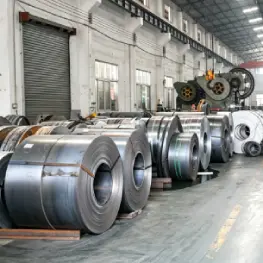
Raw Steel Assay
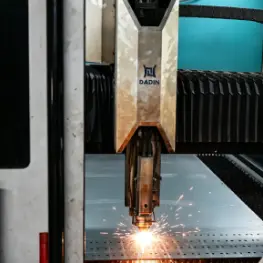
CNC Slitting
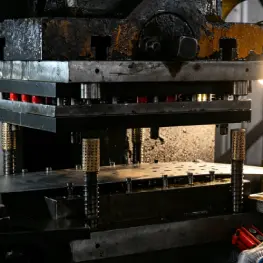
CNC Punching
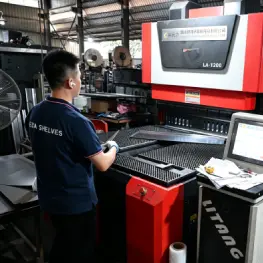
Cold Bending
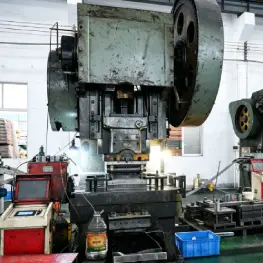
Roll Forming
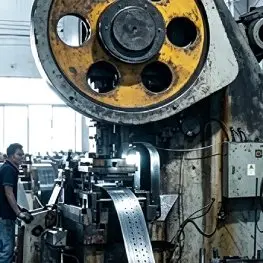
Shot Deburring
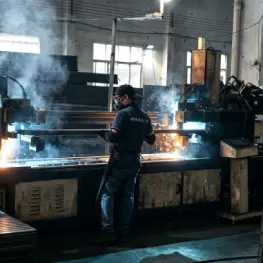
Robotic Welding
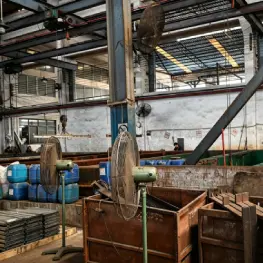
Phosphating Wash
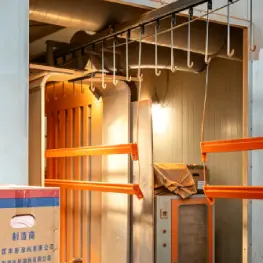
Powder Coating
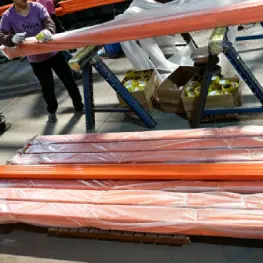
QC & Bundling
Future Sourcing & Technological Trends in Steel Pallet Racking
The modern distribution center is shifting from a passive steel framework into an active, energy-efficient technological ecosystem. Discover the macro forces reshaping warehouse procurement.
1. High-Tensile Micro-Alloy Steel Lightweighting
Global logistics centers increasingly demand Q355B and ultra-high-strength steel grades over standard Q235B. Through precision roll-forming and multi-ribbed upright cross-sections, modern racking achieves identical beam and frame capacity with up to 12% lower gross deadweight, dramatically reducing intercontinental maritime shipping fees and import tariffs.
2. Hybrid Automation & 4-Way Shuttle Convergence
The rapid rise of SKU fragmentation and urban land values has made conventional drive-in systems obsolete for high-throughput hubs. Procurement is consolidating around semi-automated 4-way radio shuttles and automated pallet cranes (AS/RS) that integrate directly into warehouse management software (WMS), achieving 90%+ cubic building utilization.
3. Tropical Cold-Chain & Coastal Corrosion Proofing
With massive cold-chain expansion across ASEAN, Latin America, and the Middle East, standard paint finishes frequently blister under continuous thermal condensation. Modern specs specify a minimum 70–90 micron electrostatic cured polyester finish with zinc-phosphate pretreatment, or full hot-dip galvanization (EN ISO 1461) capable of surviving 1000+ salt-spray hours.
4. Severe Dynamic Seismic & Ductility Codes
Warehouses across the Pacific Rim (Indonesia, Philippines, Japan, West Coast Americas) now enforce severe ductility standards. Engineers must verify second-order P-Delta structural effects, bolt grade 8.8 high-tensile connection shear ratings, and broadened baseplate anchoring dimensions conforming to Eurocode 8 or RMI MH16.1 seismic criteria.
5. Embodied Carbon & Green Factory Compliance
Global EPC contractors and international institutional developers now evaluate supplier supply-chain decarbonization. By deploying energy-efficient continuous powder curing tunnels, closed-loop effluent neutralization plants, and scrap metal recycling, compliant Chinese manufacturers provide certified carbon tracking for LEED warehouse certification.
6. Modular Mezzanine Platform Hybridization
E-commerce fulfillment operators are increasingly specifying rack-supported multi-tier mezzanines. By utilizing heavy-duty upright frames to anchor upper picking catwalks, lighting trunking, and spiral chutes, facilities double or triple active floor surfaces without altering external architectural building envelopes.
Engineering FAQ: Critical Technical & Sourcing Queries
Comprehensive answers compiled by our chief structural engineers for global procurement officers, project managers, and distributor partners.
What is the standard deflection limit for industrial pallet rack beams?
In full compliance with European EN 15512 and American RMI specifications, our load beams are calculated to an elastic deflection limit of L/200 under maximum uniformly distributed load (UDL). This ensures that a 2700mm beam bearing two 1000kg pallets deflects no more than 13.5mm, completely preventing permanent metal fatigue, secondary fastener strain, or pallet dislodgement.
How do you verify structural integrity for high-risk seismic environments?
For regions like the Philippines, Indonesia, Japan, or the Middle East, our engineers conduct dynamic finite element analysis (FEA) calibrated to local peak ground acceleration (PGA). We adjust upright column thicknesses (from 1.8mm up to 2.5mm), incorporate heavy-duty baseplates with multi-point chemical expansion anchoring, and design reinforced horizontal and diagonal K/X-bracing patterns to dissipate dynamic shear forces.
What steel grade certifications are provided with each production run?
All load-bearing members are manufactured exclusively from certified Q235B or high-strength Q355B cold-rolled carbon steel coils sourced directly from top-tier state mills (such as Baosteel and Ansteel). Every shipment includes Mill Test Certificates (MTC) detailing chemical composition (carbon, manganese, silicon, phosphorus) and mechanical tensile testing verifying yield strength (≥ 235 MPa or ≥ 355 MPa).
How does the surface pre-treatment prevent rust in high-humidity climates?
Prior to electrostatic powder deposition, all fabricated steel profiles pass through a continuous automated 9-tank pre-treatment wash. This includes chemical degreasing, rust-pickling, deoxidation, pure-water rinses, and a zinc-phosphate conversion layer. This micro-crystalline layer ensures superior chemical adhesion for our 60–90 micron thermoset polyester powder coating, preventing sub-film oxidation under tropical 95% RH environments.
How are maritime export containers packed to prevent transit damage?
Our loading engineers use 3D container cubing algorithms to maximize freight efficiency without exceeding legal road payload limits (typically 26.5 to 28 metric tons per 40HQ). Uprights and beams are bound in heavy-gauge non-woven geotextile strapping with protective corrugated channel corners. Heavy baseplates, bolts, and hardware are crated in seaworthy, fumigated wooden cases to prevent salt corrosion.
Can you provide custom engineering drawings and installation supervision?
Yes. Every layout starts with a dedicated structural CAD drawing, structural calculation report, and 3D exploded assembly diagrams. For complex projects, our multilingual engineering team provides complete step-by-step installation manuals, piece-marked tagging for all components, remote video assembly assistance, or on-site field installation managers to oversee local contracting crews.