Engineering Portfolio & Racking Configurations
Manufactured strictly via cold-formed Q235B structural steel, continuous roll-punching lines, and precision phosphating pre-treatments.
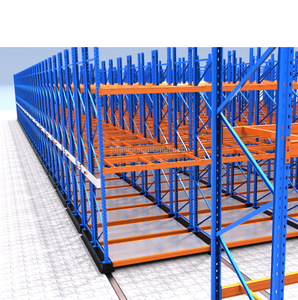
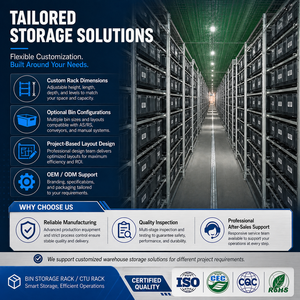
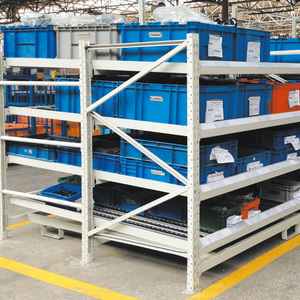
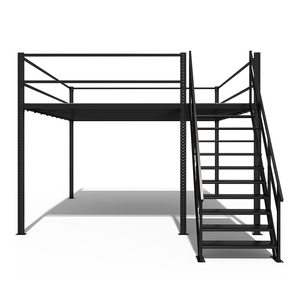
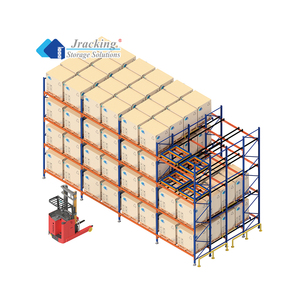
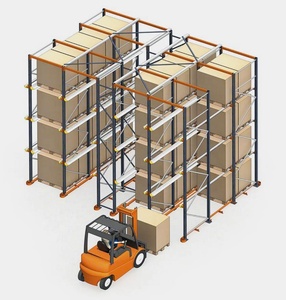
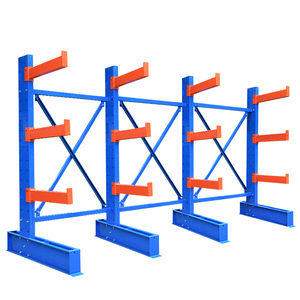
Engineering Excellence: Selective Pallet Racking Structural Dynamics
Selective pallet racking stands as the global standard for industrial inventory operations, offering an unparalleled 100% immediate selectivity metric. In contemporary supply chain management, structural reliability and spatial engineering determine operational efficiency. At our specialized manufacturing facility in Guangzhou, selective pallet racking transcends generic modular fabrication; it is designed as an engineered structural solution calculated against dynamic live loads, material fatigue thresholds, and international seismic load compliance codes including EN 15512, AS 4084, and RMI standards.
The foundational integrity of any racking bay depends fundamentally on the section profile geometry of the upright column. Utilizing continuous roll-forming techniques with automated inline punching, our columns feature multi-faceted omega profiles with up to 12 bending folds. This geometric configuration redistributes vertical gravitational vectors toward outer web profiles, yielding high buckling resistance while optimizing cold-rolled steel mass. Interlocking connections utilize 3-to-4-prong connectors robotically welded to certified box-profile beams, eliminating rotational slop and establishing joint stiffness critical for resisting frame drift during high-reach forklift docking maneuvers.
Procurement & Engineering Trends in Industrial Racking Systems
Procurement directors and supply chain engineers are navigating a fundamental transformation in logistics architecture. Specifying racking infrastructure requires cross-functional evaluation encompassing automation interfaces, local building envelopes, and environmental chemistry.
Automation & Hybrid Layouts
Standard selective profiles are increasingly engineered to accommodate automated guided vehicles (AGVs) and autonomous mobile robots (AMRs), requiring tighter manufacturing tolerances (within ±0.5 mm) for sensor recognition.
Seismic Micro-Zoning
Projects deployed in seismically active regions—such as Indonesia, the Philippines, New Zealand, or Japan—now require localized FEA (Finite Element Analysis) baseplate simulation models to prevent progressive column buckling.
Surface Chemistry & Cold Chain
With expansion across sub-zero cold-storage facilities, electrostatic thermo-setting powder resins must resist micro-cracking at -30°C, supplemented by automated hot-dip galvanizing for coastal, humid micro-climates.
Future Technology Trajectory: Intelligent Racking Infrastructures
Over the next decade, racking infrastructure will evolve from static structural steel into connected physical-digital assets. Forward-thinking procurement teams are evaluating long-term operational adaptability across multiple technological vectors:
Integrated Structural Health Monitoring (SHM): Smart racking columns are incorporating strain gauges and acceleration sensors directly into high-impact upright sections (typically between 0.3m and 1.5m floor elevation). These sensory networks provide real-time telemetry alerting facility managers to critical fork-truck impacts, structural frame distortion, or asymmetric loading configurations before progressive collapse risks occur.
High-Performance Dual-Phase Steels: Metallurgy advancements are enabling thinner profiles with significantly elevated yield points, substantially reducing shipment dead-weight, optimizing oceanic container packing efficiencies, and lowering the embedded carbon footprint per pallet position without compromising static payload security.
Manufacturing Integrity: Enterprise Factory Advantages
Operating from our certified industrial facility in Guangzhou, Guangdong, Guangzhou Heda Shelves Co., Ltd. has accumulated over 25 years of engineering experience delivering complex warehouse storage projects worldwide. Direct procurement from our manufacturing center delivers verifiable engineering governance:
Direct In-House Fabrication: Every manufacturing process—from cold uncoiling, automated multi-head progressive punching, CNC profile roll-forming, automated robotic beam seam welding, through to continuous 10-stage chemical pickling, phosphating pre-treatments, and electrostatic epoxy coating—is executed entirely within our 30,000 m² production facilities. No intermediate outsourcing safeguards critical dimensional tolerances and batch-to-batch structural integrity.
Independent Structural Engineering: Our technical team provides complete 2D architectural CAD floor layouts, photorealistic 3D structural simulations, and certified structural capacity calculations tailored to project-specific seismic ground parameters and handling equipment (VNA, Counterbalance, Reach Trucks).
Certified International Compliance: Production lines conform rigorously to ISO 9001:2015 Quality Management standards (Certificate No. 18624Q00169R0M) and European CE Marking protocols (Certificate No. 2435-CPR-8605159), ensuring smooth regulatory compliance and inspection approvals across global jurisdictions.
Engineering FAQ: Technical & Procurement Considerations
Q1 How is load capacity verified per beam level?
Payload capacity is calculated via finite element simulation and validated through physical load deflection tests adhering to EN 15512 / RMI codes. Maximum vertical deflection is strictly engineered not to exceed L/200 (span divided by 200) under full design working loads, factoring in minimum 1.5x to 1.95x safety structural factors.
Q2 What concrete slab specifications are required?
For standard selective racking reaching 6 to 10 meters, concrete slabs typically require a compressive strength of C20/25 to C25/30, with a minimum thickness of 150 mm to 200 mm, free of unreinforced surface cracks, and designed to withstand specific anchor pull-out stresses.
Q3 How does pickling & phosphating protect steelwork?
Prior to powder coating, components undergo automated immersion stages that strip mill scale and corrosion, creating a crystalline zinc-phosphate conversion layer. This micro-porous matrix maximizes mechanical adhesion for the epoxy-polyester powder, preventing paint peeling and under-film rust migration.
Q4 Can existing selective racking convert to double-deep or VNA?
Yes. Because of our standardized upright pitch patterns, selective frames can be reconfigured into Very Narrow Aisle (VNA) or paired back-to-back using heavy-duty run spacers for double-deep pantograph reach trucks, requiring minor structural adaptations to load distribution beams.
Q5 What documentation accompanies export shipments?
Every export shipment includes comprehensive container stowage packing matrices, certified raw steel chemical mill analysis sheets, mechanical tension test certificates, detailed 3D step-by-step assembly diagrams, and signed factory QC dimension records.
Q6 How do you accommodate sub-zero cold storage?
For freezing applications down to -30°C, we utilize tailored structural steel grades exhibiting low-temperature notch toughness to prevent brittle failures, paired with specialized low-cure flexible powder finishes or continuous hot-dip galvanization.
Connect Directly with Our Warehouse Engineering Team
Looking to optimize your industrial storage space, verify seismic compliance, or obtain factory-direct technical drawings? Request an engineered proposal, free 3D CAD schematic layout, and our detailed technical catalog today.
Get Catalog