Engineered High-Density Storage Solutions
Explore our export-grade industrial storage systems cold-formed from high-yield structural steel, designed for maximum volumetric utilization and international safety compliance.
Engineering Whitepaper: Maximizing Cubic Storage Efficiency in Global Logistics
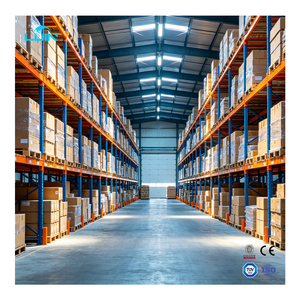
In modern industrial warehousing, industrial real estate pricing, cold-chain energy expenditures, and seismic structural requirements demand high-performance storage assets. As a leading manufacturer and exporter in China, Guangzhou Heda Shelves Co., Ltd. (founded in 2001) provides precision-machined, cold-rolled high-density pallet racking systems engineered according to rigorous international structural criteria.
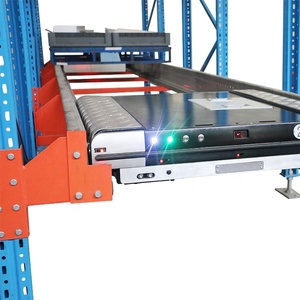
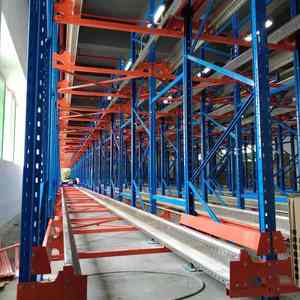
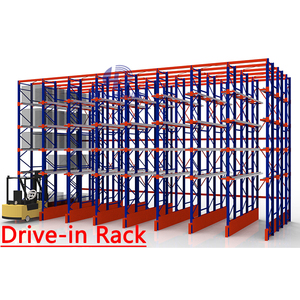
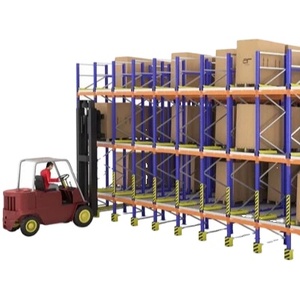
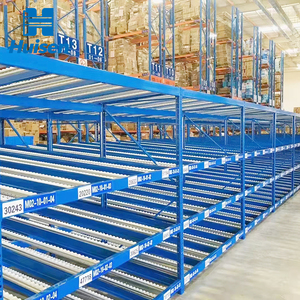
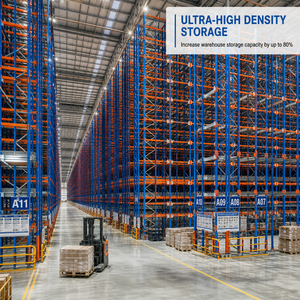
High-density racking is not a single product line; it is a strategic intralogistics discipline designed to convert dead aisle air into revenue-generating pallet positions. Whether selecting between deep-lane semi-automated Radio Shuttle systems, mechanical Drive-In arrangements, or dynamic Gravity Flow roller lanes, logistics planners must balance SKU selectivity against volumetric density.
Comprehensive Architectural Comparison: High-Density Methodologies
Procurement directors and material handling consultants must evaluate mechanical, kinematic, and spatial constraints when specifying high-density racking. Below is an engineering comparison matrix designed to assist procurement reviews:
| Racking Architecture | Volumetric Space Utilization | Inventory Rotation Principle | MHE (Forklift) Travel Cycle | Cold Chain Energy Conservation |
|---|---|---|---|---|
| Radio Shuttle System | 80% – 88% (Ultra High) | Flexible FIFO & LIFO Supported | Fast (Autonomous in-lane carrier travel) | Optimal (Reduces cubic air volume drastically) |
| Drive-In / Drive-Thru | 65% – 75% (High) | Standard LIFO (FIFO with Drive-Thru) | Slow (Forklift enters structural channel) | Moderate (High thermal mass, slow cycles) |
| Gravity Pallet Flow | 70% – 82% (High) | Strict FIFO (Gravity-assisted rollers) | Rapid (Decoupled deposit & extraction) | High (Reduces cross-dock travel time) |
| Push-Back Rack | 60% – 70% (Medium-High) | Strict LIFO (Nested gravity cart array) | Moderate (Single access face aisle) | Good for intermediate bulk chilling |
Future Procurement Trends in High-Density Pallet Racking (2025–2030)
Procurement frameworks across Southeast Asia, the Middle East, Europe, and the Americas indicate strong shifts toward high-precision and sustainable engineering. Importers are no longer securing commodity steel; they are investing in digitally integrated systems designed for lifecycle performance:
- Structural Compliance for Dynamic Seismic Zones: Infrastructure projects across seismic regions—including Indonesia, the Philippines, Japan, and parts of the GCC—require site-specific structural load calculation reports. Advanced finite element analysis (FEA) validates column buckling thresholds and upright bracing layouts under variable horizontal seismic loads.
- Semiconductor & Battery Cold-Chain Storage: Temperature-controlled environments for pharmaceuticals, biochemical reagents, and lithium cell aging demand high-tensile steel capable of withstanding brittle transition temperatures down to -30°C. Standard coatings degrade quickly in cold rooms; hot-dip galvanizing and low-temperature phosphating have become standard procurement baselines.
- Hybrid Automation Convergence: The transition toward autonomous mobile robots (AMR) and AGV counterbalance reach trucks necessitates narrower aisle tolerances. Shuttle systems are increasingly equipped with bus-communication protocols, photo-electric position referencing, and automated Wi-Fi handshakes for smart WCS/WMS integration.
- Eco-Friendly Surface Pretreatments: RoHS compliance and non-toxic zinc phosphating have replaced legacy heavy-metal coating chemistry. Zero-VOC electrostatic epoxy powder coating lines reduce environmental impact while ensuring long-term adhesion against maritime salt corrosion.
Evolutionary Engineering: The Next Technological Phase of Industrial Racks
The engineering trajectory of high-density racking focuses on structural intelligence and material optimization. Rather than relying solely on thicker gauges, modern roll-forming engineering leverages complex cold-formed cross sections with multiple stiffening ribs. These profiles deliver superior torsional and bending resistance while decreasing total dead-load weight per linear meter.
Additionally, real-time deflection monitoring using embedded IoT fiber-optic strain gauges and RFID-tagged upright protectors is advancing predictive maintenance. Warehouse directors can anticipate metal fatigue or localized forklift impact damage long before structural yield occurs, preventing catastrophic cascading collapses in deep-lane facilities.
Why Global Logistics Operators Partner with HEDA Shelves
Decades of manufacturing excellence, certified international quality standards, and localized engineering support differentiate our export operations.
Verified Certifications
Full international certification integrity including CE Certification (No. 2435-CPR-8605159), ISO 9001:2015 Management Certification (No. 18624Q00169R0M), and RoHS-compliant coatings.
In-House 10-Step Production
Complete control across 30,000 m² of factory space: raw material spectrometry, automated precision punching, cold bending, robotic welding, pickling, phosphating, and powder coating.
Free 24–48h Engineering Design
Our senior design engineers develop 2D CAD floor plans, comprehensive 3D system renderings, and structural loading simulations free of charge to de-risk investment decisions.
Anti-Corrosion Tropical Finish
Specialized multistage pickling, phosphating, and durable electro-coating formulas engineered to prevent steel oxidization in high-humidity climates across Southeast Asia and the Gulf.
Turnkey Export Packaging
Expert export loading techniques designed to maximize container volume efficiency, complete with bundled pallet bracing, comprehensive packing lists, and step-by-step installation blueprints.
Dedicated Project Engineers
Direct communication with fluent, English-speaking racking structural engineers who guide your specifications from initial clearance design through final on-site installation sign-off.
Frequently Asked Questions on High-Density Pallet Racking
Clear, technical answers to common engineering, logistical, and commercial inquiries submitted by international supply chain planners.
What warehouse metrics are required to design an accurate high-density layout?
How are seismic zone calculations incorporated into racking design?
What measures protect cold chain racking against corrosion and embrittlement?
What are the operational differences between Radio Shuttle and Drive-In racking?
How does HEDA ensure dimensional accuracy during export manufacturing?
Transform Your Warehouse Space with Certified Heavy-Duty Racking
Submit your facility floor plan and load specifications. Our engineering team will deliver a comprehensive 2D CAD layout, 3D structural model, and transparent factory-direct quotation within 24 to 48 hours.