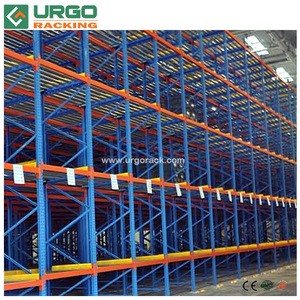
High Quality Industrial Rolling Shelves Stainless Steel Shelf Carton Flow Rack
Ergonomic Pick-Line
Specs
Custom structural manufacturing certified to FEM, RMI, and ISO 9001:2015 frameworks, engineered specifically for high bay vertical distribution, automation interfaces, and heavy footprint optimization.
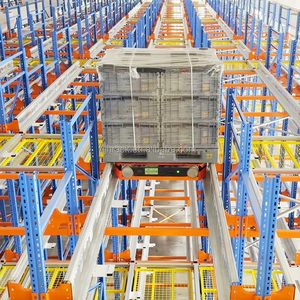
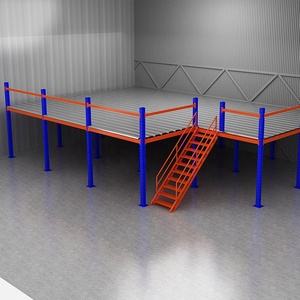
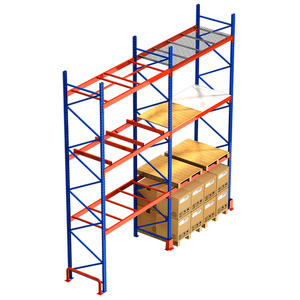
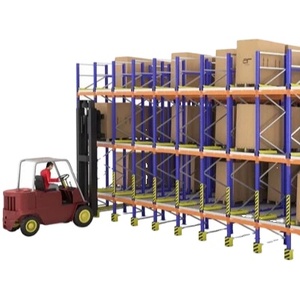
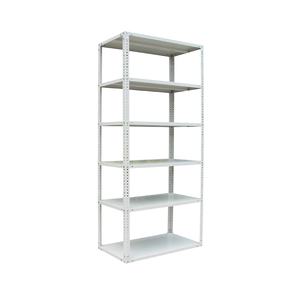
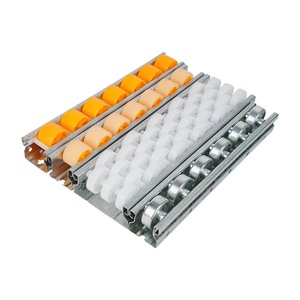
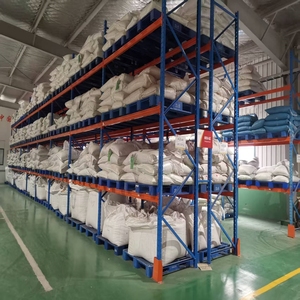
In high-throughput global supply chains, optimizing spatial density while maintaining uncompromising structural safety is paramount. High bay pallet racking systems—structures typically extending from 12 meters to over 40 meters in vertical clear clearance—represent the structural backbone of modern automated storage and retrieval systems (AS/RS) and very narrow aisle (VNA) distribution facilities. As logistics operators face skyrocketing industrial land valuations and heightened operational throughput demands, the engineering precision demanded of structural steel racking suppliers has escalated exponentially.
Exporting high bay pallet racking from China into international logistics nodes requires mastery of global engineering standards, including the European EN 15512 (Cold-formed steel storage systems), the American RMI (Rack Manufacturers Institute) MH16.1 standard, and Australian AS 4084 specifications. Structural integrity does not merely hinge on total steel volume; it is dictated by section geometric profiling, torsional rigidity of the beam-to-column connections, precise cold-bending roll-forming tolerances, and accurate seismic modeling against lateral displacement drift.
Structural failure in high bay racking is often triggered by Euler buckling of slender upright profiles or torsional flexural failure under compounding axial and eccentric load conditions. In high bay configurations, secondary moments—commonly known as P-Delta (Δ) effects—substantially amplify structural stresses as frame height increases. When a stacker crane or reach truck deposits an off-center 1,500-kilogram unit load at a 24-meter height, unbraced horizontal deflection introduces asymmetric sway forces that must be absorbed through rigid horizontal and diagonal bracing trusses.
Our manufacturing philosophy addresses structural stability at the molecular and geometry levels. We utilize certified structural high-strength steel grades such as Q235B and Q355B, ensuring that yield strength (σy) and ultimate tensile capabilities precisely match simulated load limits. Cold-bending continuous roll-forming lines punch column profiles with micro-metric accuracy, utilizing continuous 12-to-18 station roll sets that eliminate residual internal stress concentrations within the profiles, preventing localized micro-cracking and cross-sectional distortion.
For installations in tropical coastal climates (such as Southeast Asia, India, and the Middle East) or controlled-temperature cold chains (-30°C pharmaceutical and seafood storage), atmospheric moisture and condensation induce rapid chemical oxidation if surface preparation is compromised. A dependable Chinese racking manufacturer must implement an industrialized surface conversion protocol. Prior to finish application, all hot-rolled and cold-formed components must pass through chemical pickling and multi-stage immersion phosphating to fully strip scale, grease, and micro-contaminants.
Subsequently, electrostatic thermosetting powder coating is applied uniformly to a dry film thickness (DFT) averaging between 60 to 90 microns, verified through cross-hatch adhesion testing and rigorous salt-spray exposure assessments (ASTM B117). For corrosive coastal sites, specialized hot-dip galvanization protocols adhering to ISO 1461 ensure inner-wall and punched-aperture coverage, delivering multiple decades of structural lifespan without substrate compromise.
Each upright, teardrop punch, and beam connector undergoes advanced ANSYS and SolidWorks structural simulation to detect stress concentrations, ensuring compliance with global building codes.
Engineered base plate sizing, high-yield anchor bolting, and dual-axis moment frames calibrated to absorb seismic energy in active fault zones across Japan, the Philippines, and Indonesia.
Continuous twin-torch robotic welding cells guarantee penetration depth across beam-connector claw assemblies, eliminating cold lap defects and catastrophic shear failures.
Analyzing the intersection of automation integration, geopolitical sourcing strategies, and total cost of ownership (TCO) in industrial warehouse infrastructure.
The global intralogistics landscape is experiencing a definitive departure from conventional static pallet racking toward high bay dynamic automation. Warehousing operators are increasingly choosing "Clad-Rack" or "Rack-Supported Buildings," where the heavy-duty racking matrix serves a dual role: housing multi-thousand-ton inventory payloads while directly supporting external insulated wall panels, roof truss structures, and overhead crane guides. This architectural approach reduces overall civil engineering footprints, diminishes capital construction durations by up to 35%, and fully maximizes cubic airspace utilization.
Procurement teams sourcing from China are adapting their Requests for Quotation (RFQs) to mandate millimeter-grade manufacturing tolerances. Because high bay automated systems rely on optical LiDAR and autonomous mobile robotics (AMRs), horizontal beam sag under maximum load must not exceed 1/200th of the span, and vertical plumb deviation across a 30-meter height must remain within 15 millimeters. Sourcing managers must evaluate suppliers based on continuous roll-forming accuracy and modular jigs rather than sheer tonnage capacity alone.
A sophisticated industrial procurement officer recognizes that the initial capital expenditure (CapEx) represents only a fraction of total racking lifetime investment. In high bay logistics structures, premature coating degradation, floor deflection due to poor baseplate sizing, and system downtime caused by rack damage introduce massive ongoing operational expenditure (OpEx) liabilities. China's top tier suppliers now deliver complete engineering documentation: complete structural calculation packages, detailed finite element models, third-party metallurgical certificates, and standardized anchor load verification.
Moreover, circular economy dictates and supply chain elasticity are driving the demand for modular, boltless, reconfigurable framing configurations. Universal connectivity—such as universal teardrop hole patterning and standardized slotted upright designs—allows enterprise logistics networks to scale tier elevations dynamically without requiring structural frame modifications or specialized tooling.
Connect with our technical design office to receive certified structural calculations, custom 3D CAD layout models, and export-ready containerized freight schedules tailored to your facility.
Built upon 25 years of specialized metal fabrication and international warehouse execution, Guangzhou Heda Shelves Co., Ltd. delivers institutional reliability.
From prime steel coil slit-cutting, cold roll-forming, and multi-stage CNC stamping to automatic phosphating and electrostatic baking, our entire 30,000 m² facility operates without third-party outsourcing, maintaining complete dimensional accountability.
All load designs and fabrication tolerances align with European CE standard EN 15512 (Certificate No. 2435-CPR-8605159) and ISO 9001:2015 management protocols (Certificate No. 18624Q00169R0M), guaranteeing reliable site audit compliance.
Situated in Guangzhou with direct proximity to primary South China ports, we formulate optimized container-packing diagrams to ensure full volume utilization, nested frame protection, and minimal landed freight expense per cubic meter.
Direct engineering insights answering critical feasibility, safety, and logistical questions for international warehouse procurement teams.