Engineered Systems
Featured Industrial Storage & Pallet Racking Solutions
Factory-direct heavy-duty racking, automated shuttles, and custom storage infrastructure engineered for extreme loading stability and seamless international compliance.
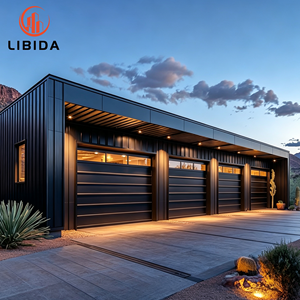
Large Span Steel Frame Storage Warehouse, Custom Prefab Steel Structure Logistics Building
View Product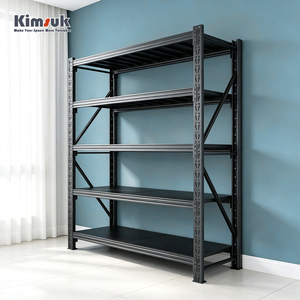
150KG-500KG Load Warehouse Wire Storage Shelf Goods Steel Rack & Shelving Etagere
View Product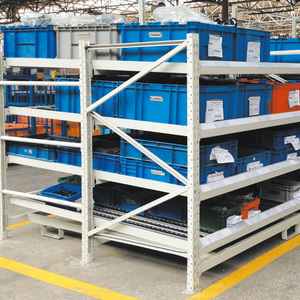
High Density Heavy Duty Cold Rolled Steel Powder Coated Flow Rack Gravity Pallet Shelves
View Product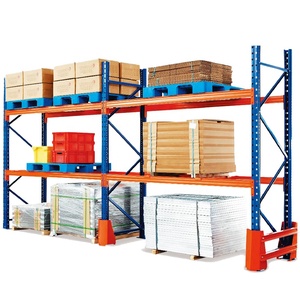
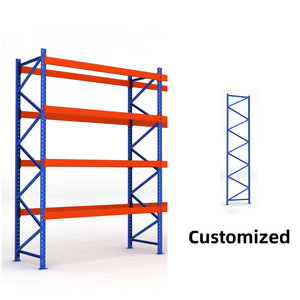
Wholesale Heavy Load Racks Adjustable Cold Rolled Steel Powder Coated Warehouse Shelving
View Product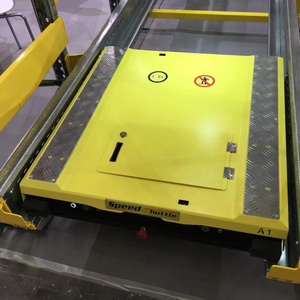
Automatic Warehouse Selective Steel Pallet Track Radio Pallet Shuttle Rack System
View Product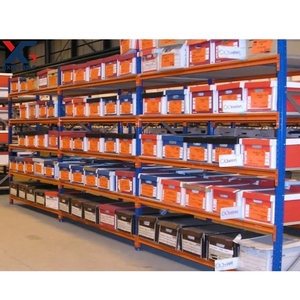
Easy To Assemble Boltless Racking Shelves Steel Stacking Storage Shelf Racks for Garage
View Product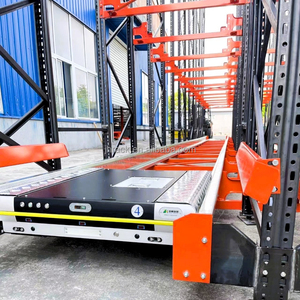
China Automatic Shuttle Rack Manufacturer Warehouse Storage Racks for FIFO System
View ProductEngineering White Paper: High-Density Double Deep Pallet Racking Architecture
In modern supply chain ecosystems, spatial efficiency and cubic footprint maximization dictate operational profitability. As enterprise land leases continue their aggressive ascent across global logistics hubs—from Southeast Asia to the Middle East, Europe, and the Americas—facility planners require racking topologies that bridge the gap between selective accessibility and high-density consolidation. A Double Deep Racking System represents the definitive mechanical balance point, engineered to place pallets two deep in back-to-back configurations, effectively eliminating 50% of the working aisles required by standard selective pallet racking.
As China’s foremost double deep pallet racking factory and heavy-duty structural exporter, our Guangzhou manufacturing infrastructure delivers precision cold-formed steel frameworks fabricated strictly from certified high-tensile structural steel (SS400, Q235B, and Q355B). Leveraging proprietary roll-forming lines, automated punch presses, and multi-axis robotic welding cells, every beam connector and upright profile conforms directly to EN 15512, FEM 10.2.02, and ANSI MH16.1 design parameters. By pairing double-reach pantograph reach trucks with precision-engineered guide rails and anti-collision upright guards, warehousing operators achieve up to a 60% volumetric utilization gain over traditional layouts without sacrificing structural resilience.
| Storage Racking Architecture | Space Utilization Ratio | Stock Rotation Model | Forklift Machinery Type | Optimal SKU Profile |
|---|---|---|---|---|
| Double Deep Racking System | 55% – 65% Cubic Efficiency | FILO (First In, Last Out) per pair | Specialized Double-Reach Pantograph Forklift | Medium-to-High volume, 2–4 pallets per SKU |
| Standard Selective Racking | 35% – 42% Cubic Efficiency | 100% Direct FIFO Access | Standard Counterbalance / Reach Truck | High SKU differentiation, single pallet units |
| Drive-In / Drive-Through Rack | 65% – 75% Cubic Efficiency | Strict LIFO (Drive-In) / FIFO (Through) | Standard Reach Truck entering rack lanes | Very homogeneous cargo, high pallets per SKU |
| Automated Radio Pallet Shuttle | 75% – 85% Cubic Efficiency | Flexible Software-Controlled FIFO/LIFO | Conventional Forklift + Automated Carrier | Cold storage, massive batch operations |
Strategic Procurement Shifts: Sourcing From China's Leading Exporter
Procurement directors and supply chain engineers evaluating international suppliers face critical criteria: metallurgical integrity, dimensional tolerances, anti-corrosive longevity, and container load optimization. When purchasing Double Deep systems from our Guangzhou export plant, overseas buyers bypass intermediate broker markups while securing verified engineering documentation:
Certified Structural Verification
Full mechanical verification backed by European CE (No. 2435-CPR-8605159) and ISO 9001:2015 registration. Independent yield point and shear testing certifications accompany every mill certificate.
Severe Environment Finishing
Proprietary 10-step surface treatment featuring acid pickling, zinc phosphating, and thermo-hardened epoxy electrostatic powder coating, with optional hot-dip galvanizing for coastal and freezing facilities.
Intelligent Container Packing
Every shipment is pre-calculated via specialized 3D packing software. Beams, upright frames, and cross-bracings are bundled with timber dunnage to prevent transport deformation and optimize sea freight cubic utilization.
Technological Horizons: The Future of Double Deep Logistics Infrastructure
The double deep racking paradigm is transitioning from static warehouse furniture to intelligent, semi-automated intralogistics nodes. Global distribution facilities are deploying automated reach automated guided vehicles (AGVs) capable of laser-guided navigation within tight double-deep corridors. Concurrently, IoT-enabled load sensors embedded directly within racking beam step-ledges monitor structural deflection, continuous load thresholds, and unexpected forklift impacts in real time.
Seismic modeling also drives racking engineering. In regions prone to seismic disturbances—such as Indonesia, the Philippines, Japan, and the American Pacific rim—our technical center develops custom finite-element analysis (FEA) models. We engineer enlarged baseplate footprints, heavy-duty floor anchoring, and reinforced transverse bracing configurations to absorb kinetic ground shear, safeguarding valuable inventory and facility personnel under dynamic seismic acceleration.
AGV & AMR Integration
Standardizing beam slots, leveling shims, and optical reflector positioning to accommodate driverless double-reach automatic guided vehicles and automated counterbalances.
Real-Time Deflection Telemetry
Integration of strain-gauge sensors on high-tier structural beams, communicating directly with Warehouse Management Systems (WMS) to prevent asymmetric overload scenarios.
High-Strength Lightweight Alloys
Deployment of specialized high-yield micro-alloyed cold-rolled steels that reduce overall dead-weight tonnage while increasing rated load capacity per pallet tier.
Procurement Intelligence
Frequently Asked Questions on Double Deep Racking
Key technical and procurement insights answered directly by our senior structural engineering and international logistics team.
What specific forklift machinery is mandatory for Double Deep systems?
Double Deep configurations necessitate reach trucks equipped with double-reach pantographs, telescopic forks, or deep-reach mast assemblies. Standard counterbalance forklifts cannot access the secondary pallet position. We calculate aisle widths (typically 2.8m to 3.2m) based strictly on your forklift's turn-radius and outer chassis specs.
How does pallet honeycombing affect Double Deep inventory efficiency?
Because the back pallet cannot be accessed until the front pallet is cleared, Double Deep functions on a FILO (First In, Last Out) basis per two-pallet slot. Honeycombing occurs if SKUs are mixed incorrectly. We recommend Double Deep systems for inventory with at least 2 to 4 pallets per SKU, ensuring near 85–90% slot occupancy.
Can bottom pallets rest directly on the warehouse concrete floor slab?
Yes. Bottom-level pallets can sit on the finished concrete slab; however, guide rails are highly recommended at floor level to align reach trucks accurately. For facilities utilizing outrigger-style reach trucks, bottom beam levels must be elevated 150–200mm off the ground so outriggers can clear beneath the first load tier.
How does HEDA guarantee steel structural safety under heavy loading?
Every project undergoes computer-aided structural FEA load modeling adhering to European FEM 10.2.02 and CE specifications. Uprights are formed with continuous omega-profile cold roll-forming with multi-point safety locks preventing accidental beam dislodgment. Structural verification calculation sheets are supplied with all project packages.
What is the standard production and shipping lead time from Guangzhou?
Standard fabrication cycle for 2 to 10 ocean containers ranges between 15 to 25 business days. With proximity to major export ports (Guangzhou Nansha, Shenzhen Yantian/Shekou), sea transit to Southeast Asian hubs takes 4–10 days, the Middle East 18–25 days, and Europe/Americas 25–35 days, accompanied by sequenced container packing maps.
Accelerate Your Facility Storage Density Today
Consult with our lead structural engineers. Receive a complete warehouse 2D CAD engineering layout, 3D visualization render, and detailed bill of materials within 24 to 48 hours.