High-Velocity Warehouse Order Picking Solutions
Direct-from-factory modular picking structures, slanted container trolleys, long-span shelving, and cold-chain radio shuttle systems engineered for zero-deflection structural integrity.
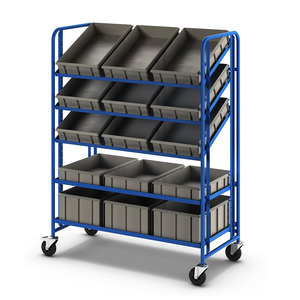
5-Level Inclined Euro Container Shelf Truck
Ergonomic gravity-fed container cart tailored for rapid piece picking, split-case handling, and lean assembly lines.
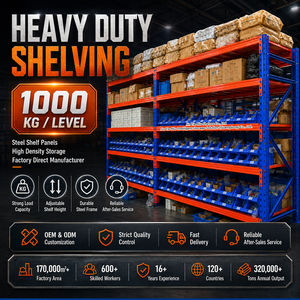
1000KG 5-Tier Industrial Beam Picking Rack
Heavy-duty cold-formed structural steel rack fitted with solid steel panels for high-density carton storage and parts picking.
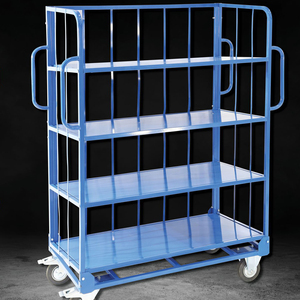
4-Layer Heavy Duty Metal Order Picking Cart
Customizable tubular steel material handling cart engineered for internal distribution, warehouse batch picking, and workshop logistics.
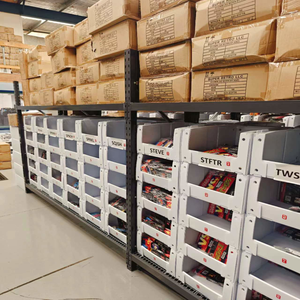
Stackable Correxed Plastic Picking Bins
Lightweight, impact-resistant polypropylene pick bins designed for clothing fulfillment, small hardware, and e-commerce sorting shelves.
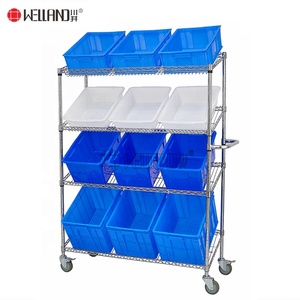
Slanted Order Picking Wire Shelving Cart
Chrome/Zinc coated open wire construction offering high ventilation, fire sprinkler penetration, and angled shelves for effortless visual picking.
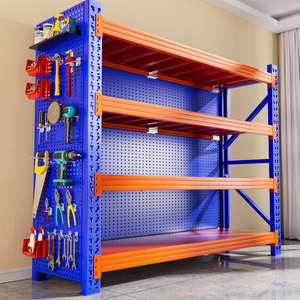
Long Span Shelving Heavy Duty Storage Rack
Adjustable boltless beam storage system offering wide clear-entry widths, ideal for manual order picking of bulky boxes and heavy tools.
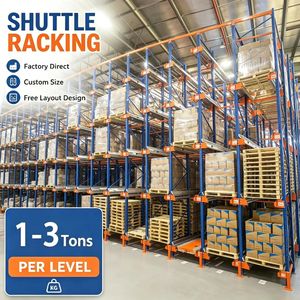
Cold Storage Radio Shuttle Racking System
Semi-automated deep-lane pallet shuttle rack engineered for ultra-low temperature (-30°C) environments, maximizing refrigeration density.
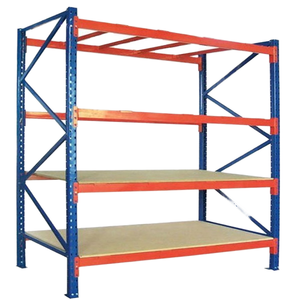
1000KG Nesrack Removable Wire Container Shelf
Heavy-duty nesting rack with wire mesh baffles and drop-gate access, delivering flexible bulk containment and dynamic modular stacking.
Technical Whitepaper: Structural Deflection, CE Compliance & Material Dynamics in Picking Racks
In modern, high-throughput automated and manual fulfillment facilities, picking racks are structural engineering assemblies subjected to continuous dynamic fatigue, uneven load distribution, and severe impact hazards.
The transition from bulk pallet storage to piece-level order picking demands an entirely different paradigm in structural calculations. Standard pallet racks are engineered primarily for uniform distributed loads (UDL) applied by forklift tines. Conversely, warehouse picking racks experience dynamic, point-loaded manual stress, horizontal impact vibrations from picker carts, and localized fatigue cycles at shelf-beam connection hooks. Non-certified racking systems sourced from unqualified fabricators frequently experience upright twist, connector clip sheared failure, and hazardous beam deflection that breaches municipal safety regulations.
Under the European standard EN 15512:2020 (Steel static storage systems - Racking - Principles for structural design) and the Construction Products Regulation (CPR 305/2011/EU), industrial picking racks marketed in international commerce must carry authentic CE marking backed by Factory Production Control (FPC) audit certifications. Our facility, Guangzhou Heda Shelves Co., Ltd., holds CE Certificate No. 2435-CPR-8605159, certifying that our cold-formed upright profiles, continuous punching precision, and robotic MIG welding lines maintain audited dimensional tolerances, yield strength consistency, and ultimate load safety margins.
Our metallurgy processes utilize certified prime grade Q235B and Q355B high-tensile hot-rolled steel coils. We strictly avoid re-rolled scrap steel, which exhibits unpredictable carbon segregation and premature stress fractures under continuous load. Structural uprights feature multi-bend Omega (Ω) and teardrop geometries calculated via finite element analysis (FEA) to maximize the moment of inertia ($I_x, I_y$) while minimizing total structural weight. Beam deflections are rigidly engineered to adhere to a maximum limit of $L/200$ for standard manual picking and an ultra-stringent $L/300$ for automated tote handling interfaces.
| Engineering Attribute | HEDA Industrial Whitepaper Specification | Standard Commodity Market Grade | Safety / Operational Advantage |
|---|---|---|---|
| Steel Substrate Grade | Certified Prime Q235B / Q355B (Yield Strength ≥ 235-355 MPa) | Mixed scrap re-rolled steel (Uncertified yield) | Zero brittle fractures under maximum dynamic impact loads |
| Structural Certification | CE No. 2435-CPR-8605159 (EN 15512:2020, EN 15620) | Self-declared mill testing (No third-party audit) | Permit-ready compliance for local building and insurance inspectors |
| Beam Deflection Limit | ≤ 1/200 (Manual) to ≤ 1/300 (Robotic Interface) | ≥ 1/150 (Visible downward sagging) | Prevents carton jamming, shelf binding, and structural creep |
| Anti-Corrosion Pre-treatment | 8-Stage Automatic Pickling & Zinc Phosphating Line | Manual solvent wipe or single water rinse | Passes ASTM B117 500-hour neutral salt spray corrosion testing |
| Welding Integrity | Robotic Continuous MIG/MAG Welding with Ultrasonic Testing | Manual spot welding with frequent slag voids | Prevents shear failure at connector clip end-plates under stress |
Corrosion mitigation represents another critical technical parameter for long-term supply chain durability. In Southeast Asia, coastal logistics zones, and refrigerated distribution hubs, relative humidity frequently exceeds 85%. Standard air-dry liquid spray coatings chip and rapidly oxidize, exposing structural cold-rolled steel to pitting rust. HEDA Shelves integrates a 400-meter fully enclosed continuous conveyor pre-treatment system that performs alkaline degreasing, twin-stage water rinsing, acid pickling to eliminate mill scale, and micro-crystalline zinc phosphating before curing. The final thermoset epoxy-polyester powder coating (RoHS compliant) is electrostatically applied at 60 to 80 microns thickness and baked at 200°C, producing an impervious barrier that resists heavy mechanical impacts and harsh chemical washdowns.
Future Procurement Trends for Warehouse Picking Racks
Market intelligence for procurement directors, logistics engineers, and 3PL supply chain strategists preparing for the next generation of omnichannel fulfillment demands.
1. High-Density Micro-Fulfillment
Rising urban industrial rents are forcing distributors away from sprawling horizontal layouts. Procurement managers are prioritizing multi-tier rack-supported picking platforms and narrow-aisle long-span systems that double or triple usable pick faces within existing building perimeters.
2. Ergonomics & "Golden Zone" Engineering
Labor shortages and workplace safety mandates require picking shelves designed around natural human biomechanics. Procurement specifications now mandate slanted container presentations and adjustable shelf pitches that eliminate repetitive bending, reducing picker fatigue and picking errors by over 35%.
3. Hybrid AMR & Human Co-Picking Synergy
Warehouses are shifting from purely manual operations to collaborative robotic environments. Next-generation picking racks must feature precision-aligned lower guidance channels, high clearance base plates, and unobstructed vertical clearance to accommodate Autonomous Mobile Robots (AMRs) operating alongside manual order pickers.
4. Total Cost of Ownership (TCO) & Modular Resilience
Global procurement teams are transitioning away from light-duty disposable shelving. Leading enterprise buyers demand bolted upright frames with field-replaceable bracing and beam levels adjustable in 50mm increments. This reconfigurability guarantees that structural assets adapt effortlessly to evolving SKU dimensions without requiring complete facility re-racking investments.
Next-Generation Engineering Innovations in Picking Racks
How digital integration, intelligent sensor telemetry, and dynamic metallurgy are transforming traditional static warehouse steelwork.
Dynamic Gravity Carton Flow Integration
Static picking shelves are increasingly augmented with modular roller tracks and friction speed controllers. Gravity carton flow systems enforce strict FIFO (First-In, First-Out) stock rotation, separating replenishment corridors from active picking faces to eliminate aisle traffic congestion in grocery and pharmaceutical operations.
IoT Structural Health & Deflection Sensors
Modern mega-fulfillment centers are beginning to deploy optical and strain-gauge sensors embedded directly into high-bay upright columns. These modules monitor dynamic impact events, forklift collisions, and unapproved weight overloads in real time, alerting maintenance managers before structural yield points are reached.
Sustainable Zero-VOC Finishes & Green Steel
Global supply chain decarbonization targets (Scope 3 emissions) are reshaping manufacturing criteria. Future picking rack factories are transitioning to hydrogen-reduced direct-reduced iron (DRI) steel coils and 100% recyclable, zero-solvent electrostatic powder coating formulations that minimize environmental impact without sacrificing industrial corrosion resistance.
Guangzhou HEDA Shelves: 25 Years of Engineering Excellence
Founded in 2001, Guangzhou Heda Shelves Co., Ltd. operates a world-class manufacturing facility delivering turnkey racking and shelving systems to over 120 countries.
Verified 10-Stage Precision Manufacturing Workflow
Prime Raw Steel Inspection
Verification of chemical composition, elongation, and yield strength on every master coil of Q235B/Q355B.
CNC Precision Slitting
High-speed automated coil slitting ensuring burr-free edges and micrometer-accurate strip widths.
Continuous Multi-Hole Punching
High-tonnage mechanical punching presses maintaining 50mm pitch accuracy without metal distortion.
Cold Roll-Forming
Multi-stand precision rolling mills shaping high-strength upright Omega sections with uniform wall thickness.
Laser Cutting & Bending
High-power fiber laser cutting of connection claws, base plates, and safety beam clips for tight tolerances.
Robotic MIG/MAG Welding
Dual-station robotic welding cells ensuring complete joint penetration and zero weld spatter on beam connectors.
Weld Seam Polishing
Mechanical surface finishing to remove sharp corners and ensure seamless mechanical contact points.
8-Stage Pickling & Phosphating
Complete immersion degreasing, rust removal, and zinc phosphating forming a dense anti-corrosion barrier.
Electrostatic Powder Coating
Automated Swiss Gema powder spray booths applying 60-80μm epoxy coating cured in a 200°C tunnel kiln.
Load Testing & Safe Bundling
Destructive deflection checks, custom wooden crating, and optimized export container packing schemes.
Frequently Asked Questions on Picking Rack Procurement
In-depth technical answers addressing engineering standards, certifications, environmental protection, and site-specific structural customizations.