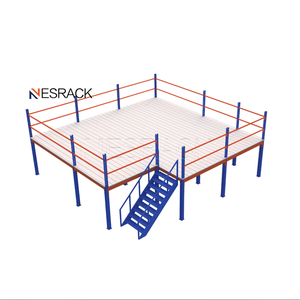
Engineered Storage Portfolio
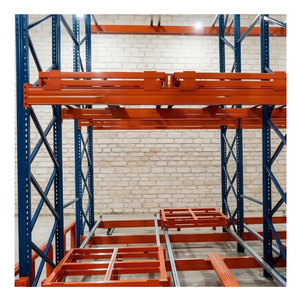
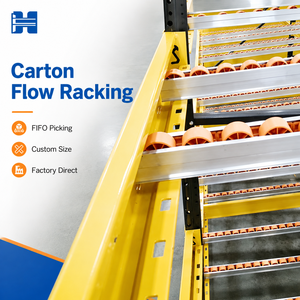
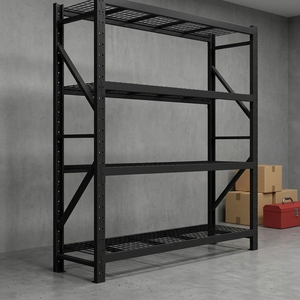
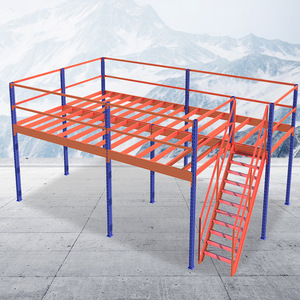
Featured Industrial Warehouse Storage & Mezzanine Systems
Every system is precision roll-formed from premium certified cold-rolled coil, engineered specifically to your architectural envelope, unit load dynamics, and seismic profile.
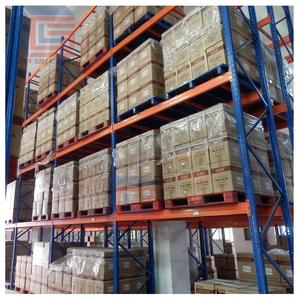
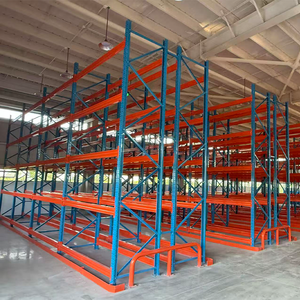
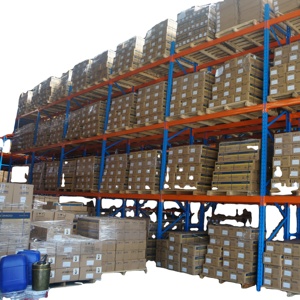
Technical Whitepaper: Engineering Rigor
Structural Design Paradigms for CE Certified Stackable Warehouse Racks
In modern industrial logistics, stackable warehouse racking systems have transitioned from passive steel frameworks into precision-engineered, load-responsive structural assets. The specification of stackable and modular racking systems demands rigorous compliance with the European Standards EN 15512:2020 (Steel static storage systems – Adjustable pallet racking systems – Principles for structural design), EN 15620 (Tolerances, deformations and clearances), and EN 15635 (Application and maintenance of storage equipment). True structural compliance ensures that under maximum permissible unit load configurations, the limit states for serviceability (SLS) and ultimate failure (ULS) are governed by finite calculation models rather than empirical guesswork.
Key Engineering Metric: Under EN 15512 guidelines, cold-formed structural members (such as upright omega-profiles and boxed step beams) must maintain elastic-plastic equilibrium with safety factors typically exceeding 1.4 for dead/live load combinations, incorporating second-order p-delta effects ($P-\Delta$) caused by lateral sway displacement in seismic zones.
A primary structural failure mechanism in high-capacity stackable racks is torsional-flexural buckling of thin-walled open sections. Industrial manufacturers must integrate specialized upright perforation patterns (typically 50mm or 75mm pitch diamond and teardrop geometries) that minimize cross-sectional steel loss while maximizing beam-connector mechanical interlock. Cold-rolled certified high-tensile steels, notably Q235B and Q355B (equivalent to European S235JR and S355JR), provide the essential yield stress ($f_y \ge 355 \text{ MPa}$) and elongation ductility required to absorb both vibrational dynamic fatigue from Material Handling Equipment (MHE) and micro-seismic base shear acceleration.
| Engineering Dimension | Standard Commercial Racks | CE Certified Industrial Racks (EN 15512) | Automated Integration Grade |
|---|---|---|---|
| Steel Substrate Grade | Standard Q195 / Q215 Commercial | Certified S235JR / S355JR (Q235B/Q355B) | High-Yield Micro-alloyed S355MC |
| Deflection Limit Ratio ($\delta$) | $L/150$ to $L/180$ | $\le L/200$ strict under full design load | $\le L/300$ for AS/RS Optical Sensor Clearance |
| Surface Chemical Pre-treatment | Manual wiping or single degrease | Automated Pickling & Phosphating (7-stage) | Shot-blasting Sa 2.5 + Nano-ceramic pre-coat |
| Finish Coating Thickness | 40–50 $\mu\text{m}$ single pass | 70–90 $\mu\text{m}$ Electrostatic Thermoset | Dual-layer Polyurethane / Hot-Dip Galvanized |
| Seismic & Fatigue Analysis | Static equivalent check only | Finite Element (FEM) Modal Dynamic Calculation | Spectral Response Calculation (P-Delta Verified) |
Corrosion protection plays an equally critical role in industrial rack longevity. Structural degradation caused by chemical vapor intrusion, coastal saline exposure, or condensation cycling in deep-freeze cold chains (-30°C) directly diminishes upright thickness. To counteract galvanic decay, precision automated manufacturing utilizes a multiphase pre-treatment: alkaline immersion degreasing, ultrasonic water rinsing, hot pickling, and microscopic zinc phosphate conversion coating. This substrate prep provides superior mechanical anchor points for thermosetting polyester powder coatings, meeting ASTM B117 salt spray endurance benchmarks in excess of 500 hours without edge peel or subcutaneous oxidation.
Strategic Procurement Forecast
Future Procurement & Technological Trends in Warehouse Racking
How digital engineering, global compliance shifts, and automated throughput requirements are reshaping modern industrial procurement decisions.
1. Transition to Hybrid Dynamic High-Density Systems
Global warehouse footprints face escalating land lease valuations. Corporate buyers are pivoting from purely static selective layouts toward hybrid configurations: integrating radio shuttle automation, push-back carts, and gravity flow rollers into rack structures to boost spatial utilization by up to 65% per cubic meter.
2. Digital Twin & BIM Structural Modeling
Modern engineering procurement mandates complete Building Information Modeling (BIM) data integration. Racking structural models are pre-validated via REVIT and 3D FEA stress simulations before manufacturing, eliminating spatial clashes with sprinkler lines, HVAC mains, and automated guided vehicles (AGVs).
3. Total Cost of Ownership (TCO) Lifecycle Sourcing
Procurement teams are shifting focus from baseline initial FOB unit price to Lifecycle TCO metrics. Certified anti-corrosive treatments, column base impact-deflector designs, and interchangeable beam connectivity mitigate rack repair downtime and reduce structural maintenance overhead over a 20-year operational horizon.
Enterprise Manufacturing Competence
Why Tier-1 Contractors and Global Distributors Partner with Us
From single distribution centers to multi-tiered automated logistics hubs, our factory delivers direct accountability, certified structural precision, and turnkey scalability.
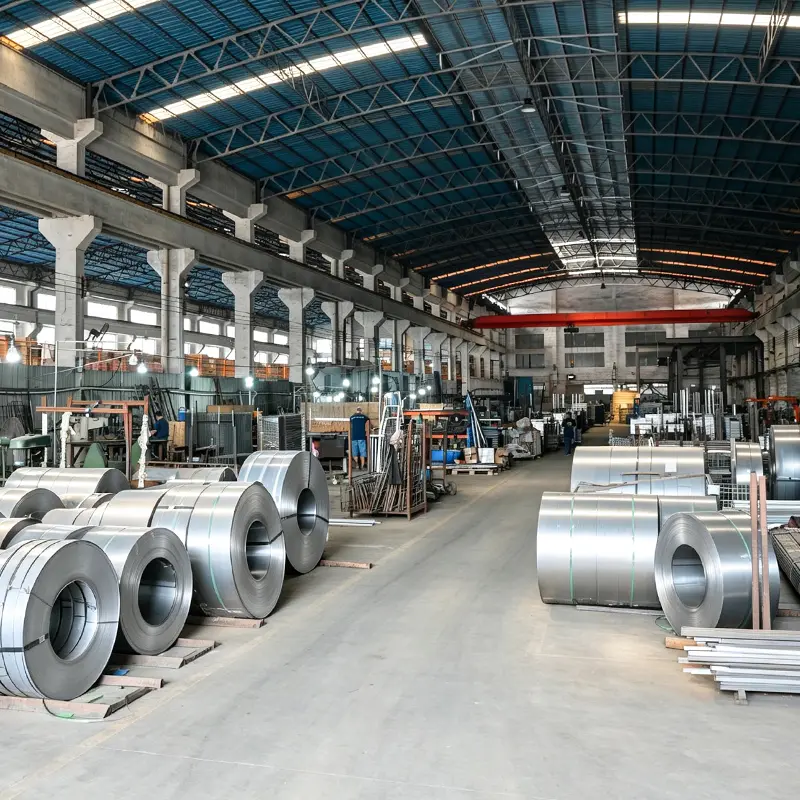
25+ Years Industrial Authority
Established in 2001, Guangzhou Heda Shelves Co., Ltd. operates a 30,000 m² automated production facility with 300+ engineering and operational specialists delivering certified storage solutions globally.
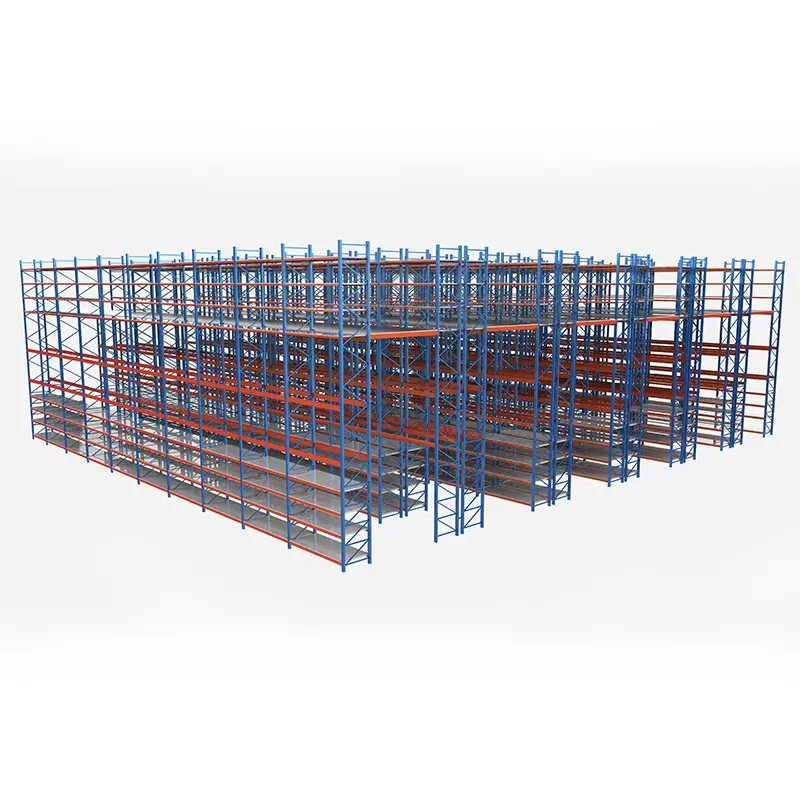
Rapid CAD & 3D Static Modeling
Our senior structural engineering division provides parametric 2D CAD architectural layouts, 3D volumetric renders, and full finite load calculations within 24 to 48 hours to streamline your project sign-off.
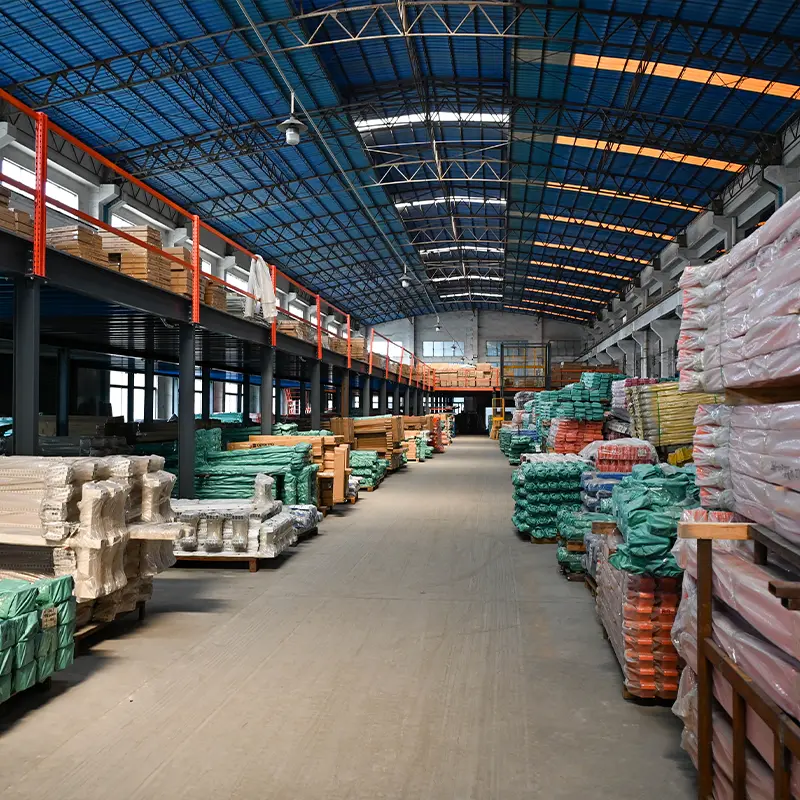
Verified Certification Credentials
Full regulatory governance with authentic CE Certification (No. 2435-CPR-8605159), ISO 9001:2015 Quality Management System verification (No. 18624Q00169R0M), and RoHS environmentally certified coatings.
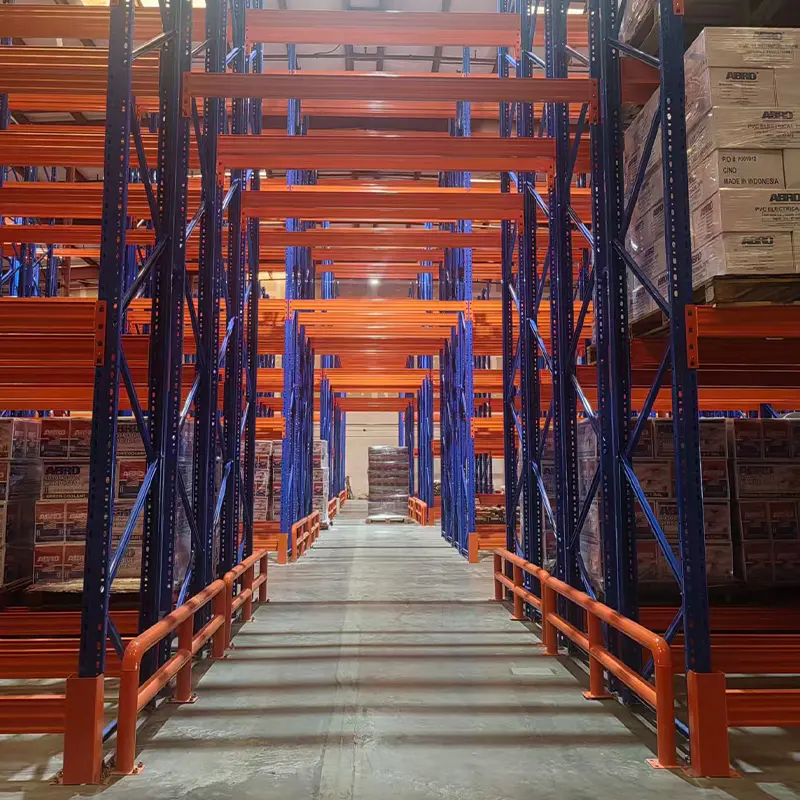
Custom OEM / ODM Roll-Forming
Precision-engineered column profiles, variable cold-rolled thickness (1.5mm to 3.0mm), custom pitch spacing, and hot-dip galvanizing options engineered specifically to withstand challenging chemical and tropical environments.
2001
Founding Year
30,000m²
Plant Facility Area
30,000t
Monthly Steel Throughput
120+
Global Export Markets
Procurement Due Diligence
Frequently Asked Questions by Industrial Sourcing Directors
Authoritative technical answers covering European certification, seismic safety engineering, coating chemistry, and container logistics planning.
What specific standards validate a racking manufacturer as truly "CE Certified"?
CE compliance for structural steel storage racks is governed by the Construction Products Regulation (CPR 305/2011/EU) and executed under harmonized standard EN 1090-1 / EN 1090-2 (Execution of steel structures) along with EN 15512. Authentic manufacturers must hold a valid Factory Production Control (FPC) certificate issued by an accredited European Notified Body (such as Certificate No. 2435-CPR-8605159). This confirms mill test tractability for raw steel, certified welder qualifications (ISO 9606-1), and verified weld penetration non-destructive testing (NDT).
How does engineering adapt stackable and pallet racks for high-risk seismic zones?
For seismic regions (such as the Pacific Ring of Fire including Indonesia, the Philippines, Japan, and parts of the Middle East), calculations follow EN 16681 guidelines. Our engineers calculate spectral response accelerations ($S_s, S_1$), increase baseplate contact surface dimensions, integrate double-anchor bolting into certified concrete slabs ($f'_c \ge 25 \text{ MPa}$), thicken upright gauge sections from 1.8mm to 2.5mm+, and optimize X-bracing diagonal patterns to dissipate lateral kinetic shear.
What chemical treatments are applied to prevent premature corrosion in humid or cold storage settings?
All steel components undergo a computerized multi-stage chemical bath process: acid pickling to eliminate mill scale, followed by iron/zinc phosphating to create an anti-oxidant crystalline barrier. Afterward, thermosetting TGIC-free polyester powder is electrostatically deposited and baked at 180°C–200°C. For sub-zero blast freezers (-30°C) or open maritime coastal sites, hot-dip galvanizing compliant with ISO 1461 (yielding a protective zinc mass $\ge 500 \text{ g/m}^2$) is supplied to eliminate flaking and rust creep.
What technical parameters are required to calculate an accurate load layout design?
To provide comprehensive 2D CAD layouts and 3D FEA stress simulations, our engineering team requires:
- Architectural DWG or dimensioned building layout showing column grids and clear height to lowest sprinkler head or truss bottom;
- Unit load profiles: pallet dimensions ($W \times D \times H$), including overhang, and maximum gross loaded weight;
- Material handling equipment (MHE) profile: forklift turning radius (Aisle width Ast), mast lift elevation, and outrigger specs;
- Inventory operational throughput: total SKU count, FIFO vs. LIFO rotation rules, and environmental temperature parameters.
How are high-volume export orders secured against shipping damage and container racking?
Export components are packed according to pre-modeled 3D container loading diagrams. Beams and upright frames are nested in structural steel bundles with internal corrugated cushioning, banded using high-tensile steel strapping, and wrapped in protective moisture-barrier stretch film. Small hardware items (bolts, base plates, safety lock pins) are boxed in labeled heavy-duty wooden crates, preventing transit shifting and accelerating on-site contractor sorting upon container de-stuffing.
Request an Engineered Layout & Certified Load Calculation
Connect directly with our senior structural logistics engineering team. Receive comprehensive 2D CAD site plans, 3D parametric renderings, structural load capacity verification, and a transparent factory-direct quotation within 24 to 48 hours.
Get a Quote