Automated RGV
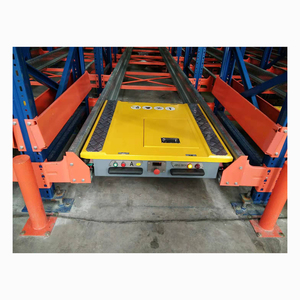
Warehouse Economic RGV Shuttle Pallet Shuttle Rack System Equipment
- High-speed Rail Guided Vehicle
- Load: Up to 1,500 kg/pallet
Guangzhou HEDA Shelves Co., Ltd. delivers high-density automated radio pallet shuttle systems engineered to European EN 15512 structural standards and Machinery Directive 2006/42/EC safety protocols.
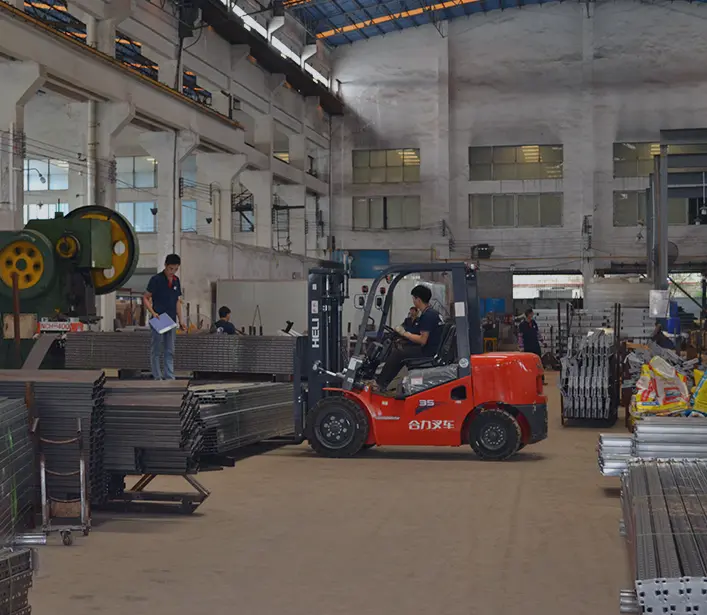
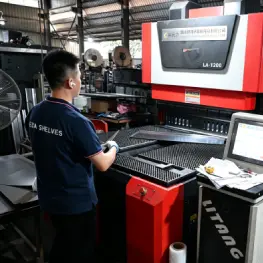
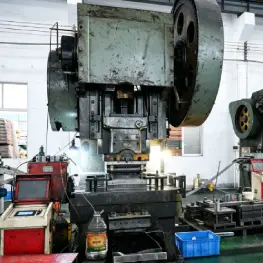
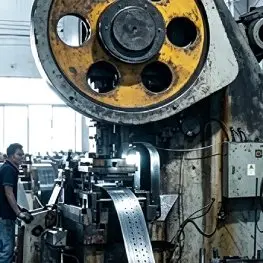
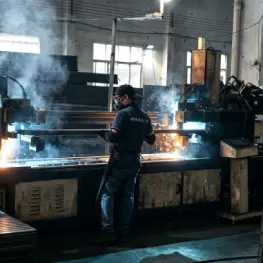
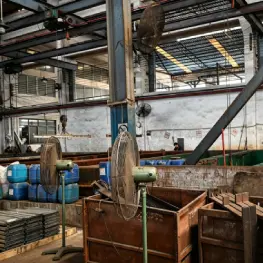
Manufactured in our 30,000 m² Guangzhou production facility, each system is calibrated for precision rail tolerances, heavy cold-rolled structural capacity, and seamless automated warehouse integration.
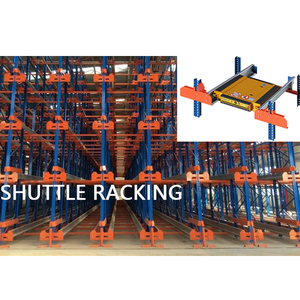
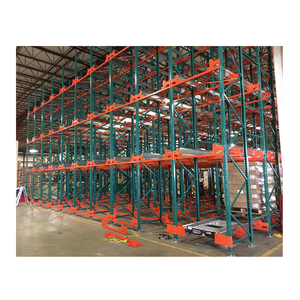
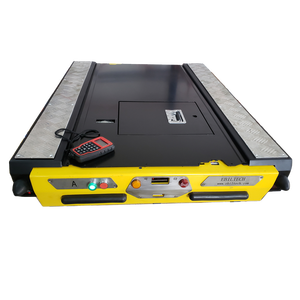
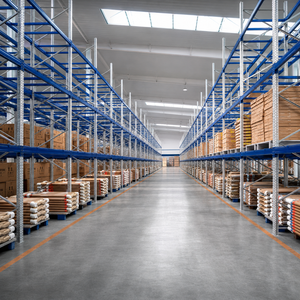
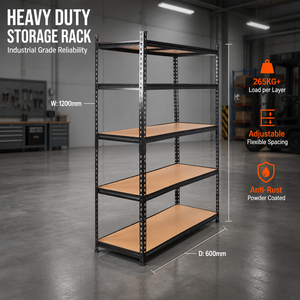
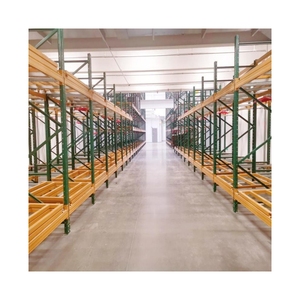
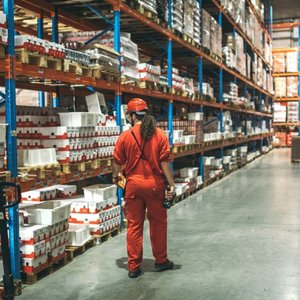
In automated warehousing, pallet shuttle racking stands out as the ultimate density-to-throughput solution. However, unlike static pallet racking or basic drive-in systems, a semi-automated radio shuttle installation operates as a hybrid electro-mechanical structure. Rigorous compliance with European Union directives is non-negotiable for system reliability, structural lifespan, and worker safety.
At Guangzhou HEDA Shelves Co., Ltd., our engineering process unifies two essential regulatory pillars: the structural integrity criteria mandated under EN 15512:2020 (Steel static storage systems – Adjustable pallet racking systems – Principles for structural design) and the mechatronic safety protocols governed by the Machinery Directive 2006/42/EC and EMC Directive 2014/30/EU for the automated shuttle carrier.
| Evaluation Parameter | HEDA CE Certified Specification (EN 15512) | Standard Non-Certified Racking | Impact on Facility Lifecycle |
|---|---|---|---|
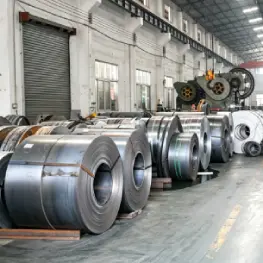
| Steel Grade & Yield Strength | Certified Q235B & Q355B (EN 10025 High Tensile Cold-Rolled) | Commercial Scrap-Blended Q195 / Q215 | Eliminates micro-cracks and structural fatigue under high-cycle dynamic loading. |
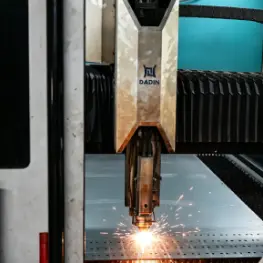
| Rail Alignment Tolerance | ±1.0 mm per 10m length; continuous zinc-plated roll profile | ±3.5 mm to 5.0 mm stamped sheet steel | Prevents shuttle wheel jamming, drive motor overheating, and sensor misalignments. |
| Dynamic Deflection Ratio | Max L/400 under maximum rated payload (1,500 kg) | L/200 or lower unrated sag limits | Maintains optical sensor leveling and prevents rail binding during rapid transport. |
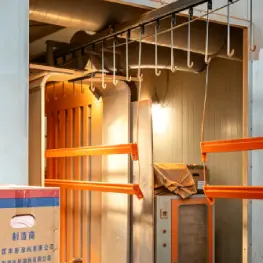
| Surface Pre-Treatment | 8-Stage Immersion Pickling & Phosphating (RoHS Compliant) | Manual solvent wipe or single-wash rinse | Guarantees 1,000+ hours salt spray resistance; stops rust propagation beneath powder coats. |
| Shuttle Battery Safety | Lithium Iron Phosphate (LiFePO4) with active BMS thermal shutdown | Standard Ternary Lithium or Lead-Acid batteries | Zero risk of thermal runaway; certified for continuous -30°C to +45°C cold chain operation. |
As logistics operations shift from manual handling to semi- and fully-automated hubs, procurement directors are re-evaluating long-term return on capital expenditures (CAPEX) through the lens of warehouse software connectivity, multi-directional kinematics, and energy efficiency.
While standard 2D radio shuttles operate along a single linear rail lane with forklift repositioning, market procurement is rapidly evolving toward 4D multi-directional shuttles. These units navigate across horizontal picking lanes and transfer across vertical elevator lifts, transforming deep-lane racks into fully autonomous, lights-out AS/RS platforms without requiring aisle-bound stacker cranes.
Modern B2B enterprise RFQs now explicitly require Warehouse Control Systems (WCS) that offer open API / REST architecture to interface directly with SAP, Manhattan, or Oracle WMS. Digital twin software models track shuttle battery cycle health, wheel wear profiles, and pallet positioning accuracy in real time, minimizing unexpected downtime through proactive predictive maintenance.
High power costs make cooling empty warehouse aisles unsustainable. Food, dairy, and pharmaceutical suppliers are adopting shuttle racking because it captures over 80% of building cube volume. New procurement standards demand anti-condensation heating elements on optical sensors, specialized synthetic low-temperature lubricants, and dual LiFePO4 battery swapping systems that eliminate condensation shock.
Procurement teams are moving away from selecting suppliers based solely on initial steel fabrication prices. Long-term operating analyses confirm that CE-certified shuttle systems cut forklift maintenance costs by 65% by eliminating rack impacts, reduce pallet handling labor costs by up to 50%, and lower building footprint requirements by 40% compared to traditional selective racking.
Choosing the correct storage geometry requires balancing floor utilization against throughput velocity. While traditional Drive-In racking provides high density at a low initial cost, it often incurs excessive pallet-handling damage and slow cycle times. Pallet Shuttle systems offer a modern engineering bridge between low-cost static racking and fully automated multi-million dollar AS/RS stacker cranes.
| Storage System Type | Floor Space Utilization | Throughput Speed | Forklift Damage Risk | Operating Strategy | Relative CAPEX / ROI |
|---|---|---|---|---|---|
| Radio Pallet Shuttle | 80% – 85% (Ultra High) | High (Cart runs up to 1.0 m/s inside channel) | Near Zero (Trucks never enter the storage channel) | FIFO or LIFO flexible | Moderate CAPEX; Fast ROI within 18–24 months |
| Traditional Drive-In Rack | 65% – 75% (High) | Slow (Forklift cautiously drives into deep lanes) | Extremely High (Frequent post & beam impacts) | LIFO only (Strict batching) | Low initial CAPEX; High structural repair & labor costs |
| Push-Back Carts / Flow | 70% – 75% (Moderate-High) | Moderate (Gravity assisted roll) | Low-Moderate (Operates at entry face) | LIFO (Push-back) / FIFO (Flow) | Moderate CAPEX; Limited to 4-6 pallet lane depths |
| Automated AS/RS Stacker Crane | 85% – 90% (Maximum) | Very High (Automated crane mast) | Zero (Fully autonomous operation) | Strict FIFO / Real-time WMS | Very High CAPEX; Extended ROI period (4–7 years) |
Founded in 2001, Guangzhou HEDA Shelves Co., Ltd. has established itself as an authoritative manufacturer and exporter of automated warehouse storage structures across Europe, Southeast Asia, South Asia, and the Middle East.
All load-bearing profiles are designed in accordance with CE 2435-CPR-8605159, ISO 9001:2015, and FEM 10.2.02 codes. Certified calculation reports and material test sheets accompany every commercial shipment.
Our in-house structural engineers formulate custom warehouse layout schematics, calculate static/seismic load envelopes, and deliver complete 3D design models within 24 to 48 hours without engineering fees.
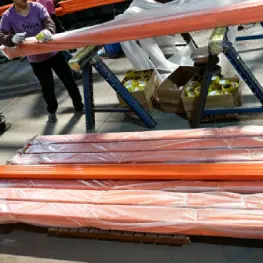
Our Guangzhou manufacturing plant provides direct freight access via Nansha, Huangpu, and Shenzhen ports. Optimized container packing diagrams maximize shipping weight to minimize per-pallet ocean freight rates.
We engineer customized baseplates, bracing geometries, and anchors for earthquake zones (Indonesia, Philippines, Japan), along with hot-dip galvanizing for humid tropical regions and cold chain storage.
Technical, structural, and contractual answers provided by the HEDA engineering department to streamline your project vetting and import process.