[email protected] Serving Southeast Asia, South Asia & the Middle East
EN
Industrial Intralogistics Whitepaper & OEM Directory

CE Certified Roller Pallet Racking Systems Factories & Factory

Precision-engineered gravity flow, live storage rollers, and high-density dynamic racking. Direct factory manufacturing adhering strictly to EN 15512, ISO 9001:2015, and CE CPR execution standards.

Standard & Heavy-Duty Product Portfolio

Engineered Dynamic & Static Racking Solutions

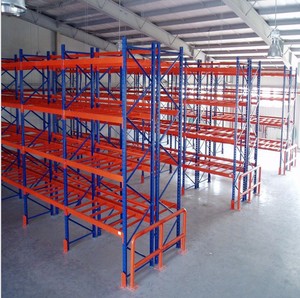
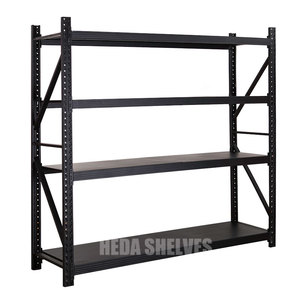
HEDA Shelves supplies global 3PL operators, cold-chain fulfillment hubs, and heavy manufacturing facilities with precision-rolled storage racking. Inspect our flagship system architectures below.

2001.EST
Over 25 Years Manufacturing
30,000m²
Guangzhou Plant Capacity
10,000+
Global Warehouse Turnkeys
120+
Countries & Ports Exported
Technical Engineering Whitepaper

Roller Pallet Racking Mechanics: Design, Physics & Compliance

Roller pallet racking—commonly designated as gravity flow racking, dynamic live storage, or pallet flow systems—leverages gravity-driven decline beds equipped with cylindrical steel or technopolymer rollers. Analyzing structural dynamics ensures zero load degradation over million-cycle duty operations.

Braking & Dynamic Velocity Regulation

Uncontrolled gravitational acceleration of pallets weighing 500kg to 1,500kg causes structural shock loads. Our systems integrate hydraulic internal-gear centrifugal brake rollers positioned every 1.5 to 2.0 meters, maintaining uniform descent velocity below 0.3 m/s irrespective of lane depth.

Prevents point-impact beam collapse during end-stop buffering.

CE & EN 15512 Structural Verification

Every cold-formed upright profile is calculated according to the European Standard EN 15512:2020 for steel static storage systems. Certified under CE Regulation 2435-CPR-8605159, components undergo yield-strength testing to verify limit-state stability under combined horizontal and vertical dead-loads.

Structural calculation packs provided for municipal permits.

Separator Mechanics for Ergonomic Retrieval

At the retrieval face, accumulated lane back-pressure from rear pallets creates immense pinch forces against the front pallet. Our engineered mechanical time-delay pallet separators physically isolate the discharge unit, allowing forklift operators frictionless, zero-resistance extraction.

Eliminates pallet damage and mast-strain on reach trucks.
Engineering Comparison Matrix

Dynamic Roller Racking vs. Alternative High-Density Systems

Comparing volumetric density, rotational flow efficiency, equipment CAPEX, and structural maintenance loads across common high-density logistics archetypes.

System Architecture Inventory Principle Aisle Footprint Reduction Throughput Speed Primary Failure Risk Operational Applicability
CE Gravity Roller Racking Strict FIFO (First-In, First-Out) Up to 65% space savings Continuous gravity feed Low (Mechanical gravity, no electronics) Food, cold storage, perishables, fast FMCG
Automated Radio Shuttle Flexible FIFO / LIFO Up to 75% space savings Motorized shuttle carriage Moderate (Battery, optical sensors, PLC) Sub-zero freezers, large identical SKU batches
Drive-In Pallet Racking Strict LIFO (Last-In, First-Out) Up to 50% space savings Slow (Truck enters rack bay) High (Forklift column collisions inside lanes) Bulk seasonal storage, low-turnover items
Selective Beam Racking Random Access (100% Direct) Baseline (Requires multiple aisles) Individual pallet retrieval Minimal (Standard upright/beam stress) E-commerce DCs, hyper-fragmented mixed SKUs
Market Forecast 2026–2030

Future Procurement Trends in Industrial Storage Engineering

Strategic logistics planning requires supply chain leaders to anticipate structural, automated, and regulatory shifts in warehousing infrastructure.

AGV & AMR Roller Integration

Modern flow lanes are abandoning manual forklift interaction. Roller discharge ends now feature optical laser reflectors and proximity stops engineered specifically for Autonomous Mobile Robots (AMRs) and counterbalanced Automated Guided Vehicles.

Decarbonization & Green Steel

Multinational EPC contractors mandate low-carbon footprint infrastructure. Procurement strategies heavily weigh EPD (Environmental Product Declaration) certificates and steel mills adopting hydrogen-reduced smelting with zero hazardous heavy-metal powder coatings.

Near-Zero Energy Cold Chains

Surging global refrigeration kWh tariffs push developers to adopt dense gravity roller tracks. Gravity operations generate zero kilowatt draw while increasing usable thermal cubic capacity by 45%, directly cutting facility compressor loads.

Factory Direct Modular Sourcing

Tier-1 distribution developers bypass domestic re-sellers. Procuring direct from integrated OEM/ODM fabrication mills drastically reduces structural markups while allowing millimeter-exact customization of column depths and punch patterns.

Direct From The Manufacturer

Guangzhou HEDA Shelves Co., Ltd.

Founded in 2001, Guangzhou Heda Shelves Co., Ltd. has established itself as an international benchmark for structural warehouse integrity, racking innovation, and high-precision steel fabrication. Operating an advanced 30,000 m² production facility in Guangzhou, China, our team of over 300 experienced engineers and technical staff executes turnkey projects for logistics enterprises worldwide.
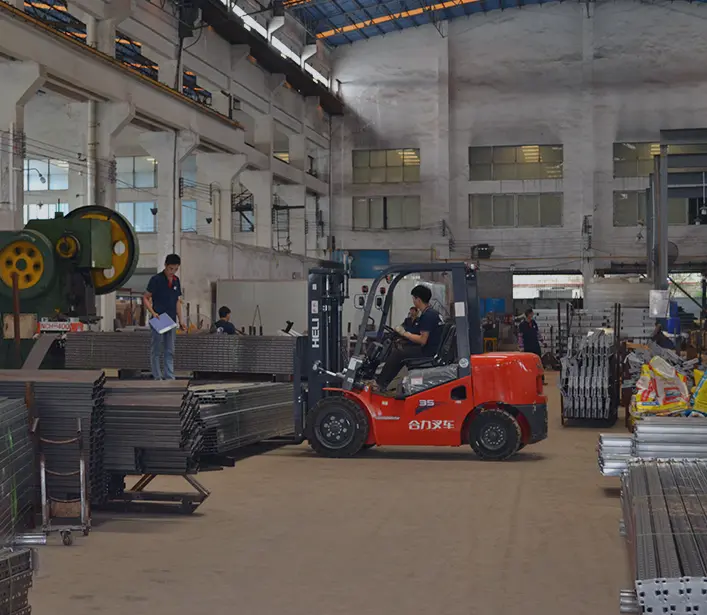
  • End-to-End Vertical Manufacturing: In-house steel slitting, continuous CNC roll-forming, automated column punching, robotic welding, 8-stage pickling-phosphating, and automated electrostatic powder coating.
  • Rigorous Global Certifications: CE Certified under CPR No. 2435-CPR-8605159, ISO 9001:2015 Registered (No. 18624Q00169R0M), and fully compliant with RoHS surface finish directives.
  • Comprehensive Engineering Support: Free 2D CAD layouts, 3D structural visual simulations, dynamic load check reports, and site-specific seismic engineering (P-Delta analysis).
  • Seamless Shipping & Loading Architecture: Rapid multimodal container dispatch from South China ports with customized nesting calculation plans to minimize ocean freight overhead.
HEDA Shelves Roll-forming and Racking Production Line in Guangzhou
Frequently Asked Questions

Roller Pallet Racking Procurement & Engineering FAQ

Direct technical answers from our senior project engineering team covering structural validation, slope inclination ratios, maintenance, and logistics.

What is the optimal incline angle for gravity roller pallet racking lanes?
Standard industrial pallet flow lanes utilize an incline gradient between 3% and 4% (approximately 1.7° to 2.3° pitch). The exact gradient is tailored based on bottom-runner pallet wood grades (Euro, GMA, or industrial plastic), total pallet gross weight (typically ranging from 300kg to 1500kg), and environmental temperatures. Cold storage conditions below 0°C require slight adjustments to overcome lubricant viscous drag within roller ball bearings.
How do CE Certification and European Standards apply to dynamic roller racking?
Our manufacturing processes comply with CE Construction Products Regulation (CPR) Certificate No. 2435-CPR-8605159, alongside the core design code EN 15512 (Steel static storage systems – Adjustable pallet racking systems – Principles for structural design) and EN 15635 for inspection maintenance. This ensures structural steel grade conformity (such as high-yield Q235B/Q355B), finite element beam calculation integrity, and validated safety deflection ratios (typically L/200 under maximal working load).
Can roller pallet racking handle sub-standard, fractured, or plastic pallets?
Gravity flow systems rely on consistent surface contact across the bottom runners. Weak, fractured wood or missing bottom boards can cause a pallet to jam or sag between roller intervals. For operations handling diverse or imperfect pallets, our engineers integrate full-width continuous heavy-duty cylindrical steel rollers rather than narrow skate-wheels, supplemented by tri-track lane guidance and entry guide flanges to ensure self-centering descent.
What mechanical elements prevent high-speed collisions in deep-lane runs?
For runs exceeding 4 to 5 pallet depths, centrifugal brake rollers are mounted flush inside the roller tracks. These brake rollers rotate freely at low operational speeds. When pallet velocity accelerates above approximately 0.25 m/s, internal centrifugal flyweights engage internal friction pads against an integrated gear cluster, generating counter-torque that automatically governs the pallet to a safe, controlled cruising speed all the way down to the discharge buffer stop.
How does HEDA protect steel against corrosion in extreme or tropical humidity?
Every steel component at HEDA Shelves undergoes a rigorous 8-stage automated surface pre-treatment consisting of hot chemical degreasing, clean-water rinsing, acid pickling to eliminate scale, and crystalline zinc-iron phosphating. Subsequently, electrostatically applied thermo-curing polyester powder coating is cured at 180°C–200°C. For coastal installations, marine freight, or sub-zero blast freezers, complete hot-dip galvanization (HDG) per ISO 1461 standards is available to guarantee over 20+ years of rust immunity.
What engineering datasets are required to start a custom factory CAD layout?
To receive a free tailored 2D/3D project layout and engineering calculation packet within 24–48 hours, simply supply: (1) Warehouse building CAD drawings or boundary dimensions showing internal clear heights, fire exits, and column grids; (2) Pallet dimensions (W x D x H) including load overhanging margins and gross weight per unit; (3) Mast specifications, turning radius, and lift height of your forklift equipment; (4) Total required SKU differentiation and daily throughput turnover volumes.

Transform Your Warehouse Throughput With Certified Dynamic Racking

Consult directly with HEDA Shelves structural engineers. Receive custom architectural CAD designs, load safety verifications, and factory-direct pricing for your next material handling or intralogistics development.