High-Yield Storage Systems & Certified Modular Components
Engineered to exact dimensional tolerances, cold-formed from certified Q235B/Q355B structural steel coils, and independently tested for dynamic shear, buckling resistance, and static load performance.
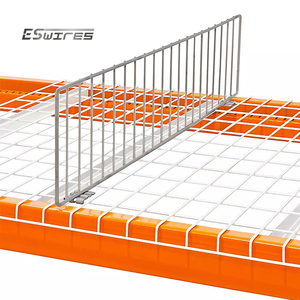
Factory Supplier Customized Warehouse Racking Accessories Welded Steel Wire Pallet Rack Dividers
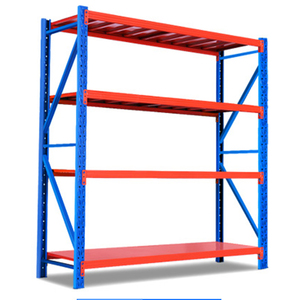
HUAWU 200kg Per Layer Boltless Shelving System 4 Shelf Steel Q235 Light Duty Warehouse Storage Rack HD036
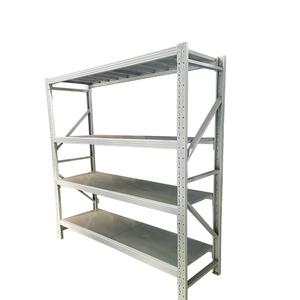
Support Customization Storage Racking Adjustable Metal Boltless Shelf and Racks Warehouse Storage Metal Rack Shelves
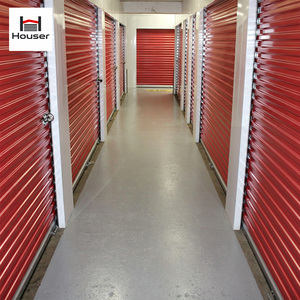
Self Storage Containers Units Business Modular Prefab Galvanized Steel Partition System Indoor Self Storage Unit
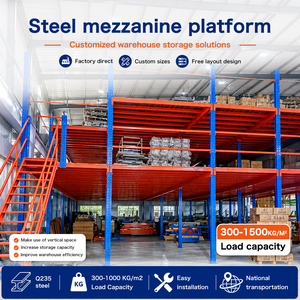
Heavy Duty Industrial Steel Mezzanine Floor Storage System Multi Level Warehouse Rack Shelving Space Saving Solution
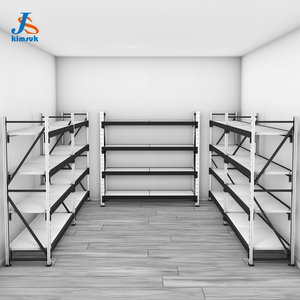
Racking Warehouse Storage Warehouse Shelving Solutions Cantliver Stacking Racks Shelves Selective Pallet Rack
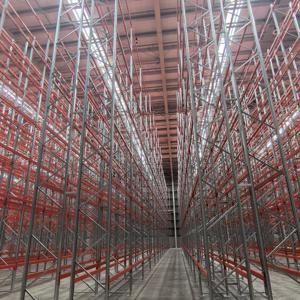
Jracking Industrial Vertical Warehouse Racks Heavy Duty Steel Pallet Racking System for Cold Storage
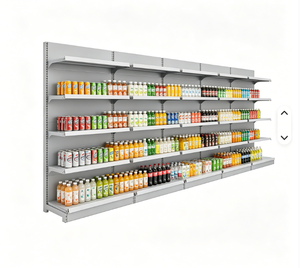
Wholesale Double-Sided Heavy Duty 4-6 Layers Metal Storage Shelf 100kg Layer OEM Supermarket Rack Modular Design China
The Engineering Foundation: CE Marking Under CPR 305/2011 & EN Norms
In modern high-bay logistics, pallet racking is classified as an engineered load-bearing steel structure. CE certification serves as mandatory legal proof that static storage frames withstand serviceability limit states (SLS) and ultimate limit states (ULS).
Normative Matrix Governing Industrial Racks in the European Single Market & Global Projects
Deploying warehouse racking without validated CE credentials introduces severe legal liabilities, workplace hazards, and structural catastrophic collapse risks. Under the Construction Products Regulation (EU CPR No. 305/2011), static steel racking systems installed across international jurisdictions must conform to a rigorous triad of standardized structural codes:
1. EN 15512:2020 (Racking Structural Design): Dictates the principles of limit state design for adjustable steel storage pallet racking systems. It replaces primitive allowable stress calculations with advanced second-order partial factor design methods, taking into account global sway, column semi-rigidity, upright perforations, and component shear buckling.
2. EN 15620 (Deformations and Clearances): Governs the interface tolerances between automated handling equipment (AS/RS, AGVs, narrow aisle cranes) and static racking. It enforces strict vertical deflection ceilings—limiting beam sag under maximum load to L/200 for conventional trucks and up to L/300 or tighter for automated systems—preventing catastrophic dynamic snagging.
3. EN 15635 (Application and Maintenance of Storage Equipment): Establishes global inspection protocols, enforcing real-time categorization of upright structural damage into Green (operational), Amber (hazardous, action required within 48 hours), and Red (immediate warehouse quarantine and offloading).
| Performance Parameter | Commercial Uncertified Racking | CE Certified (EN 15512 / CPR 305/2011) | HEDA Shelves Heavy-Duty Specification |
|---|---|---|---|
| Prime Material Sourcing | Commercial grade Q195 / mixed scrap melt | Certified structural Q235B / Q355B (EN S235 / S355) | BaoSteel prime structural coil with EN 10204 3.1 MTR |
| Load Safety Design Factor | Unverified / approx. 1.1 - 1.25 | Strict partial load factors γG = 1.35, γQ = 1.50 | γ ≥ 1.55 Dynamic & Static FEA simulated design |
| Beam Deflection Criteria | L/120 to L/150 (noticeable visual sag) | Deflection limited strictly to L/200 under full SLS | L/250 to L/300 (ideal for automated VNA/ASRS applications) |
| Seismic Qualification | Not engineered; high joint failure hazard | Eurocode 8 (EN 1998-1) compliant zone calculation | FEA response-spectrum verified baseplates & heavy uprights |
| Surface Pre-Treatment & Rust | Solvent wipe; single coat flash baking | Standard industrial degreasing & powder coat | 10-stage automated pickling, phosphating & electrostatic TGIC-free bake |
Omega Column Geometry
Multi-bend cold-rolled upright profiles featuring up to 13 structural bends maximize the cross-sectional moment of inertia, counteracting torsional-flexural buckling under axial compressions up to 32,000 kg per bay.
High-Shear Beam Connectors
Equipped with 3, 4, or 5-claw high-ductility cast connectors engineered with integrated 5.8-grade safety locking pins. Prevents disengagement from accidental uplift forces exceeding 5,000 N per beam end.
Controlled Micro-Alloying
Our raw steel features low carbon equivalent values (CEV ≤ 0.42%) ensuring ductile welding lines during robotic beam fabrication, eliminating HAZ (Heat Affected Zone) micro-cracking under repetitive forklift loading.
Procurement Transformations: Where Warehouse Racking is Heading
Evaluating total cost of ownership (TCO), ESG compliance, dynamic structural loads, and high-density warehouse automation requirements for enterprise buyers.
AS/RS & Shuttle-Ready Tolerances
Static storage is migrating rapidly to dynamic density. Modern procurement mandates FEM 9.831 / Class 100 tolerance profiles. Upright column verticality deviations must not exceed 1:1000 to enable flawless radio shuttle and stacker crane integration without structural jamming.
Decarbonization & Scope 3 Procurement
Multinational 3PLs and supply chain leaders require audited Environmental Product Declarations (EPD). Utilizing clean-melt electric arc furnace (EAF) steel and solvent-free, heavy metal-free powder coatings drastically lowers embedded carbon metrics per pallet position.
Seismic-Dynamic FEA Design
With massive supply chains emerging across high-risk seismic corridors (the Pacific Rim, Middle Eastern rift zones, Southern Europe), structural procurement now demands non-linear pushover simulations and response-spectrum calculations validating beam-end rotational energy dissipation.
Inside HEDA’s 10-Stage Precision Production Ecosystem
From metallurgical verification of incoming structural coils to multi-stage chemical surface passivation, our integrated Guangzhou factory delivers unyielding consistency under CE Certificate No. 2435-CPR-8605159.
Raw Steel Intake
Spectroscopic chemistry analysis & tensile yield testing per coil.
Precision CNC Slitting
Tight width slitting tolerances within ±0.1mm for straightness.
Continuous Punching
High-speed automated dies create precision pitch hole patterns.
Multi-Roll Cold Forming
24-station roll-forming profile mill shaping omega uprights.
Laser Tube Profiling
Interlocking box-beam welding profiles cut with micron accuracy.
Robotic Seam Welding
Automated gas-shielded dual-torch robotic welding cells.
Mechanical Calibration
Post-weld dimensional verification of connector squareness.
10-Stage Pickling
Full-immersion oil removal, acid pickling, and zinc phosphating.
Electrostatic Coating
Swiss Gema automated spray guns baking TGIC-free polyester.
Full Load Testing & Ship
Batch test destruction checks & secure export steel strapping.
Frequently Asked Questions on CE Certified Warehouse Racking
Direct, rigorous answers addressing structural engineering calculations, cold storage environmental limits, seismic codes, and international installation approval.
What exact physical tests are mandated to achieve valid CE certification under EN 15512?
Unlike ordinary fabricated steel, EN 15512 requires extensive empirical laboratory testing: (1) Stub column compression tests to evaluate cross-sectional area reduction due to hole perforations; (2) Upright frame shear and torsion tests; (3) Beam end-connector bending moment and rotational stiffness tests (M-θ curves); and (4) Floor baseplate looseness and anchorage shear pull-out verification. These parameters are fed into structural calculation software for site-specific stability verification.
How does sub-zero cold storage (-30°C) impact steel grade selection and ductile transitions?
Standard commercial steel undergoes a dangerous ductile-to-brittle transition when operated below freezing, making structures vulnerable to sudden brittle fracture when impacted by forklifts. For refrigerated and sub-zero cold chain facilities, HEDA utilizes impact-tested steels (such as S355NL / Q355D/E) with proven Charpy V-Notch impact absorption values ≥ 27J at -20°C and -40°C, combined with specialized low-temperature powder coatings or hot-dip galvanizing per ISO 1461.
What computational models are implemented for seismic zones in Asia and the Middle East?
Our engineering department designs seismic racking frameworks in accordance with Eurocode 8 (EN 1998-1) and FEM 10.2.08. We perform dynamic modal analysis using site-specific Ground Peak Acceleration (PGA) data. We calculate behavioral factor q-values, enlarge upright footings, apply double-anchor sleeve systems, and introduce vertical and plan bracings that dissipate ground-motion energy without joint tear.
What documents are supplied to support municipal building permits and safety approvals?
Every customized project is accompanied by a complete Engineering Documentation Dossier. This includes the manufacturer's Declaration of Performance (DoP) referencing CE No. 2435-CPR-8605159, ISO 9001:2015 quality registry (No. 18624Q00169R0M), raw material 3.1 Mill Test Reports (MTR), full structural calculation books stamped with 2D CAD layouts, and load safety notices for rack bay load ratings.
What is the maximum allowable upright frame deflection under operational service loads?
Under EN 15620, the lateral sway deflection of the racking structure at serviceability limit state (SLS) must not exceed H/500 (where H equals total height) for high-bay systems, while maximum beam vertical deformation is constrained to δ ≤ L/200 of the clear span between frames under full static load. For automated shuttle integration, HEDA tightens this tolerance down to L/300.
How does HEDA prevent profile deformation and paint abrasion during maritime freight?
We employ precision modular container nesting plans: Upright frames are separated with dense cross-linked polyethylene (EPE) foam, corner-protected with heavy channel cards, and bundled using non-abrasive high-tensile composite strapping. Uprights and beams are staggered on bespoke wooden dunnage blocks to optimize 40HQ container cube utilization while guaranteeing damage-free delivery.
Request an Engineered 3D Layout & Certified Load Calculation
Connect directly with our structural engineering team. Supply your warehouse footprint, clear ceiling height, pallet specifications, and forklift model to receive a complimentary CAD proposal, bay load matrix, and direct factory pricing within 24–48 hours.
Speak directly with our senior project design team for immediate assistance.
Get a Quote