Featured Push Back & Dynamic Racking Systems
Custom-engineered pallet flow, push back, shuttle, and structural configurations manufactured directly in our certified Guangzhou industrial facility.
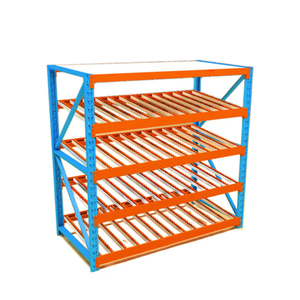
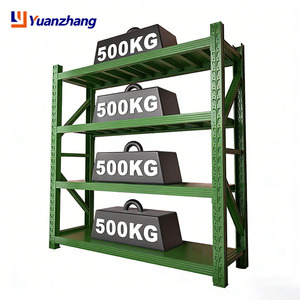
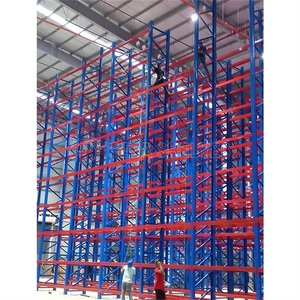
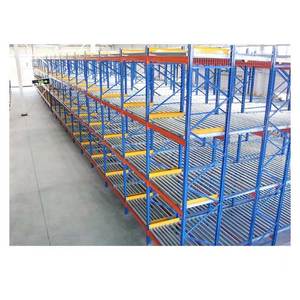
Push Back Rack Engineering: Mechanics, Tolerances & CE Criteria
How nested trolley kinematics provide operational speed and structural integrity in deep-lane pallet management.
| Storage Matrix System | Aisle Utilization Rate | Selectivity Performance | SKU Flexibility | Forklift Cycle Speed | Structural Maintenance |
|---|---|---|---|---|---|
| Push Back Racking (2 to 6 Deep) | 75% - 85% Density | Lane-Level LIFO | High (Per-lane dedicated) | Fast (No truck entry into rack) | Very Low (Pure mechanical gravity) |
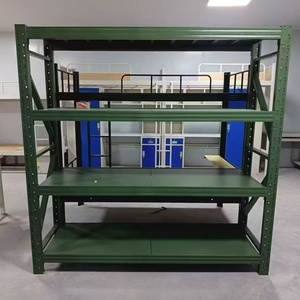
| Selective Pallet Racking | 35% - 45% Density | 100% Direct Access | Unlimited (Per pallet) | Moderate (Extensive aisle travel) | Low (Static structural beams) |
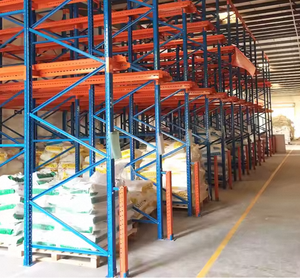
| Drive-In Pallet Racking | 70% - 80% Density | Block-Level LIFO | Low (Requires batch bulk) | Slow (Truck enters storage lane) | High (Frequent upright collision) |
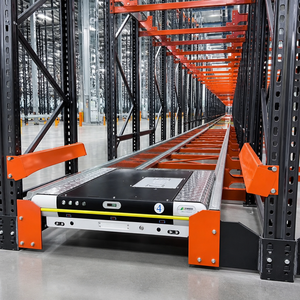
| Automated Radio Shuttle | 80% - 90% Density | Flexible LIFO / FIFO | High to Medium | Very Fast (Automated carriage) | Medium (Battery & sensor checks) |
Future Procurement Trends in High-Density Storage (2025–2030)
Key technological, structural, and macroeconomic forces impacting industrial logistics planning and warehouse purchasing.
Cold Chain Optimization
Global demand for chilled food and biologics storage requires racking that performs reliably down to -30°C. Buyers are transitioning toward heavy galvanized steel components, specialized sealed bearings, and low-temperature synthetic lubricants to eliminate cart seizure.
Supply Chain Resiliency
Procurement teams are shifting away from intermediate sourcing brokers toward factory-direct manufacturing partnerships. Purchasing directly from qualified manufacturers ensures verified steel origin, EN 10204 3.1 material certificates, and rapid lead-time control.
Seismic & Environmental Codes
Heightened building authority scrutiny across Asia-Pacific and the Americas mandates rigorous dynamic seismic testing. Racking buyers require certified seismic calculation dossiers, larger base plate dimensions, and upgraded anchoring bolts matched to soil classifications.
Push Back Racking Product Evolution & Design Advancements
How structural design improvements are elevating safety, longevity, and high-density performance.
Low-Profile Nested Trolleys
Traditional push back racks often sacrificed 150-250mm of vertical bay clearance due to stacked carts. New precision laser-cut low-profile nesting carts reduce vertical height requirements, allowing an extra pallet level in height-restricted warehouses.
Anti-Derailment & Impact Armor
Heavy dynamic usage can damage carts if pallets are off-center. Modern configurations feature internal flange interlocks and integrated impact guides that physically prevent carts from jumping the rails even under sudden forklift deceleration or driver error.
Hybrid Gravity Flow Integration
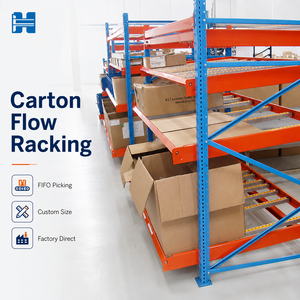
Engineers are increasingly specifying hybrid installations—integrating push back picking lanes on lower levels directly underneath upper carton flow or standard pallet racking bays to balance high-throughput order preparation with bulk storage.
Guangzhou HEDA Shelves: 25-Year Production Powerhouse
Complete in-house manufacturing oversight, precision European certified production lines, and dedicated international technical support.
End-to-End 10-Step Quality Control
Every beam, upright column, and trolley is built through our 10-step precision protocol: automated coil slitting, cold bending forming, robotic welding, 8-tank acid pickling and phosphating pre-treatment, and RoHS-compliant electrostatic powder coating.
Full CE & ISO Compliance
We provide full structural documentation and test certs for building department permits: CE Certification (No. 2435-CPR-8605159) and ISO 9001:2015 Quality Management System Certification (No. 18624Q00169R0M). Every project includes steel mill certificates and FEA reports.
Global Strategic Export Hub
Positioned strategically in Guangzhou, our team manages direct container loading plans, packing lists, and export clearance through major South China ports, drastically reducing transit times to Southeast Asia, the Middle East, Europe, and the Americas.
Frequently Asked Questions by Industrial Buyers
Direct answers to the most critical technical and logistical questions faced during push back rack purchasing.
Most installations are designed for 2, 3, 4, or 5 pallets deep per lane. While 6-deep configurations are technically viable, 2 to 4 pallets deep represent the industry sweet spot. Beyond 5 deep, the cumulative pushing force required by standard forklifts increases significantly, and lane height penalties must be accounted for due to the rail's gradient slope.
No specialized forklift equipment is required. Push back racks can be serviced by conventional counterbalance forklifts, reach trucks, or deep-reach trucks. Unlike drive-in systems where trucks must enter the structural frame, push back forklifts remain entirely within the central operating aisle, minimizing mast collisions.
For projects in seismic-active regions such as the Pacific Rim, our structural engineering team performs dynamic seismic calculations according to local building codes (e.g., UBC, IBC, or Eurocode 8). Upright steel gauges are reinforced, bracing configurations are tightened, and high-tensile chemical wedge anchors are supplied.
All steel elements pass through our continuous 8-stage industrial pre-treatment wash consisting of degreasing, acid pickling, rinsing, and zinc phosphating. This chemically seals the steel substrate before our robotic electrostatic thermoset epoxy-polyester powder application, guaranteeing lasting corrosion resistance even in tropical or high-humidity ports.
Request a Free Engineered 2D/3D Warehouse Layout
Provide your warehouse floor dimensions, ceiling clear heights, and pallet specifications. Our senior design engineers will return a complete CAD design, pallet position calculation, and quotation within 24 to 48 hours.
Get a Quote