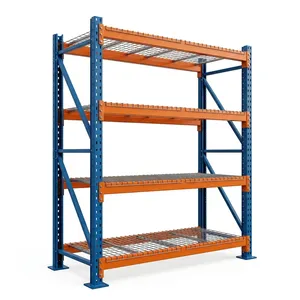
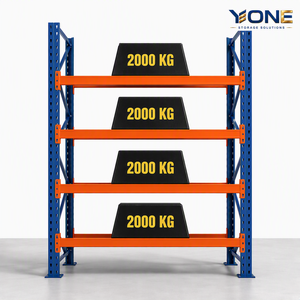
CE Certified Pallet Racking Cross Beams Manufacturer & Supplier
Guangzhou Heda Shelves delivers engineered interlocking box-beams, step-beams, and structural cross members certified under European CPR safety standards. Precision cold-formed steel with up to 5,000 kg UDL capacity per pair for high-bay logistics and heavy-duty industrial storage.
Direct Factory Catalog
Certified Racking Assemblies & Cross Beam Systems
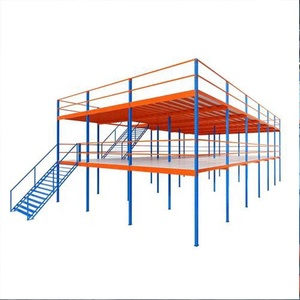
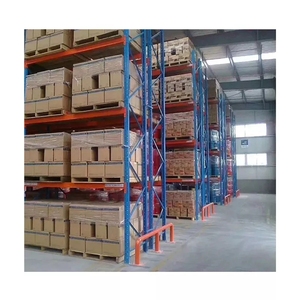
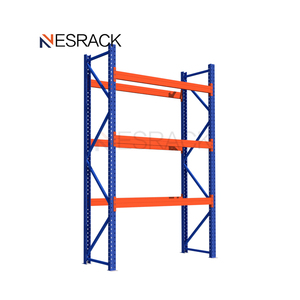
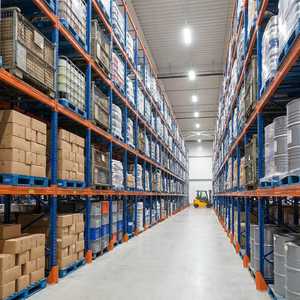
Explore our certified cold-rolled pallet racking architectures, modular cross-beam assemblies, and integrated industrial storage platforms engineered for maximum structural equilibrium.
Universal 3/4 Claw Clip100% Direct AccessISO 9001:2015
25+
Years Manufacturing Excellence (Est. 2001)
30,000t
Monthly Structural Output Capacity
10,000+
Global Warehouses Delivered Worldwide
CE/ISO
CE Cert No. 2435-CPR-8605159 Verified
Engineering White Paper
Structural Mechanics and Mechanical Integrity of Pallet Racking Cross Beams
The cross beam represents the fundamental horizontal load-bearing component in selective, drive-in, VNA, and automated shuttle racking infrastructures. In modern structural warehouse design, failure modes are predominantly driven by vertical flexural bending, lateral torsional buckling, and connector rotational stiffness at the upright interface. To satisfy stringent CE structural criteria—specifically EN 15512:2020 (Steel static storage systems - Adjustable pallet racking systems - Principles for structural design)—pallet cross beams must be calibrated against rigorous deflection ratios, weld shear parameters, and cold-formed profile yields.
1. Interlocking Twin-C Box Profile vs. Single-Rib Step Beam
HEDA Shelves manufactures dual-profile cross beams through automated continuous roll-forming lines. The primary heavy-duty architecture utilizes two cold-formed "C" profiles nested and seam-welded by high-precision robotic MIG stations to create a continuous tubular box section. This geometry provides superior Section Modulus ($Z_x$) and Polar Moment of Inertia ($J$), drastically mitigating horizontal deflection when subject to dynamic pallet placement.
For applications integrating timber shelving panels, flush galvanized steel decks, or drop-in wire mesh decking, step beams are engineered with an interior 20mm to 25mm structural recess. This enables smooth pallet transfer while preventing snag hazards during forklift entry and retraction.
The structural performance of a cross beam is dictated not merely by its central profile, but by the mechanical interlock between its end connectors (beam claws) and the column teardrop/diamond punching. Our beams incorporate 3-claw, 4-claw, and 5-claw high-ductility cast or stamped steel connectors designed to induce semi-rigid frame behavior ($M-\theta$ curve stabilization).
Every connection is fortified with an independent safety locking pin capable of resisting unintended vertical dislodgement forces exceeding 5 kN, exceeding OSHA and EN 15635 compliance benchmarks.
Standard Engineering Matrix: Box Beam Load Specifications (EN 15512 Deflection $L/200$)
Profile Dim ($H \times W \times t$ mm)
Standard Clear Span (mm)
Steel Grade (EN 10025 / GB)
Section Modulus $W_x$ (cm³)
Max UDL / Pair (kg)
Connector Claws
Safety Deflection Limit
80 × 50 × 1.5
2300 (2 Pallets @ 1000mm)
Q235B (Yield ≥ 235 MPa)
14.82
1,800 kg
3-Claw Lug
Span / 200 (11.5 mm max)
100 × 50 × 1.5
2700 (2 Pallets @ 1200mm)
Q235B (Yield ≥ 235 MPa)
22.15
2,200 kg
3-Claw Lug
Span / 200 (13.5 mm max)
120 × 50 × 1.5
2700 (2 Pallets Heavy Euro)
Q355B (Yield ≥ 355 MPa)
31.40
3,200 kg
4-Claw Lug
Span / 200 (13.5 mm max)
140 × 50 × 1.8
3300 (3 Pallets @ 1000mm)
Q355B (Yield ≥ 355 MPa)
46.90
3,800 kg
4-Claw Lug
Span / 200 (16.5 mm max)
160 × 50 × 2.0
3900 (3 Pallets @ 1200mm)
Q355B (Yield ≥ 355 MPa)
68.20
4,500 - 5,000 kg
5-Claw Heavy Lug
Span / 200 (19.5 mm max)
Industry Roadmap • 2026–2030
Future Procurement Trends in Warehouse Racking Beams
Intralogistics is transitioning toward higher automation densities, extreme weather resilience, and smart traceability. Forward-looking procurement teams are adjusting their material requisitions to match three dominant engineering vectors.
Automation-Ready Engineering
ASRS & Shuttle-Tolerant Deflection Thresholds
Standard manual forklift racks permit an elastoplastic deflection ratio of $L/200$. However, the massive surge in autonomous mobile robots (AMR) and Automated Storage and Retrieval Systems (ASRS) necessitates stiffened cross-beam profiles rated at $L/300$ or $L/400$. Even millimeter-scale deflection can blind robotic optical guidance sensors or cause shuttle carrier stalls. Global logistics developers are mandating ultra-low deflection beam matrices to safeguard robotic compatibility.
With international freight costs tied directly to steel tonnage, modern cross beam engineering emphasizes high-strength low-alloy (HSLA) steels. By replacing conventional low-carbon Q235B steel with micro-alloyed Q355B (yield strength ≥ 355 MPa), our engineers reduce cross-sectional wall thickness by 12% to 18% while expanding ultimate bending moments. This engineering leap lowers shipping container counts and structural slab point-loads without sacrificing static load capacities.
Environmental Durability
Sub-Zero Cold Chain & Coastal Anti-Corrosion Systems
Regional cold-chain facilities operating down to -30°C face severe metal embrittlement risks. Procurement protocols now demand steel with certified Charpy V-notch impact toughness values at sub-zero temperatures. Simultaneously, coastal distribution hubs across Southeast Asia and the Middle East require multi-stage pre-treatments (pickling and zinc-phosphating) followed by 80-120μm thermosetting polyester electrostatic powder coatings or hot-dip galvanization (ISO 1461) to combat saline condensation.
Enterprise Strengths
Why EPC Contractors and Global Distributors Partner with HEDA Shelves
Guangzhou Heda Shelves Co., Ltd. (founded 2001) operates a state-of-the-art 30,000 m² manufacturing complex, combining 25 years of structural metalworking with international engineering compliance.
Direct Factory Control
From raw Baosteel/Shougang hot-rolled strip slitting to continuous 18-station roll-forming, automatic CNC punching, laser profiling, and multi-station robotic beam-claw welding, 100% of manufacturing occurs in-house. This centralized control prevents tolerance stack-up and ensures flawless claw-to-upright fit on site.
CE & ISO Verified Quality
Every production batch undergoes strict quality audits. We maintain CE Certification (No. 2435-CPR-8605159) for European structural conformity, ISO 9001:2015 Quality Management accreditation (No. 18624Q00169R0M), and RoHS-compliant non-toxic powder coating lines with salt-spray testing up to 500 hours.
Free Structural CAD & 3D Modeling
Our senior engineering department operates Autodesk Revit, AutoCAD, and finite element analysis (FEA) suites. Within 24 to 48 hours, we supply prospective buyers with comprehensive static load calculations, seismic analysis (EN 1998 / FEMA 460), layout plans, and full container stuffing optimizations.
CE Construction Products Regulation (CPR 305/2011)
ISO 9001:2015 Quality Assurance System
EN 15512:2020 Pallet Racking Standard
Seismic Permitting Calculation Reports
Procurement Due Diligence
Technical Pallet Racking Cross Beam FAQs
Detailed engineering answers to address structural risks, deflection formulas, international certifications, and customs documentation requirements.
What is the permissible deflection limit for CE certified cross beams?
Under EN 15512:2020 standards, the allowable elastic vertical deflection for adjustable pallet racking cross beams must not exceed $L/200$, where $L$ is the clear span distance between upright column faces. For instance, on a typical 2,700 mm beam carrying two 1,000 kg pallets, the central vertical deflection under maximum static load must remain below 13.5 mm. In semi-automated systems or ASRS environments, HEDA Shelves engineers to tighter tolerances of $L/300$ or $L/400$ upon customer specification.
How does HEDA Shelves verify cross-beam weld integrity?
Our robotic welding cells execute dual-fillet continuous seams along the end-connector to box-beam interface. Structural reliability is assured through non-destructive ultrasonic testing (UT) and periodic destructive shear load tests where the connector weld must withstand up to 1.5 times the design ultimate limit state (ULS) moment without micro-fracturing or weld tear.
Can your cross beams integrate with existing third-party upright frames?
Yes. While we supply complete turnkey warehouse rack assemblies, our engineering department provides custom connector profiling compatible with European 50mm pitch, Dexion-type 76.2mm pitch, American teardrop patterns, and Australian 75mm patterns. We verify pitch dimensions, slot angles, and post steel gauge to ensure structural safety.
What surface protection is best for humid or corrosive climates?
For standard interior warehouses, our automated 10-step pickling, phosphating, and electrostatic epoxy-polyester powder coating (80–120μm thickness) provides superior resistance against chipping and corrosion. For outdoor lumber storage, coastal logistics sites, or cold storage facilities with frequent condensation, we manufacture beams with continuous pre-galvanized coils or full post-weld hot-dip galvanization conforming to ISO 1461 standards.
How do safety locking pins protect against catastrophic collapse?
Forklift operations frequently encounter upward pallet catching when operators lift pallets prematurely during retrieval. Every HEDA cross beam connector features dedicated safety pin holes that accept zinc-plated sprung or drop-in steel safety locks. These pins resist an upward vertical thrust of over 500 kg (5 kN) per connector, preventing the beam claw from unhooking from the upright column.
What documentation is provided for seismic engineering approvals?
For projects in seismically active regions across the Pacific Rim, Middle East, or Southern Europe, our registered structural engineers provide dynamic seismic calculation dossiers. These cover base-shear coefficients, spectral accelerations based on local building codes, anchor pull-out checks, and beam-to-column rotational stiffness curves ($K_{bi}$) required by municipal permitting authorities.
Partner directly with Guangzhou Heda Shelves Co., Ltd. Provide your pallet footprint, maximum unit weights, and clear ceiling heights. Our engineering department delivers verified structural calculations, container loading plans, and competitive factory-direct pricing within 24 to 48 hours.