Engineered Industrial Storage Systems
Tested cold-formed steel racking frameworks manufactured under ISO 9001:2015 and verified through CE EN 15512 static load calculations.
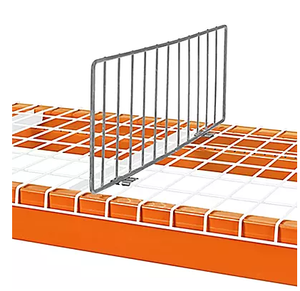
Pallet Racking Divider Pallet Rack Wire Deck Divider
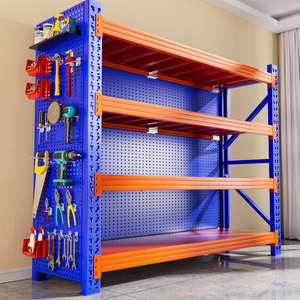
Long Span Shelving System Heavy Duty Steel Storage Rack for Warehouse Picking
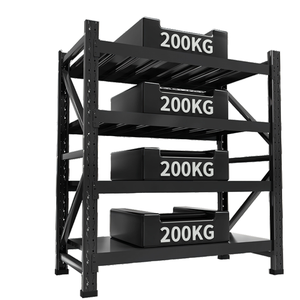
250KG Adjustable Boltless Pallet Racking Long Span 5-Layer Storage Shelving Units
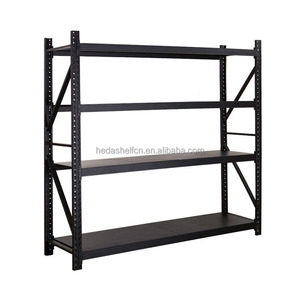
Heavy Duty Metal Garage Shelving Industrial Shelves 4 Tier Boltless Shelves
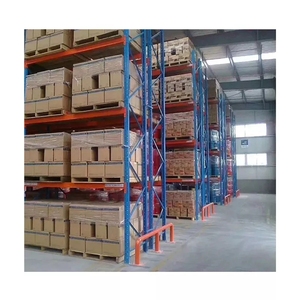
Wholesale Shelves Warehouse Rack Industrial Pallet Racking Heavy Duty Shelves
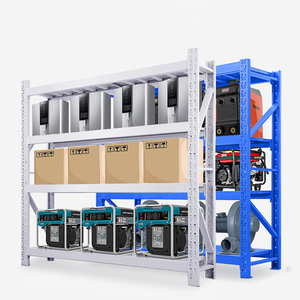
Double Deep Heavy Duty Pallet Rack 6 Meters High Metal Shelving Rack
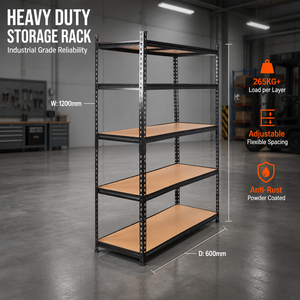
Heavy Duty Steel Shelving Rack Boltless Storage Shelves 5 Tier Adjustable
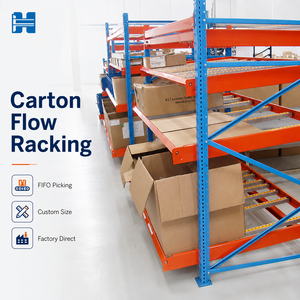
Warehouse Flow Rack Carton Gravity Roller FIFO Storage Racking System
Structural Engineering & CE Compliance in Industrial Shelving
Modern industrial warehousing operations demand more than basic storage capacity; they require validated structural engineering, high-stress load thresholds, and comprehensive safety compliance. Certified CE industrial storage shelving factories must strictly align with European Norms—specifically EN 15512 (Steel static storage systems - Adjustable pallet racking systems - Principles for structural design), EN 15620 (Tolerances, deformations, and clearances), and EN 15635 (Application and maintenance of storage equipment). Achieving CE Certification (Certificate No. 2435-CPR-8605159) guarantees that every roll-formed upright profile, connector bracket, and boxed step-beam has undergone physical destruction testing and finite element analysis (FEA) to confirm performance under critical load conditions.
Material traceability remains fundamental to certified manufacturing integrity. Sourcing high-tensile hot-rolled coils compliant with Q235B and Q355B standards ensures optimum elasticity without brittle cracking during automated cold-roll forming. For industrial facilities operating across dynamic climatic zones—from Southeast Asia’s extreme relative humidity to the arid shifts of the GCC region—structural engineering extends to electrostatic surface chemistry. Our multi-stage automated pre-treatment lines incorporate high-pressure acid pickling and phosphating, creating a dense conversion layer that anchors anti-scratch thermoset epoxy-polyester powder. This achieves superior salt-spray corrosion resistance, safeguarding longspan shelving and heavy-duty structural steel mezzanines against premature oxidation.
Future Procurement Trends in Industrial Storage (2025–2030)
Strategic procurement approaches are evolving from raw material price comparison to total lifecycle evaluation, structural modularity, and automated integration readiness.
Readiness for Autonomous Systems
Industrial racking specifications increasingly mandate tighter dimensional tolerances (±0.5mm) to support automated guided vehicles (AGVs), Autonomous Mobile Robots (AMRs), and four-way radio shuttle navigation directly inside storage corridors.
Carbon Accounting & Circularity
Enterprise procurement teams in Europe and North America evaluate suppliers based on structural steel recycling ratios, dry-powder environmental recovery systems, and RoHS-compliant heavy-metal-free thermosetting powder pigments.
Computational Static & Seismic Design
Global logistics hubs situated across seismically active regions—such as Indonesia, the Philippines, Japan, and Western Latin America—demand verified digital calculation models matching Eurocode 8 and AS 4084 building regulations.
Technological Evolution in Warehouse Racking Systems
The material handling sector is transitioning from static storage hardware to dynamic, multi-tier operational ecosystems. Traditional low-profile boltless garage shelving is now engineered with reinforced cold-formed roll profiles and interlocking tab geometries, providing uniform distributed loads (UDL) exceeding 250kg to 800kg per shelf level without requiring welded cross-bracing. In automated distribution hubs, carton flow racks and pallet gravity systems integrate precision alloy rollers with centrifugal speed governors, standardizing stock replenishment through self-regulating First-In, First-Out (FIFO) mechanisms that protect sensitive goods and mitigate human handling errors.
Simultaneously, warehouse footprints are climbing vertically to manage rising real estate costs in prime logistics corridors. Rack-supported mezzanine structures and multi-tier picking floors exploit vertical clearance up to 12 meters, multiplying operational surface area by two- to four-fold without expanding the warehouse's external footprint. These installations are configured with integral stair towers, self-closing safety pivot gates, perforated steel floor decks for sprinkler penetration, and conveyor apertures that deliver high SKU handling density across modern e-commerce fulfilment environments.
Guangzhou HEDA Shelves: Direct Factory Capabilities
Operating since 2001, Guangzhou Heda Shelves Co., Ltd. provides comprehensive engineering, structural manufacturing, and worldwide delivery support.
The HEDA 10-Step Quality Control Manufacturing Flow
Consistent structural integrity across millions of roll-formed parts demands continuous verification. Our Guangzhou facility enforces a transparent ten-step manufacturing sequence:
1. Raw Material Sourcing: Incoming steel coils undergo yield strength, elongation, and carbon-content testing.
2. Precision Slitting: High-speed automated slitting lines slice continuous steel coils to precise dimensional tolerances.
3. Automated Column Punching: CNC-driven hydraulic punching presses stamp structural connection pitches without micro-fissures.
4. Roll Profile Forming: Cold multi-roller stations progressively shape upright profiles and beam channels without stress fracture points.
5. Robotic Beam Welding: Automated multi-axis robotic welding stations apply continuous fillets linking step beams to heavy-duty end connectors.
6. Automated Polishing: Mechanized abrasive deburring clears spatter and sharp edges prior to surface chemical treatment.
7. Multi-Stage Pickling & Phosphating: Total chemical immersion washes away oils and applies a conversion barrier to lock in paint adhesion.
8. Electrostatic Powder Coating: Automated reciprocal spray guns apply non-toxic, impact-resistant polyester resins.
9. High-Temperature Curing: Curing tunnels stabilize polymer cross-linking at 180°C to 200°C for superior abrasion resistance.
10. Container Loading Optimization: Every order is packed according to specialized software load plans, optimizing container volume and protecting finishes during sea transit.
Frequently Asked Procurement Questions
Direct technical answers addressing international standards, seismic engineering, and logistics planning.
What parameters are essential to generate an engineering layout?
To produce an accurate CAD plan and static calculation, our engineering team requires: warehouse architectural drawings with clear height under hook, floor slab thickness and concrete grade, column spacing, pallet dimensions (W × D × H including overhang), maximum unit loads, forklift model lift height, and turning radii.
How does CE EN 15512 testing verify beam and upright integrity?
CE certification confirms physical testing of beam-end connectors for bending moment and shear strength, upright stub-column compression capacity, and base plate anchor resistance, ensuring published Uniformly Distributed Load (UDL) tables carry verified safety coefficients.
Can the systems be custom-engineered for active seismic zones?
Yes. For regions across the Pacific Rim, Middle East, and Mediterranean, our structural engineers run seismic simulations. We modify upright steel gauge, widen base footplates, configure heavy anchor assemblies, and add specialized spine and portal bracing systems to absorb ground acceleration forces.
How are sea-freight shipments secured to avoid container transit damage?
Upright frames and long beams are bundled on structural dunnage with corner edge-protectors and strapped via heavy-gauge plastic bands. Small accessories, base plates, row spacers, and fasteners are crated in labelled export pallets with clear loading documentation for efficient unloading on site.