Heavy-Duty Warehouse Systems & Pallet Flow Racks
Constructed from premium certified Q235B/Q355B structural steel, our high-density gravity flow and heavy-duty storage configurations are custom-sized to match your exact pallet dimensions, axle loads, and environmental demands.
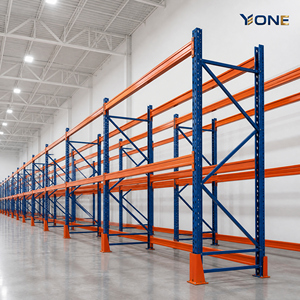 Freight Logistics
Heavy Duty Pallet Racking Warehouse Storage Rack System Q235B Steel For Freight Distribution
- Structural Q235B Cold-Formed Steel
- 50mm / 75mm Adjustable Pitch Levels
- 1,000–4,500 kg/Tier Beam Capacity
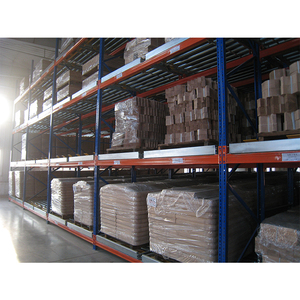 Strict FIFO
Factory Made FIFO Gravity Flow Roller Racking System Dynamic Storage Systems
- Centrifugal Magnetic Speed Brakes
- Automated Pallet Separation Mechanism
- 2.5% – 3.5% Precision Incline Gradient
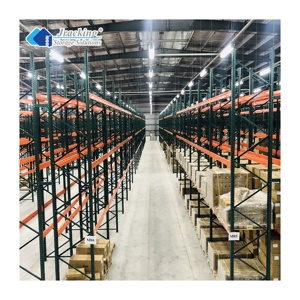 US Standard
Jracking Industrial Vertical Storage Racks US Standard Heavy Duty Teardrop Pallet Racking System
- Teardrop Interchangeable Punched Uprights
- Auto-Locking Safety Gravity Connector Pins
- Compatible with Global Forklift Fleets
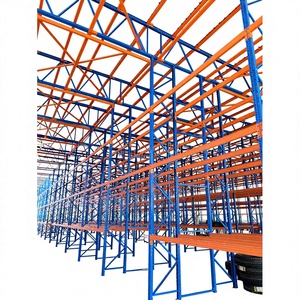 Heavy Industrial
Rack Heavy Duty Steel Shelf Warehouse Racking Pallet Industrial Storage System Racking
- Multi-Tier Structural Frame Reinforcement
- Wire Decking & Pallet Support Bars
- Certified to EN 15512 Safety Codes
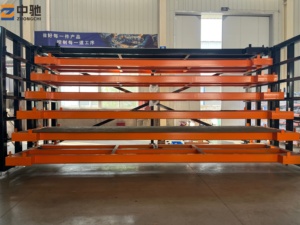 Anti-Deformation
 Steel Storage Rack Heavy Duty Industrial Rack for Warehouse Long-Term Use
- High-Yield Q355B Steel Vertical Columns
- Fatigue-Resistant Omega-Shape Profile
- Finite Element Analyzed (FEA) Load Stability
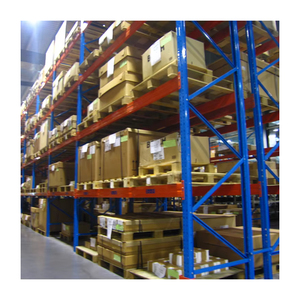 Boltless Modular
Heavy Duty Rack Steel Warehouse Rack Industrial Pallet Metal Racking Boltless Shelving
- Rapid Knock-Down Interlocking Hooks
- Epoxy Polyester Thermosetting Finish
- Corrosion Tested to ISO 9227 Standards
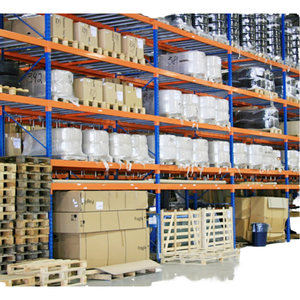 Coating Shield
Steel Warehouse Heavy Duty Adjustable Corrosion Protected Epoxy Powder Coated Stacking Pallet Shelves
- 7-Stage Pre-Treatment Acid Phosphating
- Cold-Chain Moisture & Frost Resistant
- Custom RAL Color Matching Available
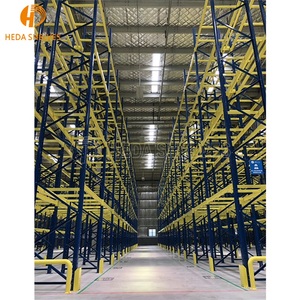 Medium-to-Heavy
Factory 4-Layer Medium Duty Rack 100-800kg Corrosion Protected Warehouse Industrial Shelving Units
- Steel Decking Panels or Solid Laminates
- High Efficiency Carton / Small-Box Access
- Rapid Clip Installation Without Bolts
1. The Mechanics and Physics of CE Certified Gravity Flow Pallet Racking
Gravity pallet racking (commonly referred to as live pallet flow or FIFO roller-track racking) operates on the principle of dynamic gravitational acceleration converted into controlled, uniform linear velocity. Unlike static selective pallet racking where forklifts must traverse internal service aisles, gravity flow installations consolidate storage into a continuous, high-density block with dedicated loading (charge) and retrieval (discharge) faces.
Achieving failure-free operation in a live dynamic roller lane requires balancing structural steel deflection limits, pallet bottom board friction coefficients, roller track incline gradients, and kinetic braking resistance. When pallets weighing from 500 kg to over 1,500 kg move down an inclined track over 20 to 30 meters, unmanaged momentum poses catastrophic crushing hazards to warehouse operators, handling machinery, and building columns.
The dynamic rolling equilibrium along an inclined roller bed is governed by: Fnet = m · g · (sin θ - μr · cos θ) - Fbrake, where θ represents the track incline angle (nominally 1.8° to 2.8° or 3.0% to 4.5% gradient), μr is the rolling friction coefficient of the pallet bottom skids, and Fbrake is the cumulative retarding force exerted by spaced centrifugal or magnetic speed controllers.
Kinetic Velocity Regulation and Dampener Engineering
In certified European installations under EN 15512, maximum pallet travel velocity must never exceed 0.3 meters per second (approx. 18 m/min). To guarantee this threshold across diverse cargo tonnages and ambient operating environments (such as cold stores operating at -28°C), industrial brake rollers are engineered at calculated pitch intervals:
- Direct-Contact Speed Controllers: Hardened steel or polyurethane-coated rollers internally geared to centrifugal brake shoes that exert dynamic counter-torque proportional to rotational speed. As speed spikes, braking resistance increases quadratically.
- Magnetic Eddy-Current Dampers: Contact-free, maintenance-free magnetic braking rollers. These utilize neodymium permanent magnets that induce opposing electromagnetic eddy currents within the conductive aluminum housing during motion, offering smooth, zero-wear deceleration unaffected by sub-zero temperatures.
- Pallet Pitch Spacing: Brake rollers are positioned every pallet-length increment along the lane (typically every 1,200 mm to 1,500 mm). This design ensures that every pallet is in contact with at least one brake dampener throughout its roll cycle.
Back-Pressure Dissipation and Time-Delayed Separator Mechanisms
In deep lanes accommodating 10 to 25 pallets in series, the aggregate hydrostatic line pressure exerted on the front pallet at the discharge face can exceed 15 metric tons. Without pressure isolation, unloading the lead pallet using a reach truck or counterbalance forklift results in rapid uncoiling, mast wedging, or sudden pallet ejection into the operational aisle.
HEDA Shelves integrates mechanical load separators at the discharge position. When the front pallet comes to rest against the structural end-stop, an integrated treadle lever automatically raises an arrestor stop behind it, holding back the entire trailing queue of pallets. Only after the forklift has cleanly lifted and removed the front pallet does the mechanical linkage release, permitting the subsequent pallet to advance at regulated speed into the picking station.
High-Density Dynamic Storage Technology Comparison Matrix
Compare mechanical layout profiles, volumetric density, energy independence, and throughput dynamics across major high-density warehousing systems.
| Storage System Type | Stock Rotation Logic | Volumetric Space Utilization | Throughput Velocity (Pallets/Hr) | Energy / Power Dependency | Mechanical Complexity & Maintenance |
|---|---|---|---|---|---|
| CE Gravity Pallet Flow | Strict FIFO (First-In, First-Out) | 80% – 85% Total Warehouse Footprint | Very High (Simultaneous Load & Pick) | Zero (100% Gravity Driven) | Low-to-Medium (Passive Rollers & Separators) |
| Radio Shuttle Racking | FIFO or LIFO Selectable | 85% – 90% (Deep Channel Storage) | High (Constrained by Shuttle Cycles) | High (Lithium Batteries & Charging Bays) | High (PLC, RF Radios, Sensors, Motors) |
| Push-Back Cart Racking | Strict LIFO (Last-In, First-Out) | 70% – 75% (Typically 2–6 Deep) | Moderate (Shared Entry/Exit Aisle) | Zero (Forklift Push Force & Gravity) | Low (Nested Steel Carts on Incline Rails) |
| Drive-In / Drive-Through | LIFO (Drive-In) / FIFO (Drive-Thru) | 65% – 75% (Lost Vertical Headroom) | Low (Forklifts Must Drive Inside Lanes) | Zero (Passive Steel Cantilever Rails) | Low (High Structural Impact Damage Risk) |
| Selective Standard Racking | 100% Random Access (FIFO/LIFO) | 35% – 45% (Aisles Consume 60% Space) | Moderate (One Pallet Handled per Bay) | Zero (Static Beams & Uprights) | Minimal (Periodic Inspection for Truck Impacts) |
Future Procurement & Technological Trends in Gravity Flow
As automated supply chains converge with escalating industrial real estate lease rates, strategic procurement managers are prioritizing long-term modularity, zero-carbon handling, and robotic integration.
Zero-Carbon Kinetic Logistics (ESG Target Alignment)
With corporate ESG directives penalizing power-hungry automation, gravity pallet racking is witnessing massive resurgence across European and American supply chains. Gravity flow uses zero electricity for horizontal transport, slashing cold-chain energy loads and eliminating battery charging hazards inside hazardous or refrigerated zones.
AGV & AMR Integration Interfaces
Modern gravity flow installations are shedding purely manual forklift handling. Charging stations feature laser-guided automated guided vehicles (AGVs) depositing pallets onto precision entry centering guides, while autonomous mobile robots (AMRs) pick cases from the discharge face using optical position confirmation sensors.
Modular Roller Cassettes & Hybrid Pitch
Next-generation pallet flow beds utilize modular drop-in roller cassettes rather than fixed full-length weldments. Facilities handling mixed-fleet pallets (GMA 48x40, Euro 1200x800, and plastic perimeter-base pallets) can adjust roller pitch, track width, and dampener placement within hours to adapt to evolving client SKUs.
Need a Custom Dynamic Flow Lane Calculation for Your Facility?
Our senior structural and materials handling engineers will evaluate your pallet base dimensions, deflection tolerances, and daily throughput cycles to generate full 2D CAD layout plans, 3D architectural models, and structural load analysis free of charge within 24 to 48 hours.
Send an InquiryCertified Manufacturing Excellence & Structural Authority
Operating from our 30,000 square meter facility in Guangzhou, China, HEDA Shelves integrates vertical manufacturing from prime hot-rolled coil slitting to automated 12-stage roll-forming, robotic welding, and electrostatic coating lines.
Founded in 2001, Guangzhou Heda Shelves Co., Ltd. has accumulated over 25 years of engineering authority in high-density industrial racking, structural platforms, and material handling systems. With monthly production output exceeding 30,000 tons and completed projects in over 120 countries, we maintain strict dimensional and structural tolerances across every frame, beam, and dynamic track component.
Our 10-Step In-House Production & Quality Verification Pipeline
Raw Coil Sourcing
Certified Q235B/Q355B structural steel coil verification with mill test chemical analysis.
Precision Slitting
High-speed longitudinal coil shearing to strip width tolerances within ±0.1mm.
CNC Column Punching
Automated progressive die punching for 50mm/75mm beam adjustment pitches.
Continuous Roll-Forming
Multi-stand cold-roll forming mills yielding rigid omega uprights and box step beams.
Laser Cutting & Notching
Fiber laser cutting of beam connectors, baseplates, and dynamic track bracketry.
Robotic CO2 Welding
Panasonic robotic seam welding ensuring penetration consistency and zero weld splatter.
Pickling & Phosphating
7-stage chemical immersion degreasing, rust stripping, and zinc-phosphate conversion.
Electrostatic Coating
Automated reciprocating spray guns applying heavy-duty thermoset epoxy-polyester powder.
High-Temp Curing
Convection bake curing at 200°C producing durable, scratch and corrosion-resistant finishes.
QC Deflection Audit
Full lot assembly, beam load deflection test (L/200 limit), and steel strapping packaging.
CE Certificate No. 2435-CPR-8605159
Fully compliant with European Construction Products Regulation (CPR) and harmonized standards EN 1090-1 and EN 15512 for execution of steel structures and static storage systems.
ISO 9001:2015 Management
System Certificate No. 18624Q00169R0M verifying end-to-end quality control across engineering calculation, procurement, roll forming, coating adhesion, and export packaging.
RoHS Compliant Finishings
All thermoset powder coatings and pre-treatment chemical formulations are verified 100% free of lead, cadmium, mercury, and toxic volatile organic compounds, certified for food DC use.
Frequently Asked Questions on Gravity Pallet Racking
In-depth technical answers addressing pallet compatibility, incline gradient configuration, brake roller lifecycles, and seismic compliance requirements.
What is the standard incline gradient for gravity pallet flow racks, and how is it determined?
Can gravity flow racks accommodate defective or non-standard wooden pallets?
How do speed controller brake rollers prevent pallet collisions and runaway loads?
What is the purpose of the load separator at the discharge pick face?
Can HEDA Shelves gravity racking systems be installed in seismic active zones?
What surface treatment is best for humid, coastal, or blast-freezer warehouses?
What documentation and certifications are provided with export shipments?
Request Your Custom Gravity Racking Floor Plan & Structural Load Report
Direct from our Guangzhou factory floor to your project site. Submit your warehouse clear heights, column grids, pallet weight profiles, and throughput targets to receive an authoritative engineering proposal with guaranteed factory-direct pricing.
Send an Inquiry