Featured Industrial & Pallet Storage Systems
Precision-manufactured in our certified Guangzhou facility. From gravity-assisted FIFO flow lines to heavy-duty cantilever systems, every rack profile is roll-formed to withstand dynamic industrial loadings and structural seismic codes.
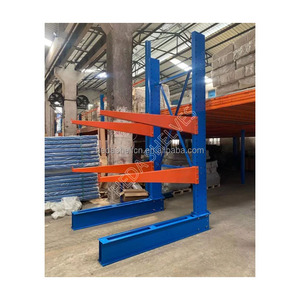
Single Sided Cantilever Rack Heavy Duty Cantilever Shelf Pallet Racking System Selective Steel Warehouse Tube Shelves
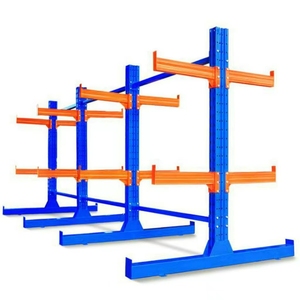
Steel Cantilever Pallet Racking Single Side Heavy Duty Multi-Level Corrosion Protection Garage Use CE Certified 500-3000kg Racks
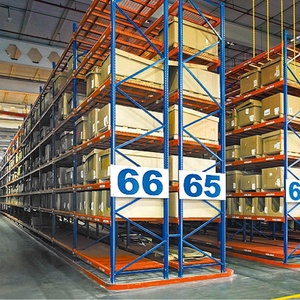
Narrow Aisle VNA Pallet Racking System Adjustable Heavy Duty Cold Rolled Steel Powder Coated High-Density Logistics E-commerce
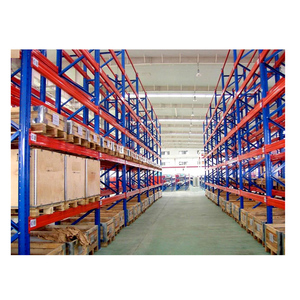
HEDA Guangzhou Steel Pallet Racking System Warehouse Rack Storage Shelves Heavy Duty
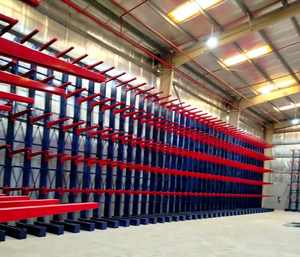
OEM Freight Warehousing Storage Rack Shelving Heavy Duty Cantilever Rack System
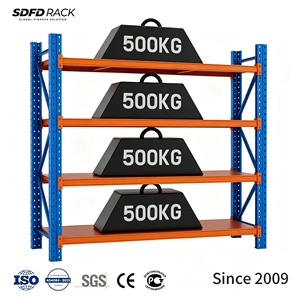
Custom Heavy Duty Industrial Steel 5 Multi-Level Stacking Storage Carpet Roll Display Warehouse Beam Pallet Racking Systems
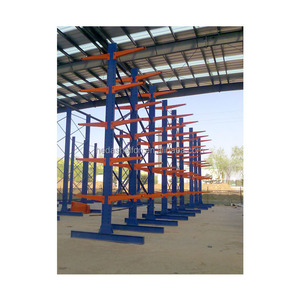
Double Sided Heavy Duty Cantilever Racking System Cantilever Racks Industrial Shelves Warehouse Racks
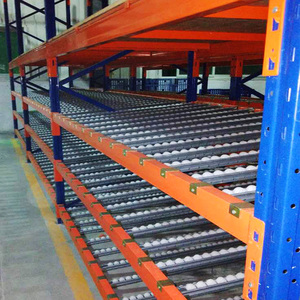
Pallet Flow Racking System Steel Shelf with Roller Tracks Warehouse Rack
Guangzhou HEDA Shelves: 25 Years of Certified Manufacturing Excellence
Founded in 2001, Guangzhou Heda Shelves Co., Ltd. operates a premier 30,000 square meter intelligent production complex in South China. We eliminate supply-chain vulnerability by integrating raw sheet coil slitting, cold roll-forming, automated CNC multi-die punching, robotic welding, and automatic electrostatic powder coating under one roof.
CE No. 2435-CPR-8605159
Full European Construction Products Regulation (CPR 305/2011) compliance. Our racking passes EN 15512:2020 limit-state design standards, accompanied by factory production control (FPC) audit documentation and EN 10204 3.1 steel mill test certificates.
ISO 9001:2015 & RoHS Certified
Certified under certificate number 18624Q00169R0M (valid through 2027-06). Our non-toxic electrostatic thermosetting polyester powder coatings comply fully with European RoHS directives, eliminating heavy metal emissions in FMCG and cold-chain facilities.
Full Seismic & Climate Adaptation
Engineered for high-humidity monsoon climates and severe seismic zones (PGA up to 0.4g). Every custom order receives structural finite element analysis (FEA), upgraded baseplates, chemical capsule anchors, and pickling-phosphating surface pretreatments.
Engineering Principles of FIFO Gravity Pallet Flow Racking
In modern automated logistics and high-velocity fulfillment centers, First-In, First-Out (FIFO) pallet flow racking—frequently referred to as dynamic gravity flow storage—represents the pinnacle of high-density passive automation. Unlike static selective racking systems that require wide operational access aisles for every single pallet rack run, dynamic FIFO racking condenses warehouse footprints by utilizing dedicated loading faces and unloading faces separated by continuous, inclined gravity roller beds.
1. Kinematic Velocity Control & Speed-Braking Rollers
The primary hazard in dynamic gravity racking is uncontrolled runaway acceleration, which creates devastating impact forces against the discharge face and destabilizes loads. To counter this, HEDA integrates self-governing centrifugal and eddy-current brake rollers positioned at designated pallet pitch intervals (typically every 1,200 mm to 1,400 mm along the lane).
These brake rollers operate without external electrical wiring. As the pallet rolls over them, an internal planetary gear train accelerates internal centrifugal flyweights against a heavy-duty friction lining. The higher the incoming pallet speed, the greater the retarding torque exerted. This maintains a uniform rolling speed between 0.2 m/s and 0.35 m/s, irrespective of whether the pallet carries a 400 kg lightweight load or a 1,500 kg payload.
2. Dynamic Back-Pressure Relief Separators
In deep-lane configurations extending from 5 to 25 pallets deep, the cumulative gravitational pressure exerted by upstream pallets against the front discharge pallet can exceed tens of kilonewtons. If an unloader forklift attempts to extract the front pallet while under this immense back-pressure, severe structural binding, load toppling, and excessive friction wear occur.
HEDA engineering incorporates mechanical floor separators at the pickup position. When the front pallet reaches the discharge stop, it triggers a spring-balanced linkage that locks a steel retention barrier immediately ahead of the second pallet. This isolates the front pallet completely from upstream line pressure, allowing the forklift operator to execute a clean, unencumbered extraction. Once the front pallet clears the channel, the mechanism automatically unlocks, allowing the queue to index forward safely by one position.
3. Structural Steel Profiles & Upright Section Modulus
Under European EN 15512 and CE structural directives, pallet racking frames must resist severe combined axial compression, transverse wind shear, horizontal surge forces from braking loads, and vertical eccentricities. Our Guangzhou facility roll-forms uprights from certified high-tensile Q235B and Q355B cold-rolled structural steel coils.
The profile geometry features multi-bend Omega sections (up to 12 cold-formed bends) that dramatically elevate the section modulus and torsional rigidity without superfluous deadweight. Beam connections utilize precision 3-lug or 4-lug drop-forged connectors fitted with anti-dislodgement safety locking pins capable of withstanding minimum shear extraction loads of 5.0 kN.
| Storage System Architecture | Inventory Principle | Floor Area Utilization | Throughput Capacity | Forklift Impact Risk | CAPEX vs. ROI Velocity |
|---|---|---|---|---|---|
| Gravity Pallet Flow (FIFO) | Strict First-In, First-Out | 70% – 85% (Ultra-Dense) | Extreme (Separated I/O) | Negligible (Aisles External) | Medium-High / Fast Payback in High-Turnover Hubs |
| Radio Shuttle Racking | FIFO & LIFO Flexible | 75% – 88% (Ultra-Dense) | High (Battery-Carrier Dependent) | Very Low (Forklifts Outer Face) | High (Substantial Shuttle Cart Electronics Maintenance) |
| Push-Back Racking | Last-In, First-Out (LIFO) | 60% – 70% (2 to 6 Deep) | Moderate | Low-Moderate (Pushing Resistance) | Moderate / Ideal for Staged Batches |
| Drive-In / Drive-Through | LIFO (Drive-In) / FIFO (Drive-Thru) | 65% – 75% (Dense Block) | Low (Slow Forklift In-Bay Travel) | High (Frequent Upright In-Bay Collisions) | Low Initial / High Structural Repair Overhead |
| Standard Selective Racking | Universal 100% Access | 35% – 45% (Aisle-Heavy) | High Single-Pallet Selectivity | Moderate (Continuous Aisle Exposure) | Lowest Initial / Poor Volumetric Floor Efficiency |
Future Procurement Trends in FIFO Pallet Racking (2025–2030)
Procurement strategies are shifting from basic component sourcing toward complete intralogistics lifecycle value, environmental compliance, and autonomous interface readiness. The following four macroeconomic and architectural trends dictate the next generation of warehouse equipment buying.
AGV & AMR Autonomous Docking Interfaces
Modern distribution facilities are rapidly replacing manned counterbalanced forklifts with Autonomous Guided Vehicles (AGVs) and Autonomous Mobile Robots (AMRs). Future FIFO procurement requires micron-level roller lane centering tolerances, mechanical optical-reflector mounts, and automated discharge sensors that communicate via industrial fieldbus protocols to trigger AMR pick sequences without human intervention.
Sub-Zero Low-Temp Steel & Synthetic Rollers
With global biopharmaceutical cold storage and rapid frozen food distribution surging, dynamic FIFO racking must perform consistently down to -30°C. Standard commercial lubricants freeze and seize roller bearings, causing massive line halts. Procurement specifications now mandate synthetic low-temperature fluorinated lubricants, galvanized structural steel profiles to prevent condensation rust, and cold-ductile impact steels that avoid brittle fracture.
Environmental Product Declarations (EPD)
Tier-1 logistics real estate developers (e.g., Prologis, GLP) and multinational corporate buyers increasingly score supply bids on Scope 3 embodied carbon. Procurement decisions prioritize mills utilizing electric arc furnace (EAF) scrap recycling and factories with zero-VOC dry powder-coating processes. Full traceability of raw steel sourcing with verifiable carbon metrics is becoming an essential condition for European public tenders.
Predictive Maintenance & Digital Twins
Procurement contracts are transitioning from one-off equipment handovers to long-term digital operational agreements. Buyers require native integration of RFID tags on major structural columns, QR-coded load charts, and roller vibration sensors capable of predicting bearing breakdown before catastrophic pallet jams occur. Digital structural twins allow facility managers to model dynamic seismic stresses during operational expansions.
Technological Development Trends in Dynamic Storage
How mechanical engineering, material sciences, and digital smart technologies are revolutionizing FIFO gravity storage hardware.
Smart Energy-Harvesting Brake Rollers
Next-generation centrifugal brake rollers incorporate micro-electromagnetic dynamos that harvest the kinetic rolling energy of descending pallets. This captured micro-wattage powers wireless IoT speed sensors and LED line status beacons, totally eliminating external wiring while providing live rack monitoring.
Universal Hybrid Pallet Runners
Traditional gravity lanes frequently fail when subjected to defective wooden pallets or uneven plastic base runners. New roller-bed developments feature split staggered twin-tracks with self-centering guide rims and high-load polymer friction-coatings, enabling seamless movement of Euro, GMA, and Australian perimeter-base skids within identical lanes.
Seismic Base-Isolation Dampers
In high-density dynamic storage, an earthquake's horizontal ground acceleration creates destructive sloshing and hydrodynamic surging of top-tier pallets. R&D is delivering fluid-viscous base dampers integrated into upright footings that absorb up to 45% of peak seismic shock waves before energy transfers into the roller beds.
Frequently Asked Technical & Sourcing Questions
Detailed answers prepared by senior intralogistics structural engineers to streamline technical evaluations, customs clearance, and warehouse feasibility studies.
What are the exact testing standards required for CE certification under EN 15512:2020?
CE marking on steel industrial racking is governed under the Construction Products Regulation (EU CPR No. 305/2011). Compliance with standard EN 15512:2020 requires physical destructive and non-destructive laboratory testing of cold-formed thin-walled steel components.
This includes stub-column compression tests to ascertain effective cross-sectional yield strength, upright-to-beam connection portal frame stiffness tests (to evaluate semi-rigid joint rotation characteristics), and beam-connector shear lock tests. Guangzhou HEDA Shelves holds CE Certificate No. 2435-CPR-8605159, confirming our products undergo stringent Factory Production Control (FPC) audits, comprehensive Mill Test traceability, and validated FEA finite element structural calculation dossiers.
What slope angle is required for FIFO gravity lanes, and how is it customized per pallet type?
The standard nominal slope for industrial pallet flow lanes is 3.5% (approx. 2 degrees inclination). However, this gradient is not one-size-fits-all:
• Wood Euro Pallets (Smooth Hardwood/Pine): Typically optimized at 3.0% to 3.5%.
• GMA Plastic Pallets (Perimeter base with slight flex): Often require 3.5% to 4.0% to overcome initial rolling resistance.
• Heavy Metal Containers / Stillage Cages: Calibrated lower (2.8% to 3.2%) with high-density steel rollers to prevent excessive momentum buildup.
HEDA provides pre-shipment lane testing at our Guangzhou test tower. Clients can ship sample packaging, pallets, and exact load profiles to verify restartability from a dead stop and terminal impact velocity before factory roll-forming begins.
How does FIFO gravity flow solve the structural "Honeycombing" issue of warehouses?
Honeycombing refers to the costly loss of accessible volumetric storage when partially empty lanes in deep storage (like Drive-In or Push-Back) cannot receive different SKUs without locking out existing pallets. Because Drive-In operates under LIFO, an operator cannot put new stock behind older lots without burying the old items.
FIFO gravity flow systems eliminate this operational deadlock. Lanes can be assigned specific SKUs with automatic stock rotation. Because inventory moves in a unidirectional continuous flow from loading to unloading face, pick faces are perpetually 100% full, stock rotation is autonomous, and internal warehouse travel distance is reduced by 30% to 45% compared to selective arrangements.
What concrete floor slab specifications (tolerances and load-bearing) are required?
Dynamic high-density systems concentrate massive static and dynamic point loads on concrete floor slabs. Under standard European FEM 10.2.14 guidelines, we recommend minimum slab specifications:
• Concrete Strength Class: Minimum C25/30 or C30/37 with steel reinforcement mesh.
• Point Load Capacity: Footplate point loadings can reach 60 to 140 kN per column depending on frame height and seismic criteria.
• Floor Flatness: Concrete flatness should conform to DIN 18202 Table 3 Line 4 or TR34 FM2 standards. Severe slab dips cause beam pitch deviations that distort gravity flow lanes, producing unequal roller loading or pallet stalling.
How does HEDA prevent galvanic corrosion and environmental wear in humid or sub-zero environments?
Environmental failure in racking typically starts at micro-pores in the surface finish. HEDA implements an automated 9-stage surface preparation line:
1. Heavy alkaline degreasing to remove mill lubricants.
2. Acid pickling to strip surface oxidation and scale.
3. Zinc-iron crystalline phosphating to establish an inert corrosion-inhibiting chemical foundation.
4. Electrostatic application of pure thermosetting polyester powder coated to a cured film thickness of 70 to 90 microns.
For outdoor, humid equatorial coastal, or blast-freezer installations, components can be specified with hot-dip galvanizing according to ISO 1461, yielding an ultra-durable 60 to 80 micron metallurgical zinc barrier capable of enduring decades without maintenance.
Request a Verified CAD Layout & Structural Loading Dossier
Planning a modern FIFO warehouse upgrade or dynamic intralogistics facility? Collaborate directly with HEDA's in-house engineering team. We supply complete 2D floor plans, 3D parametric visualizations, pallet capacity metrics, and structural calculation reports compliant with CE and local building codes.
- 24-48 Hour CAD Turnaround
- CE No. 2435-CPR-8605159
- Direct Manufacturer Pricing
- Dynamic Test Tower Trials
Consult with an Engineer
Initiate direct communication with our Guangzhou engineering and export logistics department for immediate quotes and layout reviews.
Send an Inquiry