Recommended Heavy-Duty Warehouse Storage Infrastructure
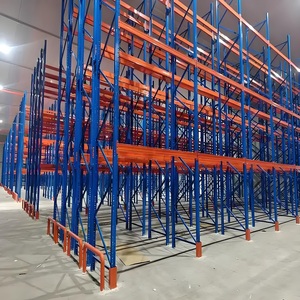
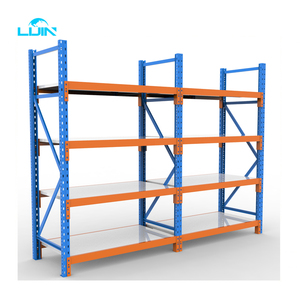
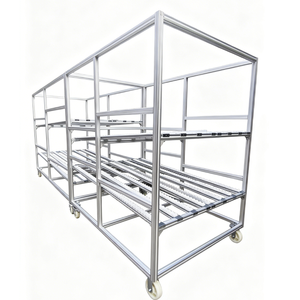
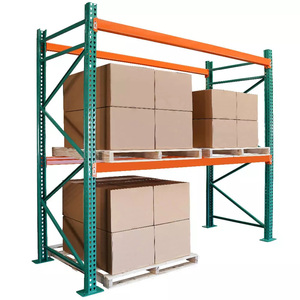
Explore our export-grade industrial racking and dynamic shelving configurations manufactured directly at our 30,000 m² Guangzhou production facility under rigorous ISO 9001:2015 and CE quality standards.
Engineering Whitepaper: CE-Compliant Cantilever Systems for Pipe & Tube Storage
Standards Alignment: EN 15512:2020, EN 15620, RMI MH16.1, and CE CPR 305/2011
In the material handling domain, long-load storage represents a classic mechanical challenge: how to mitigate torsional deflection while eliminating aisle-facing vertical column obstructions. For pipes—whether heavy seamless steel casing, high-density polyethylene (HDPE), copper plumbing conduits, or extruded aluminum tubing—traditional selective pallet racks impose catastrophic limitations. Loading standard 6-meter, 9-meter, or 12-meter tube bundles into pallet racking requires excessively wide beam bays, resulting in high point loads, unacceptable longitudinal beam sag, and hazardous handling bottlenecks.
CE certified cantilever racking functions as an unencumbered structural arm-and-column assembly. The absence of front vertical columns allows unhindered horizontal access along the entire longitudinal axis of the storage row. As an internationally certified exporter, Guangzhou Heda Shelves Co., Ltd. (CE Certificate No. 2435-CPR-8605159; ISO 9001:2015 No. 18624Q00169R0M) designs and fabricates both roll-formed and hot-rolled structural I-beam cantilever systems specifically calibrated to eliminate arm sag, column rotation, and product ovality deformation.
| Engineering Parameter | Roll-Formed Cantilever System | Structural I-Beam (Hot-Rolled) Cantilever | Heavy-Duty Pipe Storage Implications |
|---|---|---|---|
| Steel Grade Standard | Q235B / Q355B Cold-Rolled Strip | Q355B / ASTM A572 Grade 50 Structural H-Beam | High-yield structural grade resists shock loads during rough crane drops. |
| Load Capacity Per Arm | 250 kg – 1,000 kg UDL | 1,000 kg – 4,500+ kg UDL per arm level | Structural I-beam is mandatory for carbon steel pipe bundles and oil casing. |
| Arm Connection Geometry | Tapered wedge pins / Multi-tooth pin locking | High-tensile Grade 8.8/10.9 structural through-bolts | Through-bolted assemblies prevent arm dislodgement during vertical forklift lifts. |
| Impact Resistance Class | Moderate; elastic resilience within limits | High moment resistance against side impacts | Protects upright verticality in high-turnover steel stocking yards. |
| Deflection Ratio Limit | 1/200 under design working load | 1/250 to 1/300 under full design capacity | Rigid limit ensures round pipes will not roll toward the aisle boundary. |
| Outdoor Corrosion Barrier | Standard electrostatic polyester powder coat | Hot-Dip Galvanized (ISO 1461, 85μm thickness) | HDG provides 30+ years service life in coastal, monsoon, and open-yard logistics. |
A critical consideration during pipe cantilever specification is elastic deflection management. When cylindrical tubing is tiered, the point loads transfer downward onto narrow arm bearing points. Unchecked deflection allows round materials to roll forward under gravity. HEDA Shelves integrates a 2° to 4° positive incline angle on all cantilever arms, paired with welded or removable mechanical end-stops (chock retainers) standing 80 mm to 250 mm high, preventing inadvertent load rolling and guaranteeing forklift operator safety.
Procurement & Technological Trends: The Future of Industrial Cantilever Racking
Strategic Insights for Global Supply Chain Directors and Engineering Procurement Contractors
The industrial pipe and extrusions warehousing sector is undergoing profound structural shifts driven by escalating real estate costs, tighter warehouse safety regulations, and the proliferation of automated material handling. Enterprise buyers must anticipate three definitive developments shaping global procurement:
AS/RS Automated Cantilever Integration
Traditional manually operated reach trucks are being supplanted by Crane-in-Aisle and 4-Directional Automated Stacker Cranes. Cantilever columns are being engineered with ultra-tight geometric tolerances (±1.0 mm) and optical target brackets to interface seamlessly with laser-guided automated retrieval arms.
Decarbonization & Green Steel Sourcing
Tier-1 infrastructure tenders in Europe, North America, and the Middle East now evaluate Scope 3 carbon footprint metrics. Modern procurement requires suppliers to offer certified EPD (Environmental Product Declaration) filings, low-VOC electrostatically cured powder coatings, and traceability back to recyclable steel billets.
IoT Real-Time Deflection & Overload Monitoring
Next-generation pipe logistics terminals utilize wireless strain gauge sensors embedded directly into structural arm-to-column joints. These telemetry modules communicate with the WMS (Warehouse Management System), alerting supervisors to uneven load distribution or dynamic impact fatigue before plastic deformation occurs.
For international buyers, these trends mean that selecting a racking supplier is no longer a transactional purchase of steel tonnage. It requires an engineering partner capable of delivering 3D parametric CAD modeling, finite element analysis (FEA) reports, and customized connection geometry to ensure long-term facility adaptability.
Manufacturing Competence: Why Tier-1 EPCs Partner with HEDA Shelves
Guangzhou Direct Manufacturing Infrastructure for International Turnkey Projects
Established in 2001, Guangzhou Heda Shelves Co., Ltd. operates a high-capacity production facility encompassing over 30,000 square meters staffed by 300+ structural engineers, fabrication technicians, and international logistics coordinators. With an active monthly processing capacity exceeding 30,000 tons of prime-grade steel, we maintain complete control over raw material procurement, cold-forming, robotic welding, surface conversion, and export freight consolidation.
10-Step In-House Production & Quality Control Protocol
Raw Material Audit
Mill test certificates, ultrasonic wall thickness & tensile verification.
Precision CNC Cutting
High-speed laser & plasma cutting within ±0.5mm tolerance limits.
Automated Punching
Continuous CNC multi-station punching for standard 100mm/140mm pitch centers.
Cold Bending Forming
Progressive roll-forming mills producing robust closed C & box profiles.
Profile Straightening
Camber and sweep correction ensuring dead-vertical upright erection.
Surface Polishing
Automated shot-blasting to Sa 2.5 standard, removing all mill scale and slag.
Robotic CO2 Welding
Penetration-verified continuous fillet welds on heavy arm connectors.
Pickling & Phosphating
Multi-stage chemical immersion providing non-peel adhesion bases.
Electrostatic Powder Coat
Lead-free epoxy-polyester cured at 200°C for high scratch and chemical resistance.
QC Pre-Assembly & Export Pack
Trial bolt-up, steel-strapped crating, and container center-of-gravity planning.
Certificate No. 2435-CPR-8605159
Officially tested and certified in compliance with European Union Construction Products Regulation (CPR 305/2011), qualifying our structures for European municipal and corporate tenders.
Certificate No. 18624Q00169R0M
Stringent factory-wide quality management protocols govern steel traceability, torque tolerances, chemical bath pH levels, and pre-dispatch visual inspections.
Zone IV Site Calibrations
Engineered base plate anchoring, upright web stiffeners, and cross-braced back portals calculated specifically for seismic fault zones across ASEAN, GCC, and Pacific Rim corridors.
Frequently Asked Questions: Industrial Pipe Cantilever Procurement
Definitive Technical and Commercial Guidance for International Logistics and Warehouse Engineers
How do you calculate the required number of cantilever arms and spacing for flexible PVC and rigid steel pipes? +
What is the structural difference between Single-Sided and Double-Sided Cantilever Racks? +
Can cantilever racks be installed outdoors, and what anti-corrosion finish is required? +
What concrete floor slab specifications are necessary to support heavy cantilever upright loads? +
What export documentation and design approvals are provided prior to fabrication? +
Connect Directly with a Senior Structural Engineer
Send us your site floor plan, pipe dimensions, bundle weights, and forklift specifications. Our engineering department will deliver a customized 2D/3D CAD layout, load capacity calculation report, and a detailed export quotation within 24 hours.