Engineered Automotive Storage & Material Handling Systems
Explore factory-direct racking solutions engineered for extreme load factors, structural resistance, high SKU turnover, and Tier-1 automotive assembly logistics.
Engineering Integrity: Why CE Certification Dictates Automotive Racking Security
In modern automotive manufacturing plants and multi-tiered spare-parts supply chains, storage infrastructures carry far more than static mass. From engine blocks, stamping dies, and raw sheet steel to dynamic electric vehicle (EV) battery packs, automotive logistics involves extreme payload concentrations, non-standard footprint shapes, and non-stop material handling cycles. Procuring through a verified, CE-certified automotive racking systems factory and supplier is not merely a box-checking exercise—it directly ensures life safety, structural resilience under forklift impacts, seismic compliance, and legal compliance across European, Middle Eastern, and worldwide assembly hubs.
CE marking on structural steel racking (encompassing standards such as EN 1090-1 execution of steel structures, EN 15512 design calculation codes, and EN 15635 maintenance protocols) verifies that every rolled upright, heavy box beam, connector tab, and floor anchor plate has undergone finite element analysis (FEA), mechanical load deflection stress tests, and automated robotic weld inspections. At our 30,000 m² Guangzhou production facility, operating continuously since 2001, every batch of cold-formed structural steel conforms to stringent structural tolerances. Our systems safeguard Tier-1 and OEM automotive assembly plants against column buckling, beam fatigue, weld detachment, and costly supply-chain disruptions.
Enterprise Advantages: Built for High-Density Automotive Logistics
Integrating warehouse solutions for the automotive industry demands distinct structural engineering capabilities compared to generic light-duty commercial shelving. With over 25 years of dedicated manufacturing experience, our facility provides verifiable engineering superiority across every project stage:
Certified Q235B & Q355B Steel
Direct sourcing from audited primary steel mills ensures optimal tensile resilience, yield strength, and structural performance under seismic or high-vibration automotive operations.
Automated 10-Stage Manufacturing
From multi-axis CNC punching to continuous roll profile forming, robotic dual-shield welding, and electrostatic powder coating, every dimensional tolerance is tightly held.
Pre-Treatment & Anti-Corrosion
Industrial acid pickling and phosphating pre-treatments guarantee superior powder coating adhesion, resisting grease, motor oils, industrial battery acid vapours, and coastal humidity.
Automotive Racking Systems: Strategic Recommendations by Application
Achieving rapid fulfillment and operational safety in an automotive distribution center requires matching structural configurations directly to product handling profiles:
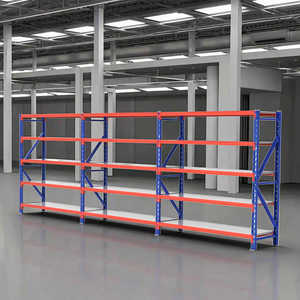
- Stamping Dies & Powertrain Components: Utilize Heavy-Duty Structural H-Beam Systems and reinforced 1000kg–2000kg stacking racks. Dies exert localized point-load stresses that cause deflection in light roll-formed beams; solid structural channels absorb dynamic set-down loads safely.
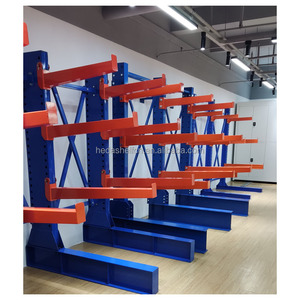
- Exhaust Systems, Trim Moldings & Roll Cages: Structural cantilever racks eliminate vertical front-column interference. Single and double-sided structural cantilever towers accommodate variable part lengths while maintaining clear overhead clearance for side-loaders and multi-directional trucks.
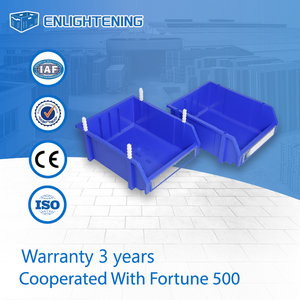
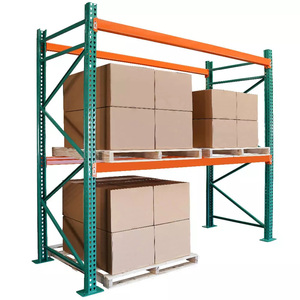
- Body Panels, Windshields & Sensitive Class-A Surfaces: Combine heavy longspan structural profiles with custom protective dividers, high-density plastic shelf bins, and rubberized support cross-ties to eliminate scratching, mechanical vibration, and cosmetic transport flaws.
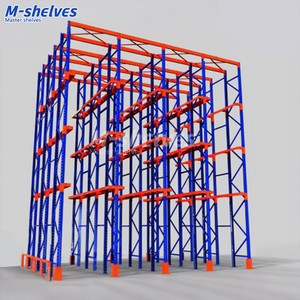
- Electric Vehicle (EV) Battery Cells & Packs: Implement Radio Shuttle Pallet Racking and Double Deep Systems with built-in thermal sensor mounts, sprinkler routing channels, and battery quarantine safety bays.
Future Procurement Trends: The Next Horizon in Automotive Intralogistics
The transition toward electric, connected, and autonomous vehicles is fundamentally changing automotive factory warehouse layouts. Over the next five to seven years, global procurement directors must adapt their racking specifications to four key industry transformations:
1. Dedicated EV Battery Storage & Thermal Containment: Unlike dry cast-iron powertrain components, lithium-ion battery modules require strict fire safety integrations within the rack structure. Future procurement contracts will prioritize designs with integrated early-suppression fast-response (ESFR) sprinkler drops, bottom steel fire-shield baffles, and automated shuttle extraction routines that safely isolate compromised battery packs in under two minutes.
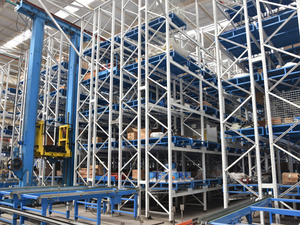
2. Deep AMR & AGV Sub-Structure Interoperability: Autonomous mobile robots (AMRs) and automated guided vehicles (AGVs) are replacing manually operated forklifts on shop floors. Racking systems are now engineered with tighter deflection parameters, optical reflector mounting brackets, and zero-ground-clearance base plates to support automated pallet shuttles and robotic low-clearance transport tuggers without dimensional drift.
3. High-Density Multi-Tier Mezzanines for E-Mobility Sub-Assembly: Automotive assembly spaces face high land costs. Structural rack-supported mezzanines allow plants to run sub-assembly lines directly above ground-level heavy component staging, doubling functional square footage without civil footprint expansions.
4. Lifecycle Carbon Footprint & Sustainable Coating Chemistry: Global OEMs are auditing Scope 3 carbon emissions across their supply chains. Racking factories using closed-loop zero-effluent phosphating, low-VOC or solvent-free electrostatic powder coatings, and traceable low-emission scrap steel will maintain a clear qualification advantage during international tenders.
Racking Development Dynamics: Moving from Static Shelves to Active Infrastructure
Historically treated as static facility fixtures, automotive warehouse racks are evolving into active, monitored data-integrated platforms. Sensor integration is currently leading this transition. Strain-gauge deflection monitors attached to central load-bearing cross beams alert operations teams via IoT dashboards whenever an overloaded automotive stamping rack exceeds design tolerances.
Furthermore, standardizations around modular beam disconnectors and weldless connection points are reducing installation schedules by up to 40%. As automotive platforms update their models on shorter product cycles, internal racking assemblies must be swiftly reconfigured. Tool-less, wedge-locking connector lugs and modular upright profiles allow automotive logistics teams to adjust storage heights quickly to fit redesigned vehicle geometries.
Need an EN 15512 Structural Calculation & Free 3D CAD Layout?
Our structural engineering team produces comprehensive 2D CAD layouts, full 3D visual models, and load-limit reports tailored to your floor capacity and forklift fleet within 24 to 48 hours.
Inquire NowFrequently Asked Questions (FAQ)
Key technical, engineering, and international shipping questions addressed by our engineering department.
Q1: How does CE certification protect an automotive manufacturer against liability?
CE marking confirms compliance with European Construction Products Regulation (CPR) and standard EN 15512. For an automotive plant, this ensures structural yield calculations, beam connector safety catches, and steel metallurgy conform to regulated safety margins, preventing fatal structural collapses and insulating factory operators from liability audits.
Q2: Can your automotive racking handle custom engine and battery dimensions?
Yes. We operate fully customizable OEM and ODM roll-forming lines. Beam spans, upright gauge thickness (ranging from 1.5mm up to 3.0mm+ cold-rolled profiles), upright depth, and horizontal support wire decking are tailored precisely to your component transport pallets, stamping dies, or EV battery cell cradles.
Q3: What seismic calculations are applied for automotive facilities in active seismic zones?
For installations in earthquake-prone regions (such as Japan, the Philippines, Indonesia, or high-risk areas of the Middle East and Europe), our engineers apply seismic acceleration parameters (PGA). We reinforce upright profiles, add heavy diagonal rear cross-bracing, enlarge floor anchor base plates, and double-anchor upright bases to absorb dynamic ground displacements.
Q4: How do your finishes resist lubricants, battery acid, and corrosive environments?
Our 10-step finishing line incorporates complete oil degreasing, acid pickling, and chemical phosphating prior to electrostatic polyester powder coating cured at 200°C. For extreme applications involving battery acid exposure, wet operations, or outdoor logistics, hot-dip galvanizing per ISO 1461 is available.
Q5: What details are required to generate an engineering proposal and quote?
Simply provide your facility's clear height, building column layout, maximum pallet or bin dimensions (L x W x H), total gross payload per level, forklift model with lift height limits, and intended daily SKU throughput. Our engineering department will return a 3D CAD design and structural estimate within 48 hours.
Q6: How are container shipments packaged to eliminate transit damage?
Beams, structural cantilever arms, and upright columns are bundled with protective corrugated paper buffers, corner angle guards, and high-tensile steel strapping. Fragile accessories, bin dividers, and hardware are crated in seaworthy palletized cartons with optimized packing sequences to maximize container cube efficiency and prevent dock handling damage.