Warehouse Pallet Storage Racks can turn unused vertical space into organized, accessible storage. That matters when aisles are crowded and pallet locations are hard to track. The right system can support safer handling and smoother picking, but it is not a universal fix. Capacity depends on the building, inventory, equipment, and daily workflow.
Industry data points to growing attention on warehouse technology and operations. MHI’s 2024 Annual Industry Report found that 55% of surveyed supply chain professionals planned to increase investment in technology and innovation. Racking is only one part of that picture. Yet a layout that fits forklifts, pallet dimensions, and stock rotation can help make warehouse processes more predictable. OSHA’s materials-handling guidance also emphasizes stable storage and keeping aisles clear—practical details that rack design must accommodate.
A useful rack plan starts with real measurements: ceiling height, load weights, pallet sizes, sprinkler clearance, and turning space. It should also account for inspection and maintenance, not just the number of pallet positions. Small details matter. One awkward aisle can slow every shift. And even a well-designed system may need adjustment as products change; that part is easy to underestimate. This guide explores why businesses choose Warehouse Pallet Storage Racks, what to assess before installation, and how to balance storage density with access and safety.
What Warehouse Pallet Storage Racks Are and How They Work
Why Choose Warehouse Pallet Storage Racks?
What Warehouse Pallet Storage Racks Are and How They Work
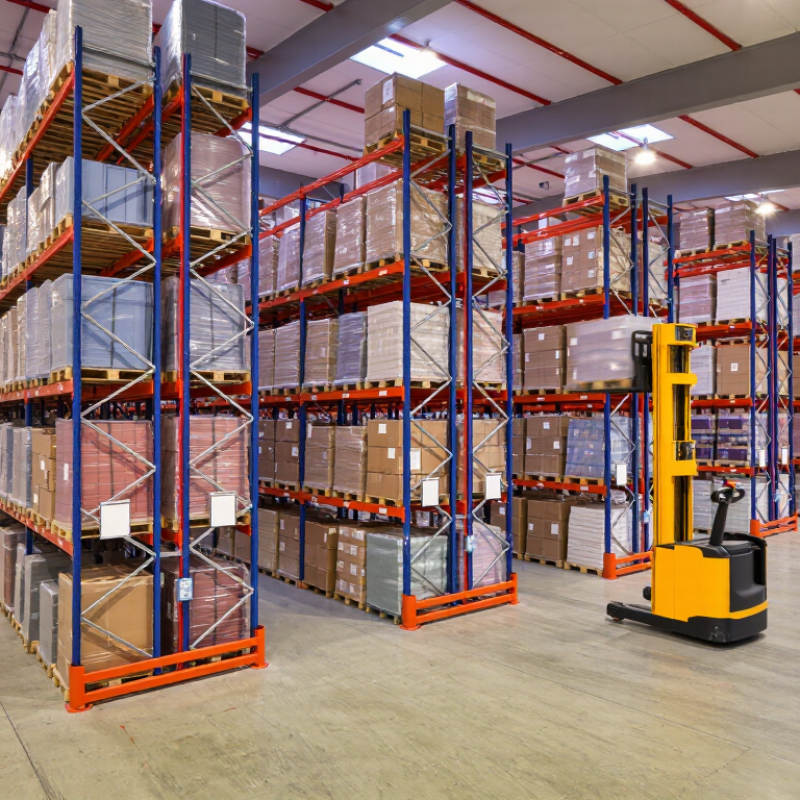
Warehouse pallet storage racks are steel structures that hold palletized goods above the floor. In a common selective-rack layout, horizontal beams connect upright frames, creating rows of accessible storage bays. A forklift lifts each pallet onto a beam level and retrieves it when needed. Simple, but the details matter: pallet dimensions, load weight, beam height, and aisle width all affect the design.
Rack layouts can make inventory easier to see and reach, while using vertical space that might otherwise sit empty. MHI’s 2023 Annual Industry Report found that 87% of surveyed organizations expected to increase supply-chain technology investment within two years. Racks are not automation, but clear locations and consistent labeling can support accurate inventory systems. The simplest layout is not always the best; dense storage may reduce access, and a small aisle change can affect daily movement.
Tips: Confirm each pallet’s size and weight before selecting beams. Keep loads within posted rack capacities, and have the installation checked by a qualified professional. Recheck after layout changes or visible damage. A bent upright is not a cosmetic issue.
Why Choose Warehouse Pallet Storage Racks? - What Warehouse Pallet Storage Racks Are and How They Work
| Rack System | How It Works | Pallet Access | Stock Rotation | Typical Advantages | Key Planning Consideration |
|---|---|---|---|---|---|
| Selective pallet racking | Forklifts place pallets on horizontal beams in individual storage positions, usually arranged in rows with operating aisles. | Direct access to each pallet position. | Suitable for FIFO or LIFO, depending on picking and replenishment procedures. | High selectivity; works well with many product types and frequent pallet picking. | Requires aisles between rack rows, so storage density is generally lower than in deep-lane systems. |
| Double-deep racking | Two pallet positions are stored one behind the other, typically using a reach truck with a suitable deep-reach attachment. | The front pallet is accessed directly; the rear pallet is accessed after the front pallet is moved. | Usually LIFO within each two-pallet lane. | Stores more pallets in a given floor area than single-deep selective racking. | Requires compatible handling equipment and careful location planning for products stored behind other pallets. |
| Drive-in racking | A forklift enters a supported storage lane to place or retrieve pallets, typically storing multiple pallets deep. | Access is through the lane opening; pallets within a lane are not all independently accessible. | Typically LIFO when loading and unloading from the same side. | High storage density for larger quantities of the same product. | Works best when each lane holds a consistent product; forklift and rack clearances must be carefully coordinated. |
| Drive-through racking | A forklift can enter a storage lane from either end, allowing loading from one side and retrieval from the other. | Access is from both ends of the lane, rather than to every pallet position from an aisle. | Can support FIFO when loading and retrieval are managed from opposite ends. | Combines deep-lane storage with the option to separate replenishment and picking sides. | Needs access aisles at both ends and disciplined lane management to maintain stock rotation. |
| Push-back racking | Each new pallet pushes earlier pallets farther back on inclined carts or rails; pallets move forward as front pallets are removed. | Operators load and retrieve pallets from the aisle-facing side. | Typically LIFO within each lane. | Provides multiple pallet positions per lane while keeping forklift travel within the aisle. | Best suited to products that can be stored in lane-based groups; pallet condition and system design affect smooth movement. |
| Pallet flow racking | Pallets are loaded at the higher rear end of a lane and move by gravity on rollers toward the picking face. | Loading and picking take place at opposite ends of the lane. | FIFO, with pallets generally moving through the lane in loading order. | Supports orderly rotation and can separate replenishment activity from picking activity. | Requires suitable pallets, lane controls, and maintenance of rollers, brakes, and other flow components. |
| Mobile racking | Rack rows move on guided bases so an operating aisle can be opened where needed. | Direct access is available to a selected row when its aisle is opened. | Depends on the storage layout and inventory procedures. | Reduces the number of permanently open aisles compared with conventional layouts. | Needs a suitable floor and building design, and access may be limited to one opened aisle at a time. |
Planning note: Rack selection, beam levels, aisle widths, and load limits depend on pallet dimensions, product weight, handling equipment, building conditions, and applicable local requirements. Have the system designed and reviewed by a qualified professional, and follow its posted load limits.
FAQS
They are steel structures that hold palletized goods above the floor. Upright frames and horizontal beams create storage bays. Forklifts place and retrieve pallets. Simple, but details matter.
They use vertical space that might otherwise stay empty. Clear bays can make inventory easier to see and reach. Dense storage can reduce access.
Record each loaded pallet’s weight, dimensions, and overhang. Check inventory turnover, ceiling height, sprinkler clearance, columns, and floor condition. Small omissions matter.
Match rack depth and beam levels to the pallets and forklift. Measure turning space as well as aisle width. A few inches can change daily movement.
Consistent labels and clear locations can help inventory systems. Racks alone do not automate tracking. Labels still need regular attention.
Keep loads within posted capacities, and place limits where operators can see them. Mixed pallet sizes and uneven loads need careful review.
Have installation checked by a qualified professional. Recheck racks after layout changes or visible damage. A bent upright needs attention. Not just paint.
Leave room for different pallet sizes and stock levels. A dense layout may work today but restrict access later. I would check the site twice; drawings can miss details.
Conclusion
Warehouse Pallet Storage Racks are structural systems designed to hold palletized goods and make them accessible to warehouse equipment. Different configurations, such as selective, drive-in, and push-back racks, support different needs for product variety, storage density, and inventory rotation. Choosing the right arrangement can make better use of vertical and floor space, improve access to stored items, and help streamline receiving, picking, and replenishment.
A suitable pallet rack system depends on the warehouse layout, load dimensions and weight, inventory flow, equipment, and plans for future growth. Safe performance also relies on proper installation, clear load limits, balanced loading, and routine inspection. By matching the rack configuration to daily operations and maintaining it carefully, a warehouse can create a more organized, efficient, and dependable storage environment.