Choosing a Warehouse Racking manufacturer in China starts with more than comparing prices or browsing polished product photos. Buyers need to understand how each supplier designs, tests, and supports storage systems for real operating conditions. A pallet rack that looks sturdy in a catalog may not suit a narrow aisle, uneven floor, or changing load profile.
A useful comparison considers upright and beam specifications, connector design, finish quality, and clearly stated load limits. Ask for drawings, capacity charts, material details, and project references. If possible, inspect a sample connection or visit the production facility. Look closely at weld consistency, punched holes, beam locks, and coating coverage. Small details matter.
It also helps to distinguish a manufacturer from a trading company. Both may be useful, but their production control, lead times, and after-sales responsibilities can differ. Request written answers about installation guidance, spare parts, warranty terms, and how design changes are reviewed. Then compare quotations on the same specifications, not just the same product name.
No shortlist is perfect. A factory visit cannot prove every claim, and a low price is not automatically a warning sign. Still, independent checks and clear documentation reduce guesswork. This guide introduces notable Chinese suppliers and practical ways to assess them. The right choice depends on your building, inventory, budget, and service expectations—not a ranking alone.
What Warehouse Racking Manufacturers in China Produce
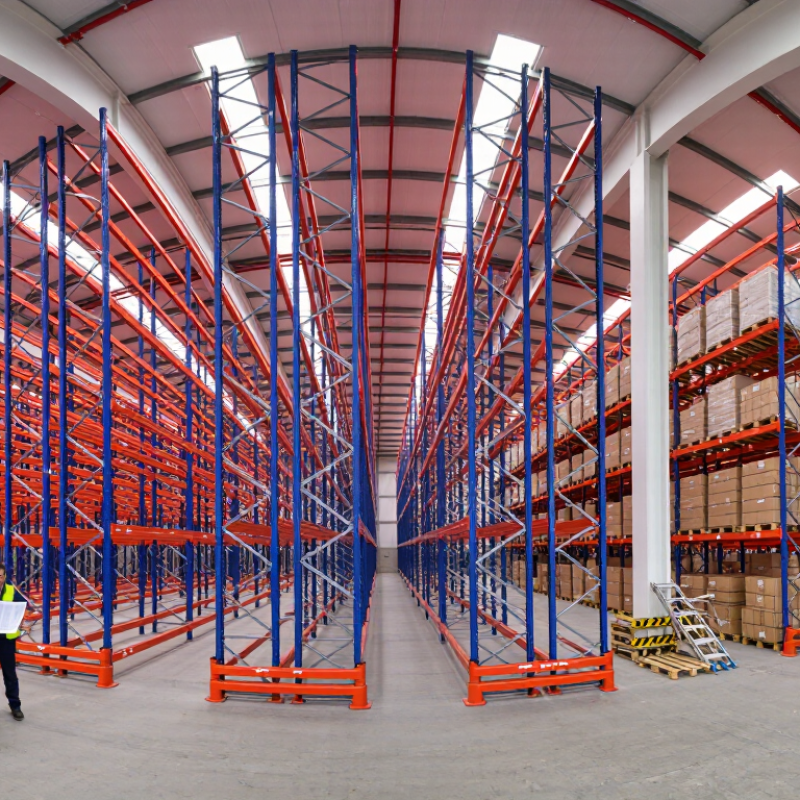
Chinese warehouse racking manufacturers produce systems for storing pallets, cartons, long materials, and small parts. Common products include selective pallet racks, drive-in racks, carton-flow shelves, cantilever racks, and multi-level mezzanines. Some factories also make mobile shelving and automated storage equipment. The right system depends on the goods, handling equipment, and available floor space.
Production usually covers uprights, beams, bracing, wire decking, and safety accessories. Steel is cut, punched, formed, welded where needed, and finished with powder coating or galvanizing. Manufacturers may offer load calculations and layout drawings, but buyers should verify beam capacity, anchoring needs, and aisle clearance for their actual site. A neat drawing can still miss a forklift’s turning space. That detail is easy to overlook.
Tips: Share pallet dimensions, weights, and handling methods before requesting a quote. Ask for clear load ratings and installation guidance. Check the finish and connections on a sample. Small mismatches matter. A system that fits today may need adjustment when inventory changes.
Who Are the Top Warehouse Racking Manufacturers in China? – What Warehouse Racking Manufacturers in China Produce
| Product category | How it is configured | Typical use | Common components and options |
|---|---|---|---|
| Selective pallet racking | Rows of upright frames and adjustable beams create individual pallet storage positions. | General-purpose warehouses that need direct access to many different pallet loads. | Upright frames, beams, beam connectors, bracing, safety locks, and optional row spacers or frame protectors. |
| Drive-in and drive-through racking | Pallets are stored on rails within deep lanes; a lift truck enters the lane to place or retrieve loads. | High-density storage for larger quantities of similar products. Drive-in layouts generally use one access side; drive-through layouts can use both ends. | Uprights, top and rear bracing, pallet support rails, lane guides, and optional entry guards. |
| Double-deep racking | Two pallet positions are placed one behind the other, typically using a suitable reach truck or handling attachment. | Warehouses seeking more pallet locations than single-deep selective layouts provide, while retaining access by aisle. | Rack frames, beams, back-to-back ties, and layout-specific clearances for the selected truck and pallet. |
| Carton flow and pallet flow racking | Inclined lanes use rollers or wheels to move cartons or pallets from the loading side toward the picking side. | Order-picking operations and storage systems designed for controlled product flow, including first-in, first-out arrangements when configured for it. | Frames, beams, flow tracks, lane dividers, stops, and optional braking or speed-control components. |
| Mezzanine systems | A raised platform supported by columns or rack structures creates an additional usable level within a building. | Facilities needing extra floor space for storage, packing, light work areas, or access between levels. | Steel columns and beams, floor decking, stairs, handrails, gates, and access openings; design depends on the building and intended loads. |
| Long-span shelving | Beam-and-upright bays with shelf levels provide open storage for items handled individually rather than as pallet loads. | Manual picking, small-parts storage, archive areas, and light- or medium-duty warehouse applications. | Uprights, beams, steel or other specified shelf panels, dividers, and optional bin or label accessories. |
| Automated storage and retrieval system (AS/RS) racks | Racking is designed to work with automated cranes, shuttles, or other material-handling equipment. | Storage and retrieval operations integrated with warehouse control or management systems. | Application-specific rack structures, rails or guide components, interfaces, and system-compatible safety provisions. |
| Common materials and finishes | Many systems use formed or fabricated steel members; material specifications and surface treatment depend on the application. | Material handling environments with different corrosion, hygiene, durability, or appearance requirements. | Powder-coated or painted finishes are common options; galvanized finishes may be specified for suitable environments. Confirm the required finish with the project design. |
Note: Product designs, dimensions, and load capacities vary by project. Rack capacity should be confirmed through project-specific engineering using the intended loads, pallet dimensions, equipment, layout, and applicable local requirements.
FAQS
Share pallet dimensions, expected loads, aisle widths, ceiling height, floor conditions, and forklift type. A clear site plan helps.
Request load tables for your beam spans and full rack configuration. Compare them with your actual pallets and handling equipment.
Review material specifications, inspection records, weld quality, coating coverage, and dimensional checks. Details matter.
Not always. Ask what was tested and under which conditions. A certificate without a clear scope may tell you little.
Compare steel grade, finish, accessories, drawings, delivery scope, and service line by line. A low price can hide missing details.
Look at welding, coating, and measurement checks on finished parts. A polished showroom proves little.
Narrow aisles may add storage space but restrict equipment movement. Poor routes can slow pickers, even with a tidy drawing.
Verify dimensions, installation clearances, packaging, lead times, and replacement-part arrangements. Check twice. Small drawing assumptions can become awkward site problems.
Conclusion
China’s Warehouse Racking manufacturers produce storage systems designed to organize goods, make better use of available space, and support different warehouse workflows. Their offerings may include selective pallet racks, drive-in systems, shelving, mezzanines, and automated storage solutions. The country’s broad manufacturing base serves businesses with varied storage needs, from straightforward stockrooms to large distribution facilities, while offering options across different capacities, layouts, and levels of automation.
When identifying leading manufacturers, buyers can consider engineering capability, production quality, safety testing, customization, installation support, and after-sales service. Comparing suppliers involves looking beyond product names to assess load requirements, warehouse dimensions, inventory movement, expansion plans, and compatibility with handling equipment. Reviewing these factors helps businesses evaluate manufacturers and product ranges on a consistent basis, match a racking system to practical operating needs, and make informed decisions about long-term performance and value.