Warehouses are being asked to hold more product without sacrificing access or safety. MHI’s 2023 Annual Industry Report, produced with Deloitte, found that 87% of surveyed supply-chain leaders expected to increase investment in supply-chain technology and innovation over the following two years. That broad trend does not guarantee every facility needs automation. It does show why storage design deserves careful attention.
A well-matched Pallet Storage System can improve usable space and picking flow, but the right configuration depends on pallet dimensions, load weights, inventory turnover, and handling equipment. Selective racking offers direct access to each pallet; drive-in and shuttle systems can suit higher-density storage. Small details matter. Beam connections, upright protection, clear load labels, and installation quality all affect day-to-day performance. A specification that looks sound on paper may still need adjustment once forklifts and real inventory enter the aisle.
China’s manufacturers offer a wide range of storage products and engineering capabilities, so buyers should compare evidence rather than rely on broad claims. Request dimensioned drawings, rated-load documentation, material specifications, coating details, and references for comparable projects. Confirm how the supplier supports inspection, installation, spare parts, and future layout changes. These checks do not remove every risk. They make assumptions visible, which is useful when selecting a long-term warehouse partner.
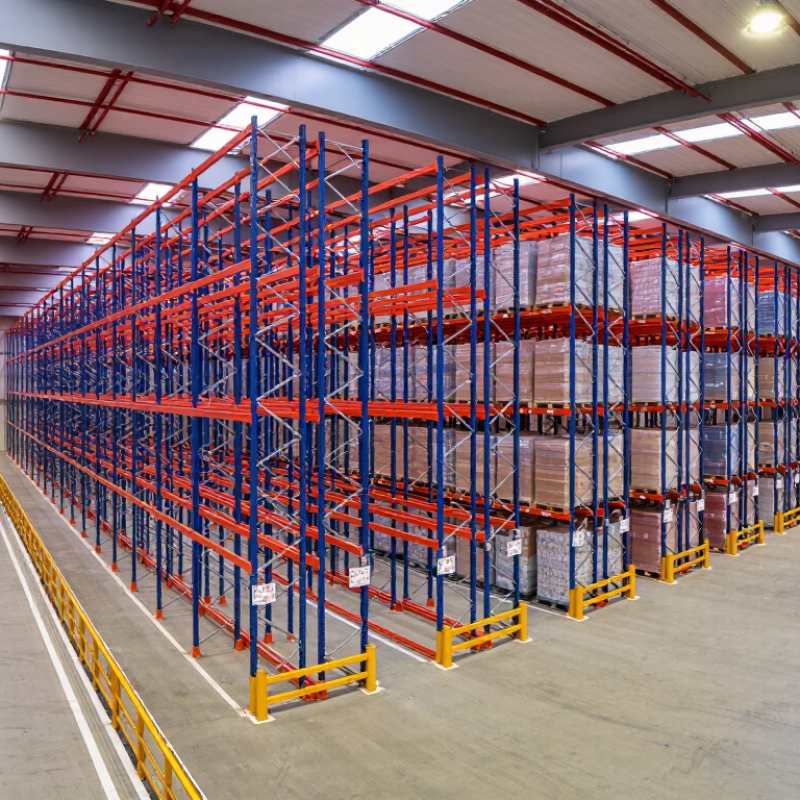
What Pallet Storage Systems Are and How They Support Warehousing
A pallet storage system is a planned arrangement of racks, floor positions, and handling routes for storing palletized goods. It helps a warehouse use vertical space while keeping inventory accessible. Selective racking, for example, gives forklifts direct access to individual pallet positions. Higher-density layouts can store more pallets in less floor area, but may limit access to specific goods.
The best arrangement depends on pallet dimensions, inventory turnover, equipment, and building height. A fast-moving product near a dispatch door can reduce travel time, while slow-moving stock may suit a less accessible location. Small details matter. Clear load labels, aisle widths, and stable pallets support safer, smoother handling. Staff should check for bent rack components and report damage promptly. Capacity must match the actual loads and rack configuration, not just a rough estimate. Even a well-planned system can disappoint if incoming pallets vary in size or the layout changes without review. A little friction remains. Regular checks help teams spot these problems before they disrupt daily work.
China Top Pallet Storage System Manufacturers
What Pallet Storage Systems Are and How They Support Warehousing
Common pallet footprints provide a practical starting point for planning rack bays and warehouse layouts.
Footprint areas are calculated from the stated pallet dimensions and rounded to two decimal places. Pallet storage systems use racks to organize loads and make better use of warehouse floor and vertical space; the right layout depends on pallet size, load requirements, and desired access.
Common Pallet Storage System Types Made in China
Common pallet storage systems made in China range from selective racks to high-density designs. Selective pallet racking gives direct access to each load, making it practical for mixed products and frequent picking. Drive-in racks use guided lanes and forklifts to store more pallets in less floor space, but access follows a last-in, first-out pattern. Double-deep racks add capacity, though they require suitable reach trucks and tighter operating discipline. Simple details matter.
For faster-moving goods, pallet-flow racks use inclined rollers to move loads toward the picking face. Push-back systems store several pallets deep on nested carts, balancing density with access. Automated warehouses may use stacker cranes and shuttle systems; their performance depends on accurate pallet dimensions, floor tolerances, and software integration. MHI’s 2024 Annual Industry Report found that 55% of respondents expected supply-chain technology investment to increase over the next five years. That points to growing interest in automation, not a guarantee that every site needs it. A manual rack can still be the better fit.
When comparing Chinese-made systems, check load capacity per beam level, steel finish, installation tolerances, and replacement-part availability. Ask suppliers to test the proposed layout against actual pallet sizes and forklift turning paths. A drawing can look efficient. The aisle may feel different on a busy shift. One weakness in many early plans is underestimating replenishment traffic.
China Top Pallet Storage System Manufacturers - Common Pallet Storage System Types Made in China
| System Type |
How It Works |
Selectivity |
Storage Density |
Typical Stock Rotation |
Common Applications |
| Selective Pallet Racking |
Each pallet is accessed directly from an aisle using a forklift. |
High |
Low to medium |
Flexible; supports FIFO or LIFO depending on warehouse procedures. |
Warehouses with many product lines, varied pallet quantities, or frequent picking. |
| Double-Deep Racking |
Two pallet positions are arranged deep on each side of an aisle; a suitable deep-reach truck is generally needed for the rear position. |
Medium |
Medium to high |
Usually LIFO within each two-pallet-deep position. |
Operations with several pallets per SKU and a need to reduce aisle space. |
| Drive-In Racking |
Forklifts enter the storage lanes and place pallets on rails; the system commonly has a loading and retrieval opening on the same side. |
Low |
High |
Typically LIFO within a lane. |
High-volume storage of fewer SKUs, including suitable batch or seasonal stock. |
| Drive-Through Racking |
Forklifts enter lanes that are open at both ends, allowing loading from one side and retrieval from the other. |
Low |
High |
Can support FIFO when loading and retrieval are managed from opposite ends. |
High-volume, low-SKU inventory where lane access from both ends is practical. |
| Pallet Flow Racking |
Pallets move by gravity along inclined roller or wheel lanes from the loading end toward the picking end. |
Lane-based |
High |
FIFO |
Date-sensitive or batch-controlled stock with enough pallets per SKU to fill lanes. |
| Push-Back Racking |
A newly loaded pallet pushes previously stored pallets backward on carts or inclined rails; pallets are retrieved from the aisle-facing side. |
Lane-based |
High |
Typically LIFO |
Multiple pallets per SKU where compact storage and access from one aisle are priorities. |
| Radio Shuttle Racking |
A powered shuttle carries pallets along rails inside deep lanes, reducing the need for forklifts to enter the lanes. |
Lane-based |
High to very high |
LIFO or FIFO, depending on lane layout and operating configuration. |
High-density storage with repeated pallet movements and fewer SKUs per lane. |
Note: Selectivity and storage density are comparative characteristics. The suitable layout depends on pallet dimensions, load capacity, SKU profile, handling equipment, and warehouse operating requirements.
How to Assess Chinese Pallet Storage System Manufacturers
Assessing Chinese pallet storage system manufacturers starts with the demands of your warehouse, not a catalog. Share pallet dimensions, load weights, aisle widths, forklift types, and expected throughput. Ask for a layout showing clearances, beam levels, and access points. Treat polished drawings as a starting point, not proof.
Request load calculations and documentation for materials, weld inspections, coating thickness, and quality checks. Confirm that quoted capacities match your actual pallet loads and storage configuration. Numbers matter. Ask how the supplier handles design changes, replacement parts, and installation support. A clear answer should identify responsible teams and realistic timelines, not just promise fast delivery.
Check references from facilities with similar products and operating conditions. If possible, inspect a completed installation or review detailed photos of beam connections, upright bases, and floor anchors. Watch the handoffs. Confirm who verifies site measurements and resolves mismatches before production. Compare quotations line by line, including packing, shipping, and after-sales terms. No single visit proves consistent quality, and remote checks can miss details. That limitation is worth discussing openly with the manufacturer.
Manufacturing Capabilities, Materials, and Quality Controls
Pallet storage systems depend on more than steel frames and tidy drawings. A capable manufacturer should translate warehouse loads, forklift clearances, and aisle dimensions into practical production specifications. Cutting, punching, welding, and surface finishing all affect how consistently beams and uprights fit together. Small variations matter. A misaligned connector can slow installation or create uneven load distribution.
Material selection should match the working environment. Structural steel is common for uprights and beams because it supports heavy loads and can be formed into repeatable profiles. Manufacturers should verify material certificates and check thickness before fabrication. Welds need visual inspection, while critical dimensions should be measured against approved drawings. Powder coating or galvanizing may help resist corrosion, depending on humidity, cleaning routines, and exposure to moisture.
Quality controls are strongest when they continue from incoming materials through final packing. Sample assemblies can reveal fit problems before a full production run, and load testing can assess performance under specified conditions. Records should connect inspection results to each production batch. Still, a test cannot represent every warehouse floor, forklift habit, or impact. That limitation deserves attention. Buyers should review stated load assumptions, installation guidance, and inspection procedures, then confirm that they reflect real operating conditions. Even a well-made system needs periodic checks for bent members, loose anchors, and damaged finishes.
Choosing a Manufacturer for Your Warehouse Requirements
Choosing a pallet storage manufacturer starts with accurate warehouse information, not a catalogue. Measure clear ceiling height, aisle widths, door openings, and the distance to sprinklers. Record pallet dimensions and the heaviest load, including uneven or overhanging goods. A qualified supplier should ask about forklift types, daily traffic, floor conditions, and future changes. Request a layout drawing and written load ratings for each beam and bay. For unusual floor conditions, involve a structural professional. Small measurement errors can create costly installation problems.
Tips: Share photos and a simple floor plan. Ask how the proposed design handles damaged uprights, replacement parts, and expansion. Compare specifications, not just price.
Before choosing, check references for warehouses with similar loads and handling equipment. Ask who verifies the final drawings, supervises installation, and provides inspection guidance. Clarify lead times, warranty limits, and how replacement components will match the original system. A neat proposal is useful, but it is not proof of reliable service. I would also question any design that seems perfect on paper; real operations change, and the layout may need adjustment after staff begin using it.
Conclusion
A Pallet Storage System helps warehouses use available space efficiently while keeping palletized goods organized, accessible, and protected. Chinese manufacturers may produce several system types, including selective, drive-in, push-back, and pallet-flow configurations. Each design supports different storage densities, inventory rotation needs, and handling methods, so the right choice depends on how a warehouse operates.
When assessing manufacturers, buyers can review engineering expertise, production capacity, material specifications, and quality-control practices. Ask how components are fabricated, finished, inspected, and tested, and check whether the manufacturer can adapt dimensions and layouts to site requirements. Comparing these capabilities with load demands, warehouse space, equipment, and future plans helps businesses choose a suitable supplier and storage solution.